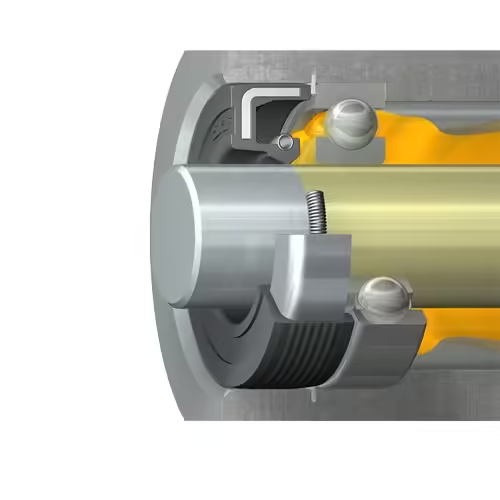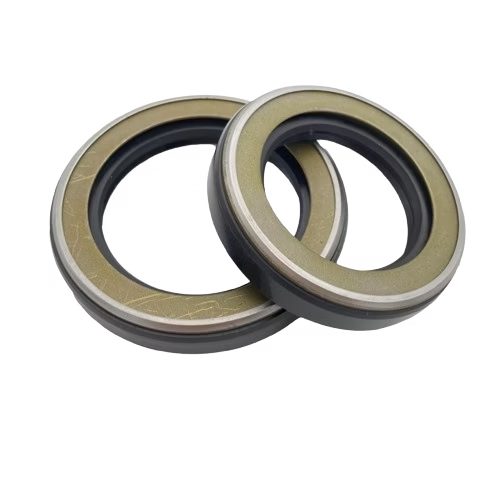
Rotary tillers work in one of the most difficult sealing environments in agricultural machinery. Their gearbox, shaft, and bearing areas are often exposed to mud, dust, sand, crop residue, water splash, vibration, and seasonal storage. In these conditions, choosing the right oil seal materials for rotary tillers is not only about oil resistance. The seal must also resist abrasive particles, maintain lip flexibility, exclude external contamination, and protect the gearbox from lubricant leakage.
For most rotary tillers, a standard NBR double-lip oil seal is still the most economical and widely used solution. However, for heavy-duty use, wet soil, sandy fields, high gearbox temperature, or longer service life requirements, buyers should consider HNBR, FKM, PU-based custom designs, cassette seals, or multi-lip sealing structures.
Quick Answer: Which Oil Seal Material Is Best for Rotary Tillers in Mud and Dust?
For most agricultural rotary tillers working in normal mud and dust, NBR TC double-lip oil seals provide the best balance of cost, oil resistance, and availability. NBR is widely used in rotary shaft seals because it works well with common mineral oils, greases, and standard gearbox lubricants.
For more demanding field conditions, HNBR oil seals are often a better choice. HNBR offers better heat resistance, aging resistance, mechanical strength, and abrasion resistance than standard NBR. It is suitable for rotary tillers working in wet soil, sandy fields, frequent operation, or higher gearbox temperature.
For high-temperature gearboxes, chemical exposure, or premium OEM machinery, FKM oil seals may be selected. FKM provides excellent heat, oil, fuel, and chemical resistance, but it is more expensive and not always necessary for standard rotary tiller applications.
In severe mud, sand, water, and abrasive contamination, the seal structure is as important as the rubber material. A double-lip seal, TC oil seal, reinforced seal, cassette seal, or custom multi-lip design may perform better than simply upgrading the rubber compound.
Why Rotary Tiller Oil Seals Fail Faster in Muddy and Dusty Conditions
Rotary tillers operate close to soil and rotating blades. Unlike clean industrial gearboxes, agricultural tiller gearboxes are exposed to dirt, water, plant residue, and abrasive particles during field work. These contaminants can collect around the shaft and gradually damage the sealing lip.
Common working challenges include:
- Soil, mud, sand, and crop residue entering the seal area
- Abrasive dust wearing the sealing lip
- Water and mud washing away lubrication near the lip
- Gearbox oil leakage caused by lip wear or shaft grooving
- Vibration, shaft runout, and misalignment during field operation
- Seasonal storage causing lip hardening, cracking, or deformation
A rotary shaft seal must retain oil inside the gearbox while preventing external contamination from entering. In rotary tillers, the external contamination risk is often more serious than in many other machinery applications. This is why a seal that works well in a clean gearbox may fail quickly in muddy agricultural use.
Why Material Selection Matters More Than Basic Dimensions
Many buyers order rotary tiller oil seals only by size: shaft diameter, housing bore, and seal width. These dimensions are important, but they are not enough.
Two oil seals with the same size can have very different service life because of differences in:
- Rubber compound quality
- Oil compatibility
- Abrasion resistance
- Lip design
- Spring tension
- Dust lip structure
- Metal case strength
- Manufacturing tolerance
- Shaft surface condition
- Installation quality
A low-cost oil seal may fit the gearbox, but if the rubber hardens, swells, cracks, or wears quickly under abrasive soil exposure, leakage will return soon.
For rotary tillers, oil resistance alone is not enough. Buyers should evaluate oil resistance, mud resistance, dust exclusion, shaft condition, and installation quality together.
Key Requirements for Rotary Tiller Oil Seal Materials
Oil Resistance
The oil seal material must be compatible with gearbox oil, grease, and common lubricants used in agricultural transmission systems.
NBR is suitable for many mineral oil and grease applications. HNBR and FKM may be selected when the temperature, lubricant, or aging resistance requirements are higher.
Abrasion Resistance
Mud and dust contain fine abrasive particles. When these particles reach the shaft-lip contact area, they can wear the sealing edge and create leakage paths.
HNBR normally provides better mechanical durability than standard NBR. PU also has strong abrasion resistance, but it must be used with the right seal structure and application conditions.
Mud and Water Resistance
The material should maintain sealing performance when exposed to wet soil, water splash, and mud buildup. However, in muddy environments, material alone cannot solve the problem. The external dust lip, seal cavity, shaft protection, and installation condition also affect service life.
Temperature Resistance
Rotary tiller gearboxes may generate heat during long working periods. Material selection should consider continuous operating temperature, short-term temperature peaks, and storage temperature.
NBR is practical for general applications. HNBR and FKM are better choices when the gearbox runs hotter or when the seal must maintain elasticity for a longer service period.
Lip Flexibility and Compression Recovery
The sealing lip must maintain stable contact pressure on the shaft. If the rubber becomes too hard, brittle, swollen, or permanently deformed, the seal may leak even when the dimensions are correct.
Good lip flexibility and compression recovery help the seal handle vibration, shaft movement, temperature changes, and seasonal storage.
Best Oil Seal Materials for Rotary Tillers
NBR Oil Seals: Standard Choice for Most Rotary Tillers
NBR, also called nitrile rubber, is the most common material for agricultural machinery oil seals. It has good resistance to mineral oil and grease, suitable flexibility for rotary shaft sealing, and a competitive price.
NBR oil seals are widely used in TC, TB, SC, and other standard rotary shaft seal structures. For repair markets, distributors, and replacement parts, NBR is usually easy to source and cost-effective.
Why NBR Is Widely Used
- Good resistance to mineral oil and grease
- Suitable for common gearbox oil sealing
- Flexible sealing lip
- Cost-effective for replacement markets
- Easy to manufacture in standard oil seal sizes
- Suitable for TC double-lip oil seals
Limitations of NBR in Muddy and Dusty Fields
NBR is not the best choice for every rotary tiller condition. In heavy mud, high abrasion, higher temperature, ozone exposure, or long service interval requirements, standard NBR may age or wear faster.
NBR may also be unsuitable for aggressive chemicals, special fuels, or high-temperature synthetic oils unless the compound is carefully selected and tested.
Best-Use Conditions
NBR is suitable for:
- Standard rotary tiller gearboxes
- Moderate field dust
- Normal gearbox temperature
- General agricultural repair markets
- Cost-sensitive replacement applications
- Machines with regular maintenance intervals
For most replacement orders, an NBR TC double-lip oil seal is a practical first choice.
HNBR Oil Seals: Better Durability for Heavy-Duty Agricultural Use
HNBR, or hydrogenated nitrile rubber, is an upgraded nitrile material. Compared with standard NBR, HNBR normally provides better heat resistance, ozone resistance, aging resistance, mechanical strength, and abrasion resistance.
This makes HNBR suitable for rotary tillers working in more demanding agricultural conditions, especially where standard NBR seals fail too quickly.
Advantages of HNBR
- Better heat resistance than standard NBR
- Improved abrasion resistance
- Better mechanical strength
- Better resistance to ozone and outdoor aging
- More suitable for heavy-duty agricultural use
- Longer service potential under difficult conditions
When HNBR Is Worth the Extra Cost
HNBR should be considered when:
- Rotary tillers work frequently in wet soil
- Sandy soil causes repeated lip wear
- Gearboxes run hot during long operation
- Standard NBR seals fail too quickly
- OEM buyers require longer maintenance intervals
- Export machinery needs more stable field performance
- Downtime cost is more important than seal unit price
HNBR is often a practical upgrade for B2B buyers who want better durability without moving directly to the higher cost of FKM or cassette seals.
NBR vs HNBR: Which Is Better for Rotary Tiller Oil Seals?
NBR is suitable for standard rotary tiller gearboxes where the main requirements are oil resistance, cost control, and easy replacement. It is a good choice for normal soil, moderate dust, common gearbox oil, and regular maintenance conditions.
HNBR is better when the machine works in wet soil, sandy fields, higher temperature, or repeated heavy-duty operation. It provides better resistance to heat aging, mechanical stress, and abrasive field conditions.
If standard NBR seals fail too quickly, HNBR is usually a practical upgrade before moving to FKM, PU-based custom seals, or cassette-style sealing systems.
For many OEM and heavy-duty agricultural machinery applications, HNBR offers a better balance between cost and service life than FKM.
FKM Oil Seals: High-Temperature and Chemical-Resistant Option
FKM, often known by the Viton® material family name, is selected when high temperature, oil resistance, fuel resistance, chemical resistance, and aging resistance are important.
Advantages of FKM
- Excellent high-temperature resistance
- Strong resistance to oils, fuels, and many chemicals
- Good aging resistance
- Good resistance to oxidation and ozone
- Suitable for premium OEM applications
- Useful when high gearbox temperature is confirmed
Limitations of FKM for Rotary Tillers
FKM is not automatically the best material for every muddy application. It is more expensive than NBR and HNBR. In many standard rotary tiller gearboxes, the operating temperature and lubricant do not require FKM.
FKM may also have lower low-temperature flexibility than some nitrile-based compounds, depending on the grade. In cold regions, compound selection should be checked carefully.
Best-Use Conditions
FKM is suitable for:
- High-temperature gearboxes
- Premium agricultural machinery
- Export-grade OEM requirements
- Chemical exposure
- Long-life sealing programs
- Special lubricant or fuel exposure
For ordinary farm replacement seals, FKM may be unnecessary unless the application data supports it.
PU Oil Seals: Strong Abrasion Resistance but Not Always Suitable for Standard Oil Seal Designs
Polyurethane, or PU, is known for strong abrasion resistance and tear resistance. It can be useful in dusty, sandy, and abrasive environments.
However, PU has strong abrasion resistance but is not always suitable for standard oil seal designs. This point is important because PU cannot always directly replace conventional spring-loaded rubber oil seals. It may require a different seal structure, lip geometry, or manufacturing method.
Advantages of PU
- Excellent abrasion resistance
- Strong tear resistance
- Good mechanical strength
- Useful for dusty and sandy environments
- Suitable for some custom wear-resistant sealing solutions
Practical Limitations
PU selection should be checked carefully for:
- Gearbox oil compatibility
- Operating temperature
- Shaft speed
- Lip heat generation
- Installation space
- Seal structure
- Hydrolysis risk in wet conditions, depending on PU type
For rotary tillers, PU may be useful in custom multi-lip seals, wipers, or special contamination-control designs, but it is not always the best material for standard TC oil seals.
ACM Oil Seals: A Limited Supplementary Option
ACM, or acrylic rubber, may be used in some hot oil sealing applications because it has good hot oil and aging resistance. However, it is not a main material choice for rotary tiller oil seals exposed to mud, dust, and abrasive soil. For most rotary tiller applications, buyers usually evaluate NBR, HNBR, FKM, or a custom PU-based sealing design before considering ACM.
Material Comparison Table for Rotary Tiller Oil Seals
| Material | Oil Resistance | Abrasion Resistance | Heat Resistance | Mud/Dust Suitability | Cost Level | Recommended Use |
|---|---|---|---|---|---|---|
| NBR | Good | Medium | Medium | Good for standard use | Low | General rotary tillers |
| HNBR | Very good | Good | High | Very good | Medium-High | Heavy-duty field use |
| FKM | Excellent | Medium-Good | Very high | Good when heat or chemical resistance matters | High | Premium or high-temperature applications |
| PU | Depends on grade | Excellent | Medium | Good for abrasive dust if design is suitable | Medium | Custom wear-resistant seals |
| ACM | Good for hot oil | Medium | High | Limited common use | Medium | Selected hot-oil applications |
Seal Structure Is as Important as Material
A common mistake is to upgrade the rubber material but ignore the seal structure. In rotary tillers, mud and dust attack the seal from outside. If the structure cannot block contamination, even a high-grade material may fail early.
Single-Lip Oil Seals
Single-lip seals mainly retain oil. They may be suitable for clean gearbox environments, but they are usually not ideal for rotary tillers where mud and dust directly reach the shaft area.
Double-Lip Oil Seals
Double-lip oil seals are commonly recommended for rotary tillers. The main lip retains gearbox oil, while the secondary lip helps block dust, soil, and external contamination.
For standard agricultural machinery, a double-lip NBR or HNBR seal is often more practical than a single-lip seal made from a premium material.
TC Oil Seals for Agricultural Machinery
TC oil seals are widely used in agricultural gearboxes because they combine oil retention and dust protection in a compact structure. They are easy to install, cost-effective, and available in many standard sizes.
A TC oil seal normally includes:
- Rubber-covered outer diameter
- Metal reinforcement
- Spring-loaded main sealing lip
- Secondary dust lip
This makes it suitable for many rotary tiller gearbox positions.
Cassette Seals for Severe Mud and Contamination
For severe mud, water, sand, and slurry exposure, cassette seals or multi-lip sealing systems may offer better protection than standard TC seals. A cassette seal can protect the shaft area with multiple sealing lips and an integrated running surface, depending on design.
Cassette seals are more expensive, but they may reduce downtime where standard oil seals fail repeatedly.
Reinforced or Metal-Cased Oil Seals
Metal-cased or reinforced structures can improve installation stability, especially where the housing bore is rigid and the machine has vibration. However, the housing condition must be controlled. If the bore is worn, corroded, or out of tolerance, leakage may still occur.
Structure Comparison Table for Rotary Tiller Applications
| Seal Type | Dust Protection | Oil Retention | Installation Difficulty | Cost | Recommended Rotary Tiller Use |
|---|---|---|---|---|---|
| Single-lip seal | Low | Good | Easy | Low | Clean or protected areas |
| Double-lip seal | Good | Good | Easy | Low-Medium | Standard tiller gearbox sealing |
| TC oil seal | Good | Good | Easy | Low-Medium | Common agricultural machinery use |
| Cassette seal | Excellent | Excellent | Higher | High | Severe mud, water, and dust exposure |
| Custom multi-lip seal | Very high | Very high | Depends on design | High | OEM heavy-duty applications |
How to Select the Right Oil Seal Material for a Rotary Tiller
Step 1: Confirm the Operating Environment
The first question is not only “What size is the seal?” but also “What field condition does the machine work in?”
Buyers should confirm whether the rotary tiller mainly operates in:
- Dry dust
- Wet mud
- Sandy soil
- Clay soil
- Mixed soil
- Water-saturated fields
- Fields with crop residue and roots
Dry sandy soil usually increases abrasion risk. Wet mud increases contamination and water exposure. Clay soil may build up around the shaft and increase friction around the seal area.
Step 2: Identify the Lubricant
The supplier should know whether the seal contacts:
- Gearbox oil
- Grease
- Mineral oil
- Synthetic oil
- Agricultural lubricant
- Special additives
- Fuel or chemical contamination
NBR is generally suitable for mineral oil and grease, while HNBR and FKM may be selected when higher temperature or stronger chemical resistance is needed. Material compatibility should always be confirmed under actual service conditions.
Step 3: Check Shaft Speed and Temperature
Higher shaft speed increases heat at the lip contact area. Higher gearbox temperature can accelerate rubber aging, hardening, and compression set.
If the gearbox runs hot during long operation, HNBR or FKM may be more suitable than standard NBR. If the tiller is used only occasionally in moderate temperature, NBR may be enough.
Step 4: Evaluate Dust and Mud Exposure Level
If mud and dust do not directly reach the shaft area, a standard TC seal may work well. If mud packs around the shaft or water frequently reaches the seal, a better dust lip, reinforced structure, or cassette-style seal should be considered.
For severe contamination, structure selection may have more impact than material upgrade alone.
Step 5: Review Shaft and Housing Condition
A new oil seal cannot solve every leakage problem. Before selecting a material, buyers should inspect:
- Shaft diameter
- Shaft hardness
- Shaft surface roughness
- Shaft wear groove
- Rust or scratches
- Housing bore condition
- Installation depth
- Shaft runout
- Misalignment
- Bearing looseness
If the shaft already has a groove at the lip contact area, the new seal may leak quickly even if it is made from HNBR or FKM.
Step 6: Balance Cost and Service Life
Low-cost NBR seals may be suitable for general replacement markets. However, in heavy-duty field use, a higher-quality HNBR seal may reduce replacement frequency and downtime.
For OEM buyers, the cheapest seal is not always the lowest-cost solution. Warranty claims, gearbox oil loss, dealer complaints, and field repair cost should also be considered.
Recommended Material by Application Scenario
| Working Condition | Recommended Material | Recommended Structure | Reason |
|---|---|---|---|
| Normal soil, moderate dust | NBR | TC double-lip seal | Cost-effective and widely available |
| Wet mud and frequent field use | HNBR | Double-lip or reinforced seal | Better wear and aging resistance |
| Sandy soil and high abrasion | HNBR or PU-based custom design | Multi-lip or cassette seal | Better contamination control |
| High gearbox temperature | FKM or HNBR | Double-lip seal | Better heat resistance |
| Premium OEM machinery | HNBR or FKM | Custom double-lip or cassette seal | Longer service life and lower warranty risk |
| Low-cost repair market | NBR | Standard TC seal | Economical replacement option |
Common Failure Causes and Material-Related Risks
Lip Wear Caused by Abrasive Dust
Fine soil particles can enter the sealing area and gradually wear the sealing lip. Once the lip edge loses its sharp sealing contact, gearbox oil leakage may begin.
Lip Hardening Due to Heat or Aging
If the material cannot handle the operating temperature, the lip may harden, crack, or lose elasticity. This is common when standard NBR is used in a gearbox that runs hotter than expected.
Oil Leakage from Shaft Grooving
A worn shaft groove is one of the most common causes of repeated leakage. The seal lip runs on the same contact line for a long time. If abrasive dust enters this area, it can wear both the rubber lip and the shaft surface.
Seal Damage During Installation
Improper pressing, tilted installation, dry lip startup, sharp shaft edges, or lack of installation tools can damage the seal before the machine even starts working.
Incorrect Material for Lubricant or Environment
Some rubber materials may swell, soften, crack, or harden when exposed to incompatible oil, fuel, chemicals, or temperature. Buyers should confirm the lubricant and operating environment before ordering.
Failure Analysis Table for Rotary Tiller Oil Seals
| Failure Symptom | Possible Cause | Recommended Check | Possible Solution |
|---|---|---|---|
| Gearbox oil leakage | Lip wear or shaft groove | Inspect shaft contact area | Replace seal and repair shaft surface |
| Mud entering gearbox area | Poor dust lip protection | Check seal structure | Use double-lip or cassette seal |
| Seal lip cracking | Heat aging or wrong material | Check operating temperature | Upgrade to HNBR or FKM |
| Early leakage after installation | Lip damage or tilted installation | Inspect installation method | Use correct tools and lubricate lip |
| Repeated failure | Shaft runout or housing issue | Measure shaft and housing | Use custom seal or repair components |
Standard Oil Seal vs Custom Oil Seal for Rotary Tillers
When Standard Oil Seals Are Enough
Standard oil seals are suitable when:
- Shaft and housing dimensions follow common specifications
- Operating temperature is moderate
- Mud and dust exposure is not extreme
- Replacement cost is the main concern
- The application uses common gearbox oil
- The machine has normal service intervals
For these applications, standard NBR TC oil seals are usually the most practical choice.
When a Custom Seal Is Required
A custom oil seal should be considered when:
- Standard seals fail repeatedly
- The tiller works in heavy mud, sandy soil, or wet fields
- The shaft has special dimensions
- Installation space is limited
- OEM buyers require longer service life
- A special rubber compound is needed
- A custom lip design is required
- The seal needs stronger dust exclusion
- A reinforced or cassette-style structure is needed
Custom seals are especially useful for OEM rotary tiller manufacturers who want to reduce warranty risk and improve field reliability.
Information Buyers Should Provide to the Supplier
To recommend the right oil seal material and structure, buyers should provide:
- Shaft diameter
- Housing bore diameter
- Seal width
- Working temperature
- Shaft speed
- Lubricant type
- Dust, mud, and water exposure level
- Existing seal drawing or sample
- Required material
- Rubber hardness
- Seal structure
- Annual demand or order quantity
- Failure photos, if available
With this information, DRO Rubber Seals can help evaluate whether NBR, HNBR, FKM, PU-based custom design, or another sealing solution is more suitable.
Installation and Maintenance Notes for Longer Seal Life
Inspect the Shaft Before Replacing the Oil Seal
A new oil seal may leak quickly if the shaft is scratched, rusty, grooved, or out of round. Always inspect the lip contact area before installation.
Lubricate the Sealing Lip Before Installation
Dry installation can cause early lip wear during startup. Apply compatible lubricant to the sealing lip before assembly.
Avoid Damaging the Lip on Sharp Edges
Sharp shaft edges, keyways, threads, or rough surfaces can cut the lip during installation. Use a guide sleeve or proper installation tool when necessary.
Keep Mud Buildup Away from the Shaft Area
Regular cleaning helps reduce abrasive contamination around the seal. This is especially important after working in wet soil or sandy fields.
Replace Seals During Gearbox Repair
Oil seals are low-cost components compared with gearbox downtime, lubricant loss, and bearing damage. During gearbox maintenance, it is usually safer to replace aged or worn seals.
Buyer Mistakes to Avoid When Ordering Rotary Tiller Oil Seals
Choosing Only by Price
A cheaper seal may reduce purchase cost, but it can increase replacement frequency, oil leakage, downtime, and customer complaints.
Ignoring the Dust Lip
For rotary tillers, external contamination protection is as important as internal oil retention. A single-lip seal may not be enough for muddy field use.
Using Standard NBR for Every Condition
NBR is practical, but heavy-duty agricultural machinery may require HNBR, FKM, or a custom structure.
Replacing the Seal Without Checking the Shaft
Repeated leakage may come from shaft wear, not only from seal quality. Always check the shaft contact area.
Not Confirming Material Compatibility
Material compatibility depends on lubricant, temperature, pressure, shaft speed, and external environment. Buyers should confirm these conditions before placing bulk orders.
Practical Recommendation for B2B Buyers
For most rotary tiller replacement applications, a double-lip NBR TC oil seal provides a practical balance of price, oil resistance, and availability.
For heavy-duty agricultural machinery, wet soil, sandy fields, or repeated field failure, HNBR double-lip oil seals or custom multi-lip designs are usually better long-term solutions.
For high-temperature gearboxes, premium OEM machinery, or special lubricant exposure, FKM oil seals should be evaluated.
For severe mud and abrasive contamination, buyers should not focus only on rubber material. The best solution may require a stronger seal structure, better dust lip, reinforced case, cassette design, shaft sleeve, or improved installation method.
The best oil seal material for rotary tillers depends on:
- Working medium
- Gearbox oil type
- Field condition
- Temperature
- Shaft speed
- Mud and dust exposure
- Shaft condition
- Seal structure
- Maintenance interval
- Cost and service life target
FAQ
What is the best oil seal material for rotary tillers?
For most rotary tillers, NBR is the standard and cost-effective choice. For heavier mud, dust, heat, or longer service life, HNBR is usually a better option. FKM is suitable for high-temperature or chemical-resistant applications.
Is NBR good enough for rotary tiller oil seals?
Yes, NBR is good enough for many standard rotary tiller gearbox applications, especially when the machine works in moderate soil conditions and uses common gearbox oil. For severe mud, sand, or high temperature, HNBR may be more reliable.
When should I choose HNBR instead of NBR?
Choose HNBR when standard NBR seals fail too quickly, when the tiller works in wet or sandy fields, when the gearbox runs hotter, or when the buyer wants longer service intervals.
Are FKM oil seals necessary for agricultural machinery?
FKM oil seals are not always necessary. They are useful for high-temperature gearboxes, premium machinery, chemical exposure, or special lubricant conditions. For standard agricultural use, NBR or HNBR is often more cost-effective.
What type of oil seal is best for mud and dust?
A double-lip TC oil seal is commonly used for mud and dust protection. For severe contamination, cassette seals or custom multi-lip seals may provide better protection.
Why do rotary tiller oil seals fail quickly?
Common reasons include abrasive dust, mud buildup, shaft grooves, wrong material selection, high temperature, poor installation, dry startup, shaft runout, and damaged housing bores.
Can a double-lip oil seal prevent mud from entering?
A double-lip oil seal can improve dust and mud protection, but it cannot solve every contamination problem. Severe mud exposure may require a cassette seal, protective cover, shaft sleeve, or custom multi-lip design.
What information should I provide when ordering custom rotary tiller oil seals?
Provide shaft diameter, housing bore diameter, seal width, working temperature, shaft speed, lubricant type, mud and dust exposure level, existing drawing or sample, material requirement, hardness, structure, and annual order quantity.
Conclusion
The best oil seal material for rotary tillers working in mud and dust is not decided by rubber type alone. For standard agricultural use, NBR TC double-lip oil seals are economical and practical. For heavy-duty field conditions, HNBR provides better durability. For high-temperature or chemically demanding applications, FKM may be the right choice. In severe mud, sand, and water exposure, seal structure can be more important than material upgrade alone.
Before ordering, buyers should confirm the working environment, lubricant, temperature, shaft condition, seal size, and failure history. With complete application data, DRO Rubber Seals can recommend standard or custom oil seals for rotary tiller gearboxes, agricultural machinery, and other industrial sealing applications.
Website: drorubber.com
WhatsApp: +0086 15815831911
WeChat: +0086 13784044874