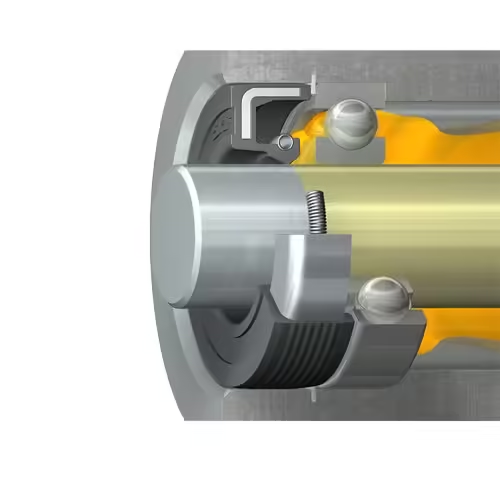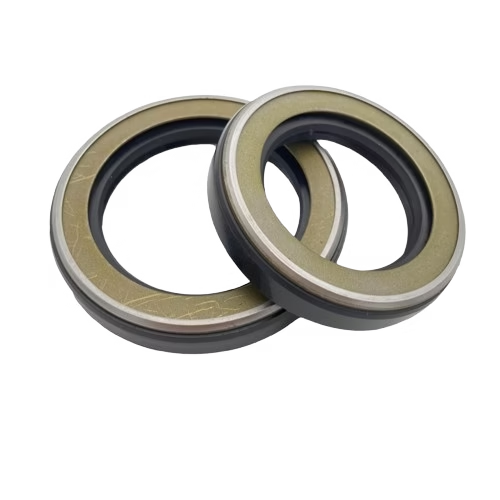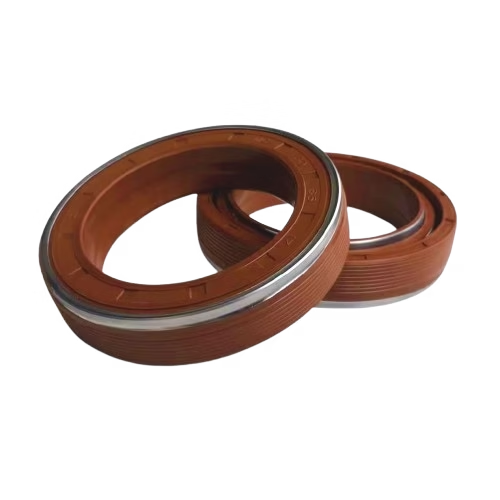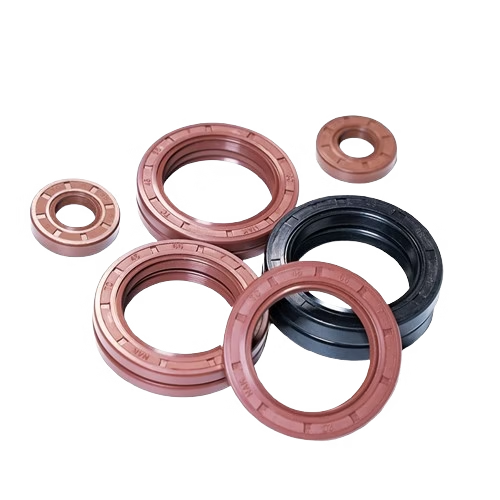
Oil seals are designed to retain lubricants, exclude contaminants, and protect rotating equipment from premature wear. Under the right operating conditions, a quality oil seal can provide thousands of hours of reliable service. Yet in practice, many seals begin leaking long before reaching their expected service life.
When leakage occurs, the seal itself is often blamed first. However, experienced engineers know that an oil seal is usually the first component to reveal a system problem, not necessarily the component that caused it. A leaking seal may indicate excessive shaft wear, bearing failure, improper installation, incompatible materials, poor lubrication, or operating conditions beyond the seal’s design limits.
Replacing the seal without identifying the underlying cause often results in repeated failures, increased maintenance costs, and unnecessary equipment downtime. For OEM manufacturers, maintenance teams, distributors, and procurement engineers, understanding why oil seals fail is the key to selecting the right sealing solution and improving long-term equipment reliability.
This guide explains the eight most common causes of premature oil seal failure, how to diagnose different failure patterns, and the engineering practices that help maximize seal performance and service life.
Quick Answer
Premature oil seal failure is rarely caused by a defective seal alone. In most industrial applications, early failure results from one or more of the following factors:
- Incorrect seal material selection
- Poor shaft surface condition
- Improper installation
- Inadequate lubrication
- Dust or particle contamination
- Excessive pressure or shaft speed
- Shaft misalignment or excessive runout
- Choosing the wrong seal design
Identifying the actual failure mechanism instead of simply replacing the leaking seal is the most effective way to extend service life and reduce maintenance costs.
What Is Considered Premature Oil Seal Failure?
Not every leaking oil seal has reached the end of its service life. A seal is generally considered to have failed prematurely when it loses its sealing performance significantly earlier than expected under normal operating conditions.
Unlike consumable components with a fixed replacement interval, oil seals do not have a universal lifespan. Their service life depends on the interaction between material properties, equipment design, operating conditions, and maintenance practices.
A seal that performs reliably for more than 10,000 operating hours in a clean industrial gearbox may fail within a few hundred hours when exposed to excessive heat, abrasive contaminants, or incorrect installation.
Expected Service Life vs. Actual Operating Life
The actual life of an oil seal is influenced by multiple factors working together rather than by a single specification.
Key factors include:
- Operating temperature
- Shaft speed
- Lubricant type and condition
- Internal pressure
- Shaft surface finish
- Bearing condition
- Contamination level
- Installation quality
- Material compatibility
For example, an NBR oil seal may provide excellent performance in a mineral oil lubrication system operating below 100°C. The same seal installed in a gearbox that continuously operates above 150°C will harden rapidly and lose its sealing capability because the material is no longer suitable for the application.
This explains why identical oil seals can have dramatically different service lives in different machines.
Common Symptoms of Premature Oil Seal Failure
Oil seals rarely fail without warning. In many cases, the condition of the sealing lip provides valuable clues about the underlying problem.
Typical symptoms include:
- Oil leakage around the shaft
- Cracked or hardened rubber
- Burned or glazed sealing lips
- Uneven lip wear
- Deep wear grooves on the shaft
- Swollen elastomer
- Garter spring displacement
- Oil contamination around the housing
These symptoms should be treated as diagnostic evidence rather than simply signs that the seal needs replacement.
Key Takeaway: A leaking oil seal is often the result of an underlying mechanical or application issue. Understanding why the seal failed is far more valuable than simply replacing it.
The 8 Most Common Reasons Oil Seals Fail Early
1. Incorrect Seal Material Selection
Selecting the appropriate elastomer is one of the most important decisions in oil seal design. Every rubber compound has its own temperature range, chemical resistance, wear characteristics, and compatibility with lubricants. A material that performs exceptionally well in one application may fail rapidly in another.
Material selection should always be based on the complete operating environment rather than on temperature alone.
Common mistakes include:
- Using NBR in continuous high-temperature applications
- Selecting FKM where excellent low-temperature flexibility is required
- Installing silicone seals in abrasive environments
- Using standard rubber materials with aggressive chemicals
- Ignoring lubricant compatibility
Even a premium-quality oil seal cannot compensate for an incompatible material.
Common Oil Seal Materials
| Material | Typical Temperature Range | Advantages | Typical Applications |
|---|---|---|---|
| NBR (Nitrile) | -40°C to +120°C | Excellent oil resistance, economical, good wear resistance | General industrial machinery, gearboxes, hydraulic systems |
| FKM (Viton®) | -20°C to +200°C | Excellent heat and chemical resistance | Automotive transmissions, chemical pumps, high-speed equipment |
| HNBR | -40°C to +150°C | High mechanical strength, ozone resistance, improved wear resistance | Heavy-duty industrial equipment, compressors |
| Silicone (VMQ) | -60°C to +200°C | Outstanding low-temperature flexibility | Food equipment, medical devices, outdoor applications |
| PTFE | -70°C to +260°C | Extremely low friction, exceptional chemical resistance, high-speed capability | Chemical processing, pharmaceutical equipment, high-speed rotating machinery |
Choosing the most expensive material is not always the best solution. The most effective seal is the one whose material matches the application’s temperature, lubricant, pressure, shaft speed, and chemical environment.
2. Improper Shaft Surface Condition
A high-quality oil seal cannot compensate for a damaged shaft.
Because the sealing lip remains in continuous contact with the rotating shaft, the shaft surface effectively becomes part of the sealing system. If the shaft is worn, rough, corroded, or out of tolerance, even the best seal will struggle to maintain a stable oil film.
The most common shaft-related problems include:
Excessive Surface Roughness
Surface finish directly affects friction, heat generation, and lubricant retention.
As a general guideline, the recommended shaft roughness for most rotary oil seals is:
- Ra 0.2–0.8 μm
A surface that is too rough accelerates lip wear, while an overly polished shaft may prevent the formation of a stable lubricating film.
Shaft Wear Grooves
After years of operation, the sealing lip often creates a wear track on the shaft.
Installing a new seal on the same groove usually results in immediate leakage because the lip cannot maintain uniform contact pressure.
Depending on the severity of the damage, possible solutions include:
- Installing a shaft repair sleeve
- Regrinding the shaft
- Replacing the shaft
- Repositioning the seal to a new contact area
Corrosion and Surface Damage
Rust, scratches, pitting, and burrs can quickly damage a new sealing lip during operation.
This is particularly common in:
- Marine equipment
- Agricultural machinery
- Water pumps
- Outdoor industrial equipment
Whenever repeated seal failures occur, the shaft should always be inspected before another seal is installed.
Key Takeaway: The shaft is part of the sealing system. Repairing or replacing a damaged shaft is often more effective than repeatedly replacing oil seals.
3. Incorrect Installation Practices
A significant percentage of premature oil seal failures occur during installation rather than during normal operation.
Even a properly selected seal can be permanently damaged if incorrect installation procedures are used.
Typical installation mistakes include:
Damaging the Sealing Lip
Passing the seal over splines, keyways, or sharp shaft edges without protection can cut or tear the sealing lip before the equipment is even started.
Installation sleeves or protective cones should always be used when applicable.
Installing the Seal at an Angle
If the seal enters the housing unevenly, the lip experiences uneven radial loading.
This often leads to:
- One-sided wear
- Uneven contact pressure
- Early leakage
Incorrect Installation Depth
Installing the seal directly over an existing shaft wear groove significantly reduces sealing performance.
The installation depth should always follow the equipment manufacturer’s specifications.
Dry Installation
Running a new oil seal without lubricating the sealing lip creates excessive friction during the first shaft rotations.
Initial dry running may result in:
- Burned sealing lips
- Heat buildup
- Surface glazing
- Rapid wear
Applying a thin layer of compatible lubricant before installation is a simple but highly effective preventive measure.
Installation Best Practices
To improve installation quality:
- Clean the shaft and housing thoroughly.
- Lubricate the sealing lip before assembly.
- Use dedicated installation tools whenever possible.
- Confirm that the garter spring remains properly seated.
- Rotate the shaft manually before startup.
Key Takeaway: Many oil seals fail within the first few hours because of installation damage rather than manufacturing defects.
4. Inadequate Lubrication
An oil seal depends on a thin lubricating film between the sealing lip and the rotating shaft to minimize friction and dissipate heat. Without this microscopic oil film, the lip rapidly overheats and wears.
Common lubrication-related problems include:
Dry Running
A completely dry sealing interface generates excessive friction almost immediately.
Even a short period of dry operation during startup can cause:
- Lip hardening
- Burned rubber
- Surface glazing
- Permanent sealing damage
Oil Starvation
Insufficient lubricant reaching the sealing interface may result from:
- Low oil levels
- Blocked lubrication passages
- Poor oil circulation
- Incorrect equipment orientation
Without adequate lubrication, the sealing lip loses its protective oil film, increasing both wear and operating temperature.
Heat Build-Up
As friction increases, heat accelerates elastomer aging.
The result is often:
- Hardening
- Loss of elasticity
- Compression set
- Cracking
- Premature leakage
Maintaining the correct lubricant level and using the lubricant specified by the equipment manufacturer are essential for extending both bearing life and oil seal service life.
Key Takeaway: Oil seals are designed to run on a controlled lubricating film—not on a dry shaft. Proper lubrication is essential for reliable sealing performance.
5. Contamination from Dust, Mud, or Metal Particles
Contamination is one of the most destructive factors affecting oil seal performance. Unlike temperature or pressure, contamination causes continuous mechanical wear that gradually damages both the sealing lip and the shaft surface.
This issue is especially common in agricultural machinery, mining equipment, construction vehicles, forestry machinery, and other applications operating in harsh environments.
Abrasive Contaminants
Dust, sand, metal particles, and rust flakes can become trapped beneath the sealing lip. As the shaft rotates, these particles act like grinding media, wearing away the elastomer and creating microscopic scratches on the shaft.
Typical contamination sources include:
- Construction dust
- Sand and soil
- Metal machining debris
- Bearing wear particles
- Gear wear debris
- Rust and corrosion products
Initially, leakage may be minor, but as wear progresses, sealing performance deteriorates rapidly.
External vs. Internal Contamination
Contamination does not always originate from outside the machine.
External contamination includes:
- Mud
- Rainwater
- Dust
- Gravel
- Crop residue
- Salt spray
Internal contamination is often caused by:
- Bearing wear
- Gear wear
- Poor filtration
- Manufacturing debris remaining inside the housing
Both types gradually damage the sealing interface if not properly controlled.
Selecting the Right Seal for Contaminated Environments
Seal design has a significant impact on contamination resistance.
| Operating Environment | Recommended Seal |
|---|---|
| Clean industrial gearbox | SC (Single Lip) |
| General industrial equipment | TC (Double Lip) |
| Agricultural machinery | TC or TB |
| Mining and construction | Cassette Seal |
| Severe contamination | Multi-lip Cassette Seal |
In dusty or muddy environments, upgrading from a single-lip seal to a double-lip or cassette seal often provides greater improvements than changing the rubber material alone.
Key Takeaway: Preventing contaminants from reaching the sealing lip is usually more effective than replacing damaged seals after wear has already occurred.
6. Excessive Pressure or Shaft Speed
Standard rotary oil seals are primarily designed to retain lubricant under low-pressure operating conditions. When pressure or shaft speed exceeds the seal’s design capability, the sealing lip can no longer maintain stable contact with the shaft.
Excessive Internal Pressure
Internal pressure places additional load on the sealing lip, causing it to deform or lift away from the shaft.
Typical causes include:
- Blocked housing breathers
- Hydraulic pressure spikes
- Thermal expansion
- Pump pulsation
Common symptoms include:
- Oil leakage
- Lip deformation
- Seal blowout
- Accelerated wear
In many cases, restoring proper housing ventilation solves the problem more effectively than replacing the seal.
High Shaft Speed
Higher shaft speeds increase friction at the sealing interface, resulting in:
- Increased operating temperature
- Faster material aging
- Reduced lubricant film thickness
- Accelerated lip wear
The allowable shaft speed depends on factors such as shaft diameter, surface finish, lubrication quality, and seal material. PTFE seals generally tolerate higher surface speeds than conventional rubber oil seals because of their low coefficient of friction.
When a Standard Oil Seal Is No Longer Suitable
Applications involving continuous high speed or elevated pressure may require more specialized sealing solutions, such as:
- Pressure-resistant rotary oil seals
- PTFE rotary shaft seals
- Mechanical seals
- Cassette sealing systems
Selecting the correct seal type at the design stage is usually more economical than replacing standard seals repeatedly.
Key Takeaway: Every oil seal has operating limits. When pressure or shaft speed exceeds those limits, upgrading the sealing design is often the only reliable solution.
7. Shaft Misalignment or Excessive Runout
An oil seal is designed to operate on a shaft that rotates concentrically. If the shaft moves excessively during operation, the sealing lip experiences uneven loading, leading to localized wear and premature leakage.
Worn Bearings
Bearing wear is one of the most common hidden causes of recurring oil seal failure.
As bearing clearance increases, the shaft begins to move radially instead of rotating concentrically. This movement causes:
- Uneven lip loading
- One-sided wear
- Increased friction
- Repeated leakage
Replacing the oil seal without correcting the bearing problem rarely provides a long-term solution.
Shaft Vibration
Dynamic vibration continuously changes the contact pressure between the shaft and the sealing lip.
Possible causes include:
- Bent shafts
- Unbalanced rotating components
- Loose couplings
- Gear damage
- Motor imbalance
Over time, vibration accelerates fatigue of both the sealing lip and the garter spring.
Engineering Inspection
Whenever repeated seal failures occur, maintenance personnel should inspect:
- Bearing clearance
- Shaft runout
- Shaft straightness
- Housing alignment
- Shaft concentricity
These mechanical issues are often responsible for repeated leakage, even when high-quality replacement seals are used.
Key Takeaway: Replacing an oil seal without checking bearing condition and shaft alignment often treats the symptom rather than the cause.
8. Choosing the Wrong Seal Design
Selecting the correct material is only part of the sealing solution. The seal profile itself must also match the operating environment.
Different oil seal designs provide different levels of contamination protection, rigidity, and pressure capability.
Common Oil Seal Designs
Seal Design Main Features Typical Applications SC Single sealing lip Electric motors, clean gearboxes TC Primary lip with auxiliary dust lip Automotive, industrial machinery TB Metal outer case with dust lip Heavy-duty industrial equipment VC Flexible rubber outer diameter Stamped housings, corrosion-prone applications Cassette Seal Multi-lip sealing system with wear sleeve Mining, agriculture, construction equipment For clean indoor equipment, a standard SC seal is often sufficient. However, equipment exposed to mud, water, or abrasive particles generally benefits from a TC or cassette seal with improved contamination resistance.
Choosing a more suitable seal profile frequently extends service life without changing the elastomer material.
Key Takeaway: The seal profile is just as important as the rubber compound. Matching the seal design to the operating environment is essential for long-term reliability.
How to Diagnose Oil Seal Failure by Wear Pattern
A failed oil seal provides valuable information about the conditions under which it operated. Examining the wear pattern before installing a replacement seal often helps identify the real cause of leakage.
Table 2. Oil Seal Failure Analysis Guide
| Failure Appearance | Likely Cause | Recommended Action |
|---|---|---|
| Cracked sealing lip | Excessive heat or material aging | Upgrade material and reduce operating temperature |
| Burned lip | Dry running or inadequate lubrication | Restore lubrication and inspect oil supply |
| One-sided wear | Shaft misalignment or worn bearings | Inspect shaft alignment and bearing clearance |
| Torn sealing lip | Installation damage | Use installation tools and guide sleeves |
| Swollen rubber | Chemical incompatibility | Select a compatible seal material |
| Deep shaft groove | Shaft wear | Install a repair sleeve or replace the shaft |
| Excessive lip wear | Contamination or rough shaft surface | Improve filtration and inspect shaft finish |
| Spring displacement | Incorrect installation | Replace the seal and review installation procedures |
A damaged seal should always be treated as evidence of a broader mechanical issue rather than simply a failed component.
Key Takeaway: Failure analysis should focus on identifying the root cause of leakage instead of replacing the seal without further investigation.
Environmental Factors That Shorten Oil Seal Life
Even when the correct seal has been selected and installed properly, harsh operating environments can significantly reduce service life. The following environmental conditions should always be considered during seal selection.
High Temperature
Continuous exposure to excessive heat accelerates rubber aging, leading to hardening, compression set, and loss of elasticity. For high-temperature applications, materials such as FKM are generally more suitable than standard NBR.
Low Temperature
Low temperatures reduce rubber flexibility and may cause the sealing lip to stiffen or crack during startup. Silicone and certain low-temperature elastomers provide better performance in cold environments.
Water, Mud, and Dust
Water can wash away the lubricating film, while mud and dust introduce abrasive particles that accelerate lip and shaft wear. Double-lip or cassette seals are often recommended for these environments.
Fuels and Hydraulic Fluids
Different fuels and hydraulic fluids vary significantly in chemical composition. Selecting an incompatible elastomer may result in swelling, softening, or rapid material degradation.
Aggressive Chemicals
Applications involving acids, solvents, or corrosive chemicals generally require high-performance materials such as FKM or PTFE to maintain sealing performance.
UV and Ozone Exposure
Oil seals stored or operated in environments with prolonged UV exposure or ozone generation may experience surface cracking and premature aging. Proper storage and ozone-resistant materials help minimize these effects.
Key Takeaway: Environmental conditions should always be evaluated alongside temperature, pressure, and lubrication when selecting an oil seal.
How to Extend Oil Seal Service Life
Selecting the right oil seal is only the first step toward reliable sealing performance. In practice, service life depends on the condition of the entire sealing system, including the shaft, bearings, lubrication, installation quality, and operating environment.
Instead of replacing failed seals repeatedly, maintenance teams should focus on eliminating the root causes of premature wear. The following engineering practices can significantly improve seal reliability while reducing maintenance costs and unplanned downtime.
Improve Shaft Surface Condition
The shaft is one of the most critical components in any rotary sealing system. Before installing a new oil seal, always inspect the shaft for damage that could immediately compromise sealing performance.
Pay particular attention to:
- Wear grooves
- Corrosion
- Scratches or burrs
- Surface roughness
- Shaft runout
For most rotary shaft seals, a surface roughness of Ra 0.2–0.8 μm is generally recommended. If the shaft has developed a deep wear groove, installing a repair sleeve or replacing the shaft is usually more effective than installing another seal on the damaged surface.
Key Takeaway: A new oil seal cannot compensate for a worn shaft. Inspect the shaft before replacing the seal.
Follow Proper Installation Procedures
Even the highest-quality oil seal can fail within minutes if it is installed incorrectly.
Good installation practices include:
- Cleaning the shaft and housing thoroughly before assembly
- Lubricating the sealing lip with a compatible lubricant
- Using installation sleeves when passing over splines or keyways
- Pressing the seal squarely into the housing
- Confirming that the garter spring remains properly seated
- Rotating the shaft manually before startup
Avoid striking the seal directly with a hammer, as uneven installation may distort the seal case or damage the sealing lip.
Key Takeaway: Careful installation is one of the simplest and most cost-effective ways to prevent premature oil seal failure.
Maintain Adequate Lubrication
Oil seals rely on a stable lubricating film to reduce friction and dissipate heat.
Routine maintenance should include:
- Maintaining the correct lubricant level
- Using the lubricant recommended by the equipment manufacturer
- Replacing contaminated oil promptly
- Keeping lubrication passages clean
- Avoiding extended periods of dry running during startup
Proper lubrication protects not only the oil seal but also bearings, shafts, and other rotating components.
Key Takeaway: Stable lubrication extends the service life of the entire rotating system—not just the oil seal.
Control Contamination
Preventing contamination is often more effective than replacing damaged seals.
Recommended preventive measures include:
- Installing double-lip oil seals where dust is present
- Maintaining effective lubricant filtration
- Replacing damaged housing breathers
- Cleaning equipment before maintenance
- Protecting replacement seals from dirt during installation
For equipment operating in mining, construction, or agricultural environments, cassette seals may provide substantially longer service life than conventional rotary shaft seals.
Key Takeaway: Keeping contaminants out is far less expensive than repairing the damage they cause.
Inspect Bearings and Shaft Alignment
Repeated seal failures frequently indicate problems elsewhere in the rotating assembly.
Routine inspections should include:
- Bearing clearance
- Shaft concentricity
- Shaft vibration
- Housing alignment
- Radial runout
Replacing the oil seal without correcting these issues often results in another leak within a short period.
Key Takeaway: If the same oil seal fails repeatedly, inspect the bearings before replacing another seal.
Adopt Preventive Maintenance Instead of Reactive Repairs
Many companies replace oil seals only after leakage becomes visible. A preventive maintenance strategy helps identify wear before failure causes production interruptions.
Regular inspections should verify:
- Shaft condition
- Bearing performance
- Lubricant cleanliness
- Seal condition
- Housing ventilation
- Operating temperature
Planned maintenance generally costs significantly less than emergency shutdowns caused by unexpected seal failures.
Key Takeaway: Preventive maintenance extends service life while reducing total operating costs.
Practical Oil Seal Maintenance Checklist
The following checklist can be incorporated into routine maintenance programs to improve equipment reliability.
Table 3. Preventive Maintenance Checklist
| Inspection Item | Recommended Check |
|---|---|
| Shaft surface | No grooves, corrosion, or scratches |
| Shaft runout | Within equipment specification |
| Bearings | No looseness or abnormal vibration |
| Lubricant | Correct type, clean, adequate level |
| Seal lip | No hardening, cracking, or visible wear |
| Housing bore | Clean and undamaged |
| Dust protection | Dust lip intact where applicable |
| Housing breather | Clean and unobstructed |
| Operating temperature | Within material limits |
| Leakage | No visible oil around the seal |
This checklist is particularly useful during scheduled shutdowns or preventive maintenance inspections.
Typical Application Scenarios
Oil seals operate under very different conditions depending on the equipment. Understanding the primary failure risks in each application helps engineers choose more suitable sealing solutions.
Automotive Gearboxes
Automotive transmissions typically operate at high rotational speeds and elevated temperatures. The most common failure risks are heat, shaft wear, and blocked housing breathers.
Recommended solution: FKM oil seals with a TC profile are commonly used for high-temperature gearbox applications.
Hydraulic Pumps and Motors
Hydraulic equipment is exposed to continuous pressure fluctuations and specialized hydraulic fluids. Incorrect material selection or excessive pressure can quickly reduce seal life.
Recommended solution: Select materials compatible with the hydraulic fluid and use pressure-resistant seal designs where required.
Agricultural and Construction Equipment
Mud, sand, water, and crop residue continuously attack the sealing system. Abrasive contamination is usually the primary cause of premature failure.
Recommended solution: TC or cassette seals combined with regular cleaning and proper lubrication.
Industrial Motors and Pumps
These applications generally experience less external contamination but operate continuously for long periods. Bearing wear, shaft misalignment, and inadequate lubrication are the most common causes of leakage.
Recommended solution: Maintain bearing condition, inspect shaft alignment, and replace worn shafts before installing new seals.
Table 4. Recommended Oil Seal Selection by Application
| Application | Primary Risk | Recommended Material | Recommended Seal Design |
|---|---|---|---|
| Automotive Gearbox | High temperature | FKM | TC |
| Hydraulic Pump | Pressure fluctuations | NBR / FKM | Pressure-resistant TC |
| Agricultural Equipment | Mud and dust | HNBR | TC / Cassette |
| Electric Motor | Continuous operation | NBR | SC |
| Water Pump | Moisture | FKM | TC |
| Chemical Processing | Aggressive chemicals | PTFE / FKM | PTFE Rotary Seal |
| Mining Equipment | Severe contamination | HNBR | Cassette |
This table provides general guidance only. Final seal selection should always be based on the actual operating conditions.
Case Study: Looking Beyond the Oil Seal
During a recent technical consultation, a gearbox manufacturer contacted the DRO Rubber engineering team regarding recurring oil leakage on one of their production lines.
The maintenance team had already replaced the oil seal three times within six months. Each replacement temporarily stopped the leakage, but the problem quickly returned. Since several brands of seals had produced the same result, they suspected that seal quality was the issue.
Rather than recommending another replacement seal, we asked the customer to provide additional information, including operating temperature, shaft speed, lubricant type, photos of the failed seal, and images of the shaft surface.
After reviewing the application, three issues became apparent:
- The shaft had developed a noticeable wear groove, preventing the sealing lip from maintaining consistent contact pressure.
- The input shaft bearing showed excessive clearance, causing shaft runout and uneven lip loading during operation.
- The gearbox operated continuously at approximately 170°C, while the installed seal was made from standard NBR, which was not suitable for prolonged exposure to this temperature.
Instead of replacing the seal again, the customer implemented a complete corrective solution:
- Installed a shaft repair sleeve
- Replaced the worn bearings
- Improved housing ventilation to reduce internal pressure
- Upgraded the seal material from NBR to FKM
- Standardized the installation procedure using guide sleeves and proper lip lubrication
Following these changes, the recurring leakage was eliminated, maintenance intervals increased significantly, and production downtime was substantially reduced.
This example illustrates an important engineering principle:
Oil seals rarely fail alone. They usually reveal underlying problems elsewhere in the sealing system.
The most effective solution is rarely “install a better seal.” It is identifying and correcting the operating conditions that caused the original failure.
Buyer Checklist Before Ordering Oil Seals
Selecting an oil seal based only on dimensions is one of the most common purchasing mistakes. Two seals with identical inner diameter (ID), outer diameter (OD), and width can perform very differently if their materials or designs are not suited to the application.
Whether you are purchasing standard replacement seals or sourcing custom sealing solutions for OEM equipment, providing complete operating information helps manufacturers recommend the most appropriate product and reduces the risk of premature failure.
Information Buyers Should Prepare
Before requesting a quotation, collect as much application data as possible.
Table 5. Information to Provide Your Oil Seal Supplier
| Information | Why It Matters |
|---|---|
| Shaft size (ID) | Determines the seal’s internal diameter. |
| Housing bore (OD) | Ensures the correct outside diameter and fit. |
| Seal width | Confirms the available installation space. |
| Shaft speed | Influences lip design and material selection. |
| Operating temperature | Determines suitable elastomer materials. |
| Working medium | Ensures chemical compatibility with oils, fuels, or hydraulic fluids. |
| Internal pressure | Determines whether a standard or pressure-resistant seal is required. |
| Contamination level | Helps select between single-lip, double-lip, or cassette seals. |
| Installation orientation | Affects lip direction and sealing configuration. |
| Equipment type | Provides context for operating conditions and expected service life. |
Providing this information enables suppliers to recommend a sealing solution based on the actual application rather than dimensions alone.
Common Purchasing Mistakes
Many premature failures can be traced back to incorrect purchasing decisions rather than manufacturing defects.
Avoid these common mistakes:
- Selecting a seal based only on price.
- Assuming all NBR or FKM compounds have identical properties.
- Replacing the seal without inspecting the shaft or bearings.
- Ignoring operating temperature and pressure.
- Using the original seal specification even after equipment operating conditions have changed.
- Purchasing solely by dimensions without confirming the seal profile.
A lower-priced seal that requires frequent replacement often results in higher maintenance costs than a properly selected sealing solution.
Key Takeaway: The best oil seal is not necessarily the most expensive—it is the one designed for your operating conditions.
Frequently Asked Questions
1. What is the most common cause of oil seal failure?
The most common causes include incorrect material selection, poor shaft condition, improper installation, contamination, inadequate lubrication, and excessive shaft movement. In many cases, multiple factors contribute to the failure rather than a single issue.
2. How long should an oil seal last?
There is no universal service life. Depending on the application, an oil seal may operate reliably for several thousand to more than 10,000 hours. Factors such as temperature, shaft speed, lubrication, contamination, and maintenance practices have a greater impact on service life than the seal itself.
3. Can I replace only the oil seal if it starts leaking?
Not always. Before replacing the seal, inspect the shaft surface, bearing condition, lubrication system, and housing alignment. Installing a new seal without addressing the underlying cause often results in another leak within a short period.
4. Which oil seal material is best?
There is no single material that is best for every application.
- NBR is widely used for general-purpose industrial equipment.
- FKM performs well at elevated temperatures and in chemically aggressive environments.
- HNBR offers improved mechanical strength and wear resistance.
- Silicone is suitable for very low-temperature applications.
- PTFE is preferred for high-speed or chemically demanding applications.
Material selection should always match the application’s operating conditions.
5. When should a cassette seal be used instead of a standard oil seal?
Cassette seals are recommended for equipment exposed to severe contamination, such as mining, agricultural, forestry, and construction machinery. Their multi-lip design provides superior protection against mud, water, and abrasive particles, helping extend service life in harsh environments.
6. What information should I provide when requesting a custom oil seal?
To recommend the most suitable sealing solution, suppliers typically require:
- Shaft and housing dimensions
- Operating temperature
- Shaft speed
- Lubricant or working medium
- Internal pressure
- Type of equipment
- Environmental conditions
- Required service life
- Any relevant drawings or part numbers
The more complete the application data, the more accurate the seal recommendation will be.
Conclusion
Oil seal failure should be viewed as a system issue rather than a component issue. While selecting a high-quality seal is important, long-term sealing performance depends on the interaction between material selection, shaft condition, installation quality, lubrication, operating environment, and equipment design.
When leakage occurs, replacing the seal alone may restore operation temporarily, but it rarely addresses the underlying cause. A systematic inspection of the shaft, bearings, lubrication system, and operating conditions often reveals why the original seal failed and helps prevent the problem from recurring.
For equipment manufacturers, maintenance teams, and industrial buyers, investing time in proper seal selection and failure analysis can significantly reduce downtime, extend equipment life, and lower total maintenance costs.
If you are selecting oil seals for a new project or experiencing recurring leakage in existing equipment, providing detailed application information allows sealing specialists to recommend a solution tailored to your operating conditions rather than relying solely on dimensions or material specifications.
Contact Us
At DRO Rubber Seals, we manufacture standard and custom oil seals for a wide range of industrial, automotive, hydraulic, and heavy-duty applications.
Our engineering team can assist with:
- Oil seal selection and material recommendations
- OEM and custom sealing solutions
- Reverse engineering from samples or drawings
- Seal failure analysis and application support
- Small-batch and high-volume production
Whether you need a standard rotary shaft seal or a custom-designed sealing solution, we can help you identify the right product for your application.
Website: drorubber.com
WhatsApp: +86 15815831911
WeChat: +86 13784044874