Agricultural machinery rarely stops because an oil seal is expensive or complicated. It stops because a small sealing problem has allowed something more serious to happen.
Oil leaves a gearbox. Dust enters a bearing chamber. Water turns the lubricant milky. A shaft develops a visible wear groove. The bearing begins to move, and the sealing lip can no longer follow the shaft correctly. By the time leakage is obvious, the repair may involve much more than replacing one rubber component.
This is why agricultural machinery oil seals should be selected as part of the complete rotating system. Seal material matters, but so do the lip structure, shaft surface, housing condition, lubrication, installation method, contamination level, and maintenance practice.
For agricultural machinery manufacturers, gearbox rebuilders, distributors, repair companies, and aftermarket buyers, the practical objective is not simply to find a seal with the correct dimensions. It is to prevent repeat leakage, emergency repairs, warranty claims, and lost field hours.
Quick Answer
Better oil seals reduce agricultural machinery downtime by keeping lubricant inside bearings and gearboxes while excluding dust, mud, water, crop residue, and agricultural chemicals.
To improve seal life, buyers should match the rubber compound and lip design to the actual working environment, inspect the shaft and housing before fitting a replacement, control runout and bearing movement, lubricate the sealing lip during assembly, and avoid reinstalling a standard seal when the application clearly requires stronger contamination protection.
In many repeat-failure cases, ordering the same seal size again does not solve the problem. The seal structure, material, shaft condition, lubricant, and field environment must be reviewed together.
Why Small Oil Seal Failures Can Stop Agricultural Machinery
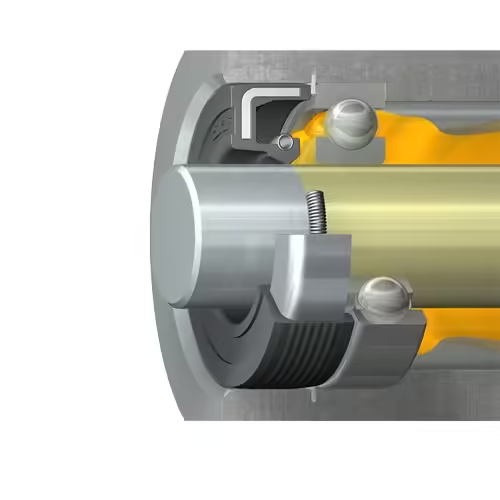
An oil seal normally has two jobs.
The first is to retain oil or grease around a rotating shaft. The second is to stop external contamination from entering the bearing housing, axle, transmission, pump, or gearbox.
In agricultural equipment, the second job is often more difficult than the first.
A tractor axle may work close to loose soil and standing water. A harvester gearbox can be surrounded by dry dust and crop fibers for long hours. A rotary tiller shaft may run in mud, abrasive soil, and water. Equipment may then be cleaned with a pressure washer that pushes water and dirt directly toward the seal position.
When the sealing lip wears or loses contact with the shaft, lubricant can escape. At the same time, fine particles may travel inward. Dust mixed with oil creates an abrasive paste that damages the shaft, lip, bearing surfaces, and gears.
This failure chain can develop gradually:
- The dust lip becomes worn or damaged.
- Fine contamination reaches the main sealing lip.
- Abrasive particles cut the lip contact area.
- Oil begins to seep around the shaft.
- Lubricant level falls or becomes contaminated.
- Bearing temperature and clearance increase.
- Shaft movement becomes greater.
- Leakage accelerates and the machine requires repair.
In the field, the cost is not limited to the replacement seal. It may include labor, lubricant, bearings, wear sleeves, shafts, gearbox components, transport, delayed harvesting, and repeat service work.
Common Oil Seal Failure Causes in Agricultural Equipment
A leaking oil seal should not automatically be treated as the original cause of the failure. It may be the first visible symptom of a problem elsewhere in the assembly.
The table below is intended as a troubleshooting guide. More than one cause may be present at the same time.
| What Is Found During Inspection | Likely Cause | What It Can Lead To | Recommended Check |
|---|---|---|---|
| Oil around the shaft or housing | Worn lip, damaged shaft, excessive oil level, pressure buildup, or installation damage | Lubricant loss and bearing overheating | Inspect the lip, shaft track, breather, lubricant level, and installation depth |
| Dirt behind the dust lip | Dust lip wear, unsuitable lip design, or damaged external protection | Abrasive contamination inside the bearing or gearbox | Review contamination level and consider a stronger exclusion design |
| Milky or cloudy gearbox oil | Water ingress, washing exposure, damaged seal, or condensation | Corrosion, poor lubrication, and bearing damage | Check wash direction, seal condition, breathers, and housing joints |
| A visible groove on the shaft | Long-term lip contact, soft shaft surface, contamination, or poor lubrication | Repeat leakage after seal replacement | Measure the groove and consider a wear sleeve or shaft repair |
| Seal lip is hard or cracked | Excessive temperature, aging, ozone exposure, or unsuitable material | Loss of lip flexibility and radial contact | Confirm actual operating temperature and rubber compound |
| Seal lip is swollen or soft | Chemical or lubricant incompatibility | Lip distortion and rapid leakage | Verify lubricant, additives, cleaning chemicals, and seal material |
| Leakage begins immediately after repair | Lip damage, reversed seal direction, dry start, tilted installation, or incorrect size | Immediate rework | Review installation tooling and assembly procedure |
| Leakage returns after a short period | Root cause not corrected | Repeat downtime and warranty risk | Inspect bearings, shaft runout, surface condition, pressure, and contamination |
Lubricant leakage is often a system problem
A wet area around the shaft does not always mean the rubber compound is poor.
The gearbox may be overfilled. A blocked breather may create internal pressure. A worn bearing may allow the shaft to move radially. The shaft may have a groove exactly where the new lip is installed. The housing bore may be damaged, allowing oil to pass around the seal outside diameter.
Before approving another replacement, repair teams should determine whether the oil is passing:
- Between the sealing lip and shaft
- Around the seal outside diameter
- Through another housing joint
- From a nearby breather or plug
- Along the shaft from another component
This distinction helps prevent the wrong corrective action.
Dust, mud, and crop residue attack the lip differently
Dry dust is especially dangerous because very fine particles can move past an inadequate dust lip and collect near the primary sealing edge.
Mud creates another problem. It can pack around the shaft, hold abrasive particles against the lip, and prevent drainage. Crop fibers may wrap around the shaft and damage the external lip mechanically.
Water exposure also needs to be defined correctly. Occasional splash, prolonged submersion, and direct pressure washing are not the same service condition. A seal suitable for rain or splash may still perform poorly when a high-pressure cleaning jet is aimed at the shaft.
Shaft and bearing condition must be checked together
A new seal cannot correct excessive shaft movement.
When bearing clearance increases, the shaft may move beyond the lip’s ability to maintain stable contact. The result is an uneven wear pattern, heat generation, and leakage that returns even though the replacement seal has the correct dimensions.
A visible shaft groove is another warning sign. Installing the same seal at the same depth places the new lip directly into the damaged track. In that situation, the repair may require a wear sleeve, shaft replacement, surface restoration, or a controlled change in seal installation depth where the assembly design permits it.
How to Choose an Oil Seal That Survives Dust, Mud, and Long Field Hours
Oil seal selection should begin with the working environment, not with the material name.
Two agricultural gearboxes using the same shaft diameter may need different seals. One may operate inside a relatively protected tractor transmission. The other may be mounted close to soil, crop residue, and wash water.
The following questions are more useful than asking for a “heavy-duty oil seal” without further details:
- What lubricant is being retained?
- What is the actual shaft temperature near the seal?
- How fast does the shaft rotate?
- Is there internal pressure?
- Is contamination dry, wet, abrasive, fibrous, or chemical?
- Is the seal exposed to direct pressure washing?
- Does the shaft run continuously or intermittently?
- How difficult is replacement during the operating season?
- What happened to the previous seal?
A supplier can make a more reliable recommendation when these conditions are known.
Oil Seal Material Options for Agricultural Machinery
The material table below should be used as a selection starting point, not as final approval data. Actual temperature capability and service life depend on the compound formulation, lubricant, additives, shaft speed, lip design, pressure, contamination, and heat generated at the sealing interface.
| Material | Indicative Service Characteristics | Main Advantages | Main Limitations | Common Agricultural Uses |
|---|---|---|---|---|
| NBR | Commonly used for moderate-temperature oil and grease service | Good mineral-oil resistance, practical wear performance, and economical cost | May harden more quickly at elevated temperature and has more limited weather resistance than HNBR or FKM | General gearboxes, tractor components, pumps, hubs, and standard aftermarket replacement |
| HNBR | Used where higher heat, wear, ozone, or aging resistance is required | Better mechanical strength, heat resistance, and environmental durability than standard NBR in many formulations | Higher cost and still requires lubricant compatibility confirmation | Harvesters, heavy-duty gearboxes, dusty equipment, long operating cycles, and demanding field service |
| FKM | Selected for higher temperatures and certain aggressive oils or chemicals | Strong heat, oil, fuel, and chemical resistance in suitable formulations | Higher cost; low-temperature flexibility and abrasion conditions must be reviewed | Hot transmission areas, engine-related positions, specialized lubricants, and chemical exposure |
| ACM | Often considered for hot oil and transmission-fluid service | Good resistance to hot oils and oxidation | Lower low-temperature flexibility and not the first choice for every abrasive external environment | Selected transmission and hot-lubricant applications |
NBR is often sufficient—but not always
NBR remains a practical choice for many tractor, pump, hub, and gearbox applications. It is widely available and usually economical for distributors that need standard replacement stock.
However, NBR should not be selected only because the original seal was black or because the dimensions match. Visual appearance does not confirm the compound, and two black seals can have very different formulations and performance.
For standard oil temperatures and moderate contamination, a correctly formulated NBR seal may provide good service. Where repeated hardening, lip wear, ozone cracking, or high field temperature is involved, HNBR or another compound may deserve evaluation.
HNBR can help when heat and abrasion occur together
HNBR is commonly considered for heavy-duty agricultural applications because it can provide improved heat resistance, mechanical strength, and aging resistance compared with general-purpose NBR.
It is not automatically the correct answer for every failed tractor oil seal. The lubricant, shaft speed, lip loading, and contamination path still need to be checked. An HNBR seal installed over a grooved shaft or damaged during assembly will still leak.
FKM should solve a real operating requirement
FKM is useful where the application involves higher temperature, aggressive lubricant chemistry, fuels, or certain chemicals. Its higher price does not make it universally better.
In a low-temperature, heavily abrasive, poorly lubricated application, another compound or seal structure may perform better. Procurement teams should avoid treating FKM as a general upgrade without confirming the complete duty conditions.
ACM is more application-specific
ACM may be suitable for selected hot-oil and transmission applications. Its use should be reviewed carefully where low-temperature starting, water, severe mud, or heavy external abrasion is expected.
For OEM projects, the compound should be approved against the actual lubricant and operating cycle rather than selected from a generic temperature chart.
Lip Design and Seal Structure Matter More Than Many Buyers Think
Buyers often compare oil seals by three dimensions: shaft diameter, housing diameter, and width.
Those dimensions are essential, but they do not describe the complete seal.
Two seals with the same size may differ in:
- Main lip geometry
- Dust-lip design
- Spring specification
- Rubber compound
- Metal-case construction
- Outside-diameter coating
- Lip surface treatment
- Radial load
- Directional pumping features
- Installation depth requirements
These differences can determine whether the seal survives one season or returns quickly with leakage.
Single-lip seals
A single-lip rotary shaft seal is mainly intended to retain lubricant. It can be suitable where the external environment is reasonably clean or where another component already provides contamination protection.
Using a basic single-lip seal in an exposed tiller, harvester, or axle position may leave the primary lip directly exposed to dust and mud.
Double-lip and dust-lip seals
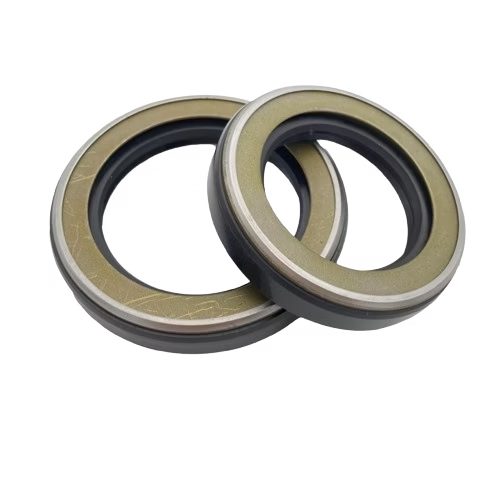
A double-lip seal adds an auxiliary lip on the air side. Its purpose is normally to reduce the amount of dirt, dust, or splash that reaches the main oil-retaining lip.
The space between the lips must be considered during installation. In some designs and applications, a suitable grease can be placed between the lips to reduce dry friction and improve contamination control. Too much grease, unsuitable grease, or incorrect assembly can also create problems, so the seal supplier’s recommendation should be followed.
The auxiliary lip is not a complete barrier against every environment. Severe mud packing, direct pressure washing, or wrapped crop fiber may require additional protection, such as a shield, labyrinth, cassette-style seal, deflector, or redesigned housing.
Spring-loaded primary lips
A garter spring helps maintain radial contact between the primary sealing lip and shaft. It can compensate for a limited amount of lip wear and dimensional variation.
The spring cannot compensate for major shaft runout, a deep wear groove, excessive pressure, or unstable bearings. Stronger spring load is also not always better, because excessive lip load may increase friction, heat, and shaft wear.
Seal direction matters
The main sealing lip normally faces the lubricant or the medium being retained.
Installing the seal in reverse is a common cause of immediate leakage. This is especially easy to miss when a replacement seal has a different external appearance from the original part.
For equipment with contamination or fluid on both sides, a standard single-direction oil seal may not be sufficient. The application may require a different arrangement or two-way sealing concept.
Engineering Factors That Affect Seal Life
Material selection receives a lot of attention, but many repeat failures are caused by the metal components around the seal.
Shaft surface finish
The shaft needs a controlled surface that supports lubrication without acting like a file against the lip.
For many conventional elastomer rotary shaft seals, a ground shaft surface in the general region of approximately Ra 0.2–0.8 μm is often used as an engineering starting point. The final requirement should come from the seal manufacturer’s drawing or technical recommendation because seal type, material, speed, and application conditions can change the acceptable range.
Surface lead is also important. Spiral machining marks can pump oil under the lip even when the measured roughness appears acceptable. A shaft may therefore pass a roughness check and still leak because of its machining pattern.
Special rotary seals can require tighter counterface conditions. Parker, for example, specifies a much narrower surface-finish range and higher hardness for one of its specialized rotary sealing systems, illustrating why shaft requirements should be matched to the actual seal design rather than copied from a general table.
During inspection, look for:
- Circumferential grooves
- Axial scratches
- Rust or pitting
- Sharp edges
- Coating damage
- Spiral machining marks
- Dirt embedded in the contact track
A fingernail catching on the wear track is a useful field warning, but proper measurement is still required when deciding whether to reuse the shaft.
Shaft hardness
A shaft that is too soft may develop a groove quickly, especially when dust reaches the contact area.
There is no single hardness value that suits every agricultural oil seal. Shaft material, speed, surface treatment, expected service life, contamination level, and seal design must all be considered. Hardened sleeves or treated shaft surfaces may be justified in positions where abrasive wear has caused repeated leakage.
The correct question is not simply, “Is the shaft hard?” It is, “Is the counterface hard and durable enough for this seal, speed, contamination level, and maintenance target?”
Runout, misalignment, and bearing movement
The lip must follow the shaft as it rotates. Excessive dynamic runout causes the contact band to move continuously, creating alternating areas of high and low lip pressure.
Misalignment can produce similar effects. One side of the lip runs heavily loaded while the opposite side loses contact.
Bearing wear makes both conditions worse. A repair company that changes the oil seal but ignores bearing movement may see the same machine return after a short period.
When repeat leakage occurs, check:
- Shaft runout at the seal position
- Bearing radial and axial clearance
- Shaft-to-housing concentricity
- Bent shafts
- Loose bearing fits
- Gear or belt loads that deflect the shaft
The acceptable values depend on seal size, shaft speed, and design. OEM drawings and seal supplier limits should take priority over general rules.
Housing bore condition
Oil can leak around the seal outside diameter as well as under the sealing lip.
The housing bore should be clean, round, free from burrs, and within the interference range required for the selected seal construction. A rubber-covered outside diameter, exposed metal case, or coated metal case may require different housing recommendations.
A damaged housing can create several problems:
- Insufficient interference
- Seal movement during operation
- Leakage along the outside diameter
- Tilted installation
- Damage to the rubber covering
- Poor concentricity with the shaft
Applying sealant without understanding the leak path can hide the real problem and make the next repair more difficult.
Pressure and ventilation
Many standard rotary shaft seals are designed for little or no sustained pressure.
A blocked breather, excessive grease filling, thermal expansion, or internal pumping action can raise pressure inside a gearbox. The lip may then lift from the shaft or wear faster.
Before specifying a pressure-capable seal, inspect the gearbox ventilation and lubricant level. Increasing seal capacity is not the best solution when the original problem is a blocked breather.
Lubrication at the sealing edge
A conventional elastomer sealing lip normally needs a thin lubricating film. Without it, the contact area can heat quickly.
Dry starts may occur when:
- The lip was not lubricated before installation
- The machine was stored for a long period
- Grease did not reach the lip
- The oil level was too low
- The seal position was poorly designed
- Two lips were assembled without suitable lubrication between them
A burnt, shiny, or hardened lip contact band can indicate excessive heat or poor lubrication.
Installation Mistakes That Cause Early Leakage
A correctly specified oil seal can fail during the first few minutes of operation if it is installed carelessly.
Check the old seal before discarding it
The removed seal contains useful failure information.
Before cleaning or throwing it away, record:
- Which side was wet
- Where dirt accumulated
- Whether the spring was still in position
- Whether the lip was cut, hard, swollen, or worn
- Whether the seal was installed squarely
- The lip contact position on the shaft
- Any markings, material code, or directional feature
Failure photos should show both sides of the seal, the shaft track, the housing, and the surrounding contamination. A single photo of a dirty seal on a workbench is rarely enough for supplier analysis.
Inspect the shaft and housing
Clean the components without damaging the sealing surfaces. Remove rust, old sealant, sharp burrs, and hardened contamination.
Do not install a new seal over:
- A sharp shaft shoulder
- An exposed keyway
- Damaged splines
- A deep wear groove
- Corrosion pits
- A burr left by seal removal
Where the lip must pass over threads, splines, or keyways, use a protective installation sleeve.
Use a tool that supports the correct area
The installation tool should apply force evenly to the seal face or reinforced case area. It should not press on the flexible lip or distort the metal case.
Direct hammer blows can bend the case and tilt the seal. Tapping around the circumference a little at a time may appear to work, but it often produces uneven depth and hidden deformation.
A press or controlled installation tool provides better alignment.
Lubricate the lip, but control contamination
Apply a lubricant compatible with the seal compound and operating medium. Avoid placing dirty grease on a new lip or using an assembly product that may attack the rubber.
The housing outside diameter may require dry installation, lubricant, or sealant depending on the seal construction and supplier recommendation. One method should not be applied to every seal.
Install squarely and confirm the final depth
A tilted oil seal creates uneven interference and uneven lip contact. Even a small angle can shorten service life at higher shaft speeds.
After installation, confirm:
- The seal is square to the housing
- The lip faces the correct direction
- The spring remains in position
- The seal depth matches the design
- The lip is not folded
- The shaft rotates without abnormal resistance
- The breather and lubricant level are correct
| Installation Error | What Usually Happens | Better Practice |
|---|---|---|
| Hammering directly on the seal | Case distortion or tilted installation | Use a flat driver or press tool sized to the seal |
| Installing the lip dry | Heat damage during initial rotation | Apply a compatible assembly lubricant |
| Dragging the lip over a keyway or spline | Cut or rolled sealing edge | Use a protective sleeve |
| Installing into a dirty bore | Outside-diameter damage or poor seating | Clean and inspect the housing before assembly |
| Reusing a grooved shaft | Leakage returns at the same contact track | Repair the shaft or install an approved wear sleeve |
| Guessing the installation direction | Immediate leakage or poor dirt exclusion | Confirm which side faces the lubricant |
| Changing the installation depth without checking clearance | Lip contacts a shoulder or wrong shaft area | Confirm drawing limits before changing depth |
| Using excessive sealant | Contamination, poor seating, or difficult future removal | Use only when specified and apply a controlled amount |
Preventive Maintenance Practices for Longer Seal Life
Oil seals do not normally require adjustment, but the conditions around them should be inspected.
For seasonal machinery, the best time to find a small leak is before the machine enters a period of continuous field work.
Before the operating season
Check for dried oil tracks, wet dust around the seal, damaged guards, blocked breathers, and bearing movement.
Rotate the shaft where practical and listen for rough bearing noise. Inspect stored machines for corrosion around exposed shaft areas. Long storage periods can also allow lips to stick to dry shaft surfaces.
During intensive operation
A quick daily inspection can identify changes before major lubricant loss occurs.
Look for:
- Fresh oil around the shaft
- Dust becoming wet near the housing
- Mud packed against the seal
- Unusual bearing noise
- Higher local temperature
- Loose guards or shields
- Wrapped crop fibers
- Repeated need to top up lubricant
A small amount of harmless assembly grease should not be confused with active leakage. The important sign is fresh lubricant continuing to appear or the lubricant level falling.
After washing
Do not aim a pressure-washing nozzle directly at the seal edge, breather, or housing joint.
After cleaning, inspect whether water has collected around the seal area. On critical equipment, lubricant condition should be checked if water ingress is suspected. Milky oil, corrosion particles, or an unexpected change in viscosity indicates that further inspection is required.
Replace related components when the evidence supports it
A repair quotation may need to include more than the seal.
Depending on inspection results, related parts may include:
- Wear sleeves
- Bearings
- Bushings
- Shafts
- Spacers
- Retaining rings
- Breathers
- Shields or deflectors
Replacing these parts increases the initial repair cost, but it may be cheaper than a second gearbox removal during harvest season.
Standard Oil Seals vs. Custom Agricultural Sealing Solutions
A custom oil seal is not necessary for every machine.
Many agricultural applications use standard rotary shaft seal sizes and can be served reliably with a correctly specified NBR, HNBR, FKM, or ACM seal.
A standard solution is usually suitable when:
- The shaft and housing dimensions are common
- The original structure has a good service history
- Temperature and speed are within normal limits
- Contamination is moderate
- Replacement is easy
- Annual demand does not justify new tooling
- A suitable catalog lip design already exists
However, a standard seal may become a false economy when the same position produces repeat leakage, warranty claims, or frequent field repairs.
| Selection Issue | Standard Oil Seal | Customized Solution |
|---|---|---|
| Dimensions | Existing standard shaft, bore, and width | Non-standard dimensions or restricted installation space |
| Material | Common commercial compounds | Application-specific compound or approved formulation |
| Contamination | Moderate dust or splash | Severe dust, mud, fibers, water, or chemical exposure |
| Lip design | Conventional single or double lip | Modified dust lip, radial load, lip geometry, or multi-stage structure |
| Development cost | Lower initial purchasing cost | Tooling, sampling, and validation may be required |
| Lead time | Often shorter | Longer during development and first production |
| Best use | Proven replacement applications | Repeated failures, OEM programs, or demanding duty cycles |
| Purchasing objective | Fast, economical supply | Lower repeat-failure and lifecycle risk |
When customization deserves serious consideration
A custom agricultural oil seal may be justified when the application involves:
- An oversized or unusual shaft
- Non-standard housing dimensions
- Very limited axial space
- Severe mud packing
- Continuous abrasive dust
- Direct water exposure
- High shaft speed
- Pressure above the capability of a standard design
- Specialized synthetic lubricants
- Fertilizer or chemical contact
- A long target maintenance interval
- High OEM warranty exposure
- Sufficient annual demand to support tooling and validation
Customization should begin with failure analysis and application data. Copying the failed seal shape in a different material may reproduce the same weakness.
Typical Agricultural Applications and Their Main Sealing Risks
Tractor axles and transmissions
Tractor axle seals work under changing loads, vibration, soil contamination, and sometimes water exposure.
Bearing condition is especially important. Axial or radial movement can open the lip contact and create repeat leakage. Distributors supplying tractor oil seals should record the exact axle position because left-side, right-side, inner, and outer seals may not share the same structure.
Harvesters
Harvester components often run for long periods in dry, dusty conditions. Fine crop dust can enter areas that appear protected, while straw and fibers may wrap around exposed shafts.
A dust lip helps, but heavily exposed positions may require a shield or more complex exclusion arrangement. The maintenance target should reflect the fact that stopping a harvester during a short harvest window carries a high operational cost.
Rotary tillers
Rotary tillers combine mud, soil, water, shock loads, and abrasive particles.
The outer sealing system often has to do more than retain gearbox oil. It must prevent packed soil from reaching the main lip. Shaft guards, deflectors, seal orientation, grease barriers, and bearing condition may all affect performance.
Irrigation pumps
Pump applications require a clear understanding of which fluid is being sealed and where the oil seal is located.
Water splash around an external shaft is different from sealing pressurized process water. A conventional gearbox oil seal should not be used as a substitute for a mechanical seal or another pump sealing system without engineering review.
Seeders and balers
Seeders and balers may use many relatively small rotating shafts. One seal failure may not destroy the entire machine immediately, but repeated contamination can create a large maintenance burden across multiple bearing points.
For aftermarket buyers, consistent part identification and stock control are often as important as unit price.
For Distributors and Repair Companies: Record the Failure, Not Only the Size
For agricultural machinery distributors and repair companies, recording only the oil seal size is often not enough.
Two seals with the same shaft diameter, housing bore, and width may have different lip designs, rubber compounds, spring loads, outside-diameter constructions, and dust-exclusion performance. Supplying the wrong structure can lead to repeated returns even when the seal fits the housing correctly.
A useful purchasing or repair record should include:
- Equipment manufacturer and model
- OEM part number
- Seal position on the machine
- Shaft, bore, and width
- Original seal markings
- Main-lip and dust-lip arrangement
- Rubber material, where confirmed
- Lubricant type
- Working temperature
- Field environment
- Failure symptom
- Shaft condition
- Bearing condition
- Photos before cleaning
- Annual demand
- Previous supplier specification
- Whether the order is for repair, distributor stock, or OEM production
Failure records are especially valuable for repeat orders. They help purchasing teams avoid substituting a basic single-lip seal for a dust-lip design simply because the nominal size is the same.
For gearbox rebuilders, the repair report should also state whether the shaft was reused, sleeved, polished, or replaced. Without this information, the next leakage complaint may be blamed on the seal even when the new lip was running on an old wear track.
For distributors, separating seals by equipment position and application reduces picking errors. A stock description such as “40 × 62 × 10 NBR oil seal” may be too general. A better record might include the equipment model, shaft position, lip type, compound, original reference, and approved replacement code.
This information also helps an oil seal manufacturer assess whether a standard seal is suitable or whether a custom structure should be discussed.
Case Example: Reducing Repeat Gearbox Leakage
The following is a representative application scenario based on buyer and repair-company feedback. It is not presented as a controlled laboratory test, and actual results depend on the machine and working conditions.
A repair company handling agricultural gearboxes found that several machines returned with oil leakage around the shaft area after relatively short field use.
The replacement seals had the correct nominal dimensions. They fitted the shaft and housing, and no obvious leakage appeared immediately after assembly. However, the machines were operating for long hours in dry harvesting conditions with heavy fine-dust exposure.
When the returned assemblies were inspected, the problem was not limited to seal size.
Fine dust had collected around the external lip and reached the primary sealing area. One shaft had a visible wear track at the lip contact position. The repair record also showed that the previous replacement seal was a standard single-lip design, although the original application had significant contamination exposure.
The repair team changed its process.
Instead of ordering the same size again, it:
- Reviewed the seal position and working environment
- Changed the specification to a double-lip HNBR oil seal
- Inspected every shaft contact surface before assembly
- Replaced the worn sleeve on the damaged shaft
- Checked bearing movement
- Lubricated the lip during installation
- Recorded the equipment model and failure condition for future orders
The important lesson was simple: repeated leakage was not solved by fitting another seal with the same dimensions.
The seal structure, rubber compound, shaft condition, bearing condition, and field environment had to be reviewed together. The improved purchasing record also reduced the risk of the repair team receiving a dimensionally correct but structurally unsuitable replacement on later orders.
For OEM and aftermarket buyers, this type of failure analysis is more useful than requesting a “better quality seal” without explaining what happened.
What Buyers Should Provide Before Ordering Agricultural Oil Seals
The most accurate oil seal recommendation begins with complete application information.
For a standard replacement inquiry, provide at least:
- Shaft diameter
- Housing bore diameter
- Seal width
- Equipment model
- OEM or existing part number
- Seal quantity
- Clear photos of both sides of the original seal
For technical selection or repeat-failure analysis, also provide:
- Lubricant name and type
- Minimum and maximum operating temperature
- Shaft rotational speed
- Rotation direction, where relevant
- Pressure or vacuum condition
- Shaft material and surface treatment
- Available shaft roughness data
- Shaft runout
- Bearing movement
- Housing material and bore tolerance
- Exposure to dust, sand, mud, crop fibers, or water
- Pressure-washing conditions
- Fertilizer, pesticide, fuel, or chemical exposure
- Failure symptoms
- Photos of the shaft wear track
- Expected service interval
- Annual purchasing demand
- OEM drawing or cross-sectional drawing
When a drawing is not available, a used sample can help identify dimensions and structure. However, a damaged or swollen seal should not be treated as the only dimensional reference because its condition may have changed during service.
For custom oil seal projects, buyers should also clarify:
- Prototype quantity
- Annual forecast
- Validation requirements
- Packaging and identification needs
- Material approvals
- Traceability requirements
- Target production date
Providing this information early reduces repeated communication and helps the supplier distinguish between a catalog replacement, a material change, and a complete custom sealing project.
Conclusion
Reducing agricultural machinery downtime is not achieved by choosing the most expensive rubber compound or repeatedly replacing a leaking seal with the same part.
A reliable solution starts by identifying how the old seal failed.
Dust may have cut the sealing lip. Water may have entered during pressure washing. The shaft may have a visible groove. Bearing movement may be opening the lip contact. The rubber compound may be incompatible with the lubricant, or the seal may have been damaged during installation.
The practical selection process is to:
- Match the compound to the lubricant, temperature, and environment
- Use a lip structure that reflects the actual contamination risk
- Inspect the shaft, bearings, housing, breather, and lubricant
- Protect and lubricate the lip during installation
- Record failure details for future repeat orders
- Consider a custom sealing solution when a standard replacement repeatedly fails
For agricultural machinery manufacturers, tractor-parts distributors, gearbox rebuilders, repair companies, and aftermarket oil seal buyers, this approach helps reduce repeat leakage, field repairs, warranty risk, and lost operating hours.
DRO Rubber Seals supplies standard and customized agricultural sealing solutions for rotating shafts, gearboxes, axles, pumps, and related equipment. For product selection or failure analysis, send the seal dimensions together with the equipment model, lubricant, working environment, failure photos, and shaft information.
Frequently Asked Questions
Why do oil seals fail more frequently in agricultural machinery?
Agricultural oil seals are exposed to dust, soil, mud, water, crop fibers, vibration, shock loading, and long seasonal operating hours. Fine contamination can damage the sealing edge, while water can affect the lubricant and corrode the shaft.
Failures may also result from worn bearings, shaft grooves, blocked gearbox breathers, improper installation, or unsuitable rubber compounds. The seal should therefore be inspected as part of the complete shaft and bearing system.
Which oil seal material is best for tractors and harvesters?
There is no single best material for every tractor or harvester.
NBR is suitable for many general oil and grease applications. HNBR may be preferred where better heat, wear, and environmental resistance are required. FKM is often considered for higher temperatures or more aggressive lubricant and chemical conditions. ACM may be used in selected hot-oil or transmission applications.
The final material should be chosen according to the lubricant, temperature, shaft speed, contamination, pressure, low-temperature requirements, and seal design.
Should I choose a single-lip or double-lip oil seal for farm equipment?
A single-lip seal may be suitable in a protected and relatively clean position. A double-lip or dust-lip seal is usually more appropriate where dust, dirt, mud, crop residue, or water splash can reach the shaft.
However, an auxiliary lip is not a complete solution for severe contamination. Exposed applications may also need a shield, deflector, labyrinth, grease barrier, or redesigned seal arrangement.
How can I prevent dust and mud from damaging oil seals?
Begin by selecting a seal with suitable external contamination protection. Keep guards and deflectors in place, prevent mud from packing around the shaft, and avoid directing pressure-washing jets at the sealing edge.
During repair, inspect the shaft for abrasive wear and check whether dirt has passed beyond the dust lip. In severe applications, review the complete exclusion system rather than replacing the same seal repeatedly.
What shaft surface finish is recommended for rotary shaft oil seals?
Many conventional elastomer rotary shaft seals use a ground counterface in the general region of approximately Ra 0.2–0.8 μm as a starting point. The exact requirement depends on the seal type, compound, shaft speed, pressure, and manufacturer.
Surface lead, hardness, scratches, corrosion, and wear grooves are also important. Always use the seal supplier’s drawing or technical recommendation for final approval.
How often should agricultural oil seals be inspected?
Seasonal machinery should be inspected before intensive field operation and again after the season. During harvesting, planting, or other continuous work, a brief daily check for fresh leakage, wet dust, mud buildup, bearing noise, and abnormal temperature can identify developing problems.
Inspection frequency should increase in severe dust, mud, water, or pressure-washing environments.
Should an oil seal be replaced whenever the gearbox is opened?
Replacement is often practical when the seal has been disturbed, removed, aged, damaged, or exposed during a major gearbox repair. Reusing an old seal can create unnecessary leakage risk.
The shaft contact area and bearing condition should also be inspected. Installing a new seal over a damaged shaft does not provide a complete repair.
When is a custom oil seal better than a standard seal?
A custom oil seal may be justified when the application has non-standard dimensions, severe contamination, unusual pressure, specialized lubricant, limited installation space, high shaft speed, chemical exposure, long maintenance targets, or repeated failures with standard parts.
Annual demand, tooling cost, validation needs, and expected reduction in warranty or maintenance risk should be reviewed before starting customization.
Why does a new agricultural gearbox oil seal still leak?
Immediate or early leakage may be caused by lip damage, reversed installation, a dislodged spring, dry assembly, a tilted seal, incorrect depth, a grooved shaft, bearing movement, excessive lubricant level, blocked ventilation, or leakage around the outside diameter.
The exact leak path should be identified before another replacement is installed.
What information should I send to an oil seal manufacturer?
Provide the shaft diameter, housing bore, seal width, equipment model, part number, lubricant, temperature, shaft speed, pressure, contamination exposure, failure symptom, and order quantity.
For repeat failures or custom projects, also send drawings, shaft data, bearing condition, installation details, failure photos, annual demand, and the target service interval.
Website: drorubber.com
WhatsApp: +0086 15815831911
WeChat: +0086 13784044874