Transmission seals are small components, but they protect one of the most expensive systems in a vehicle or industrial drivetrain. When a transmission seal goes bad, the problem rarely stays “small” for long. What begins as a fluid leak can turn into pressure loss, overheating, erratic shifting, accelerated wear of gears and clutches, and in severe cases, complete transmission failure.
For buyers, maintenance teams, and OEM engineers, this topic is not just about identifying leakage. It is about understanding how seal failure affects uptime, repair cost, equipment reliability, and material selection. If you are sourcing replacement transmission seals, the right question is not only “Which size fits?” but also “Which material, lip design, and operating profile will reduce the total cost of failure?”
This guide explains what happens when a transmission seal fails, the most common warning signs, root causes, real-world consequences, and how to select a better replacement seal for automotive and industrial applications.
What Does a Transmission Seal Actually Do?
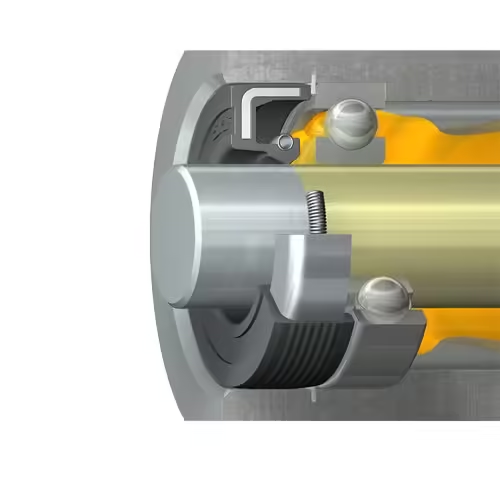
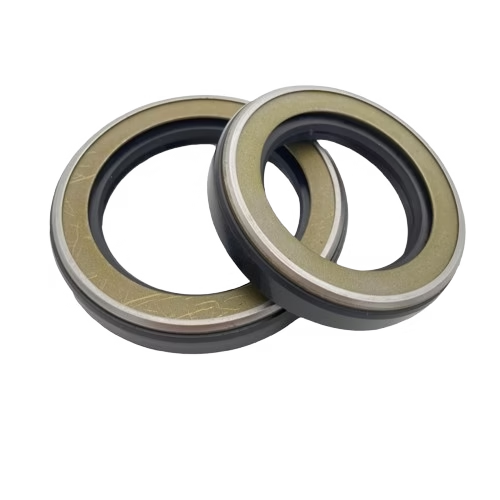
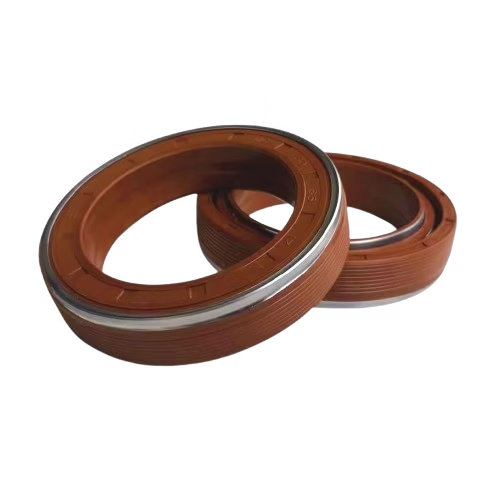
A transmission seal is designed to retain lubricant or transmission fluid, exclude contaminants, and help maintain the hydraulic integrity of the system. In both automotive transmissions and industrial power transmission units, seals sit at critical interfaces where shafts rotate, housings meet, or internal pressure must be controlled. SKF notes that shaft seals operate between rotating and stationary components and are fundamental for fluid retention and contamination exclusion.
Main functions of transmission seals
- Prevent automatic transmission fluid or gear oil leakage
- Maintain hydraulic pressure for proper shifting response
- Block dust, water, and abrasive contaminants from entering the system
- Protect bearings, clutch packs, gears, and valve body components from premature wear
- Reduce the risk of overheating caused by low fluid volume
Common transmission seal types
Depending on the application, transmission sealing points may include:
- Input shaft seals
- Output shaft seals
- Axle seals
- Torque converter seals
- Valve body and port seals
- Static cover gaskets and bonded sealing interfaces
In automotive transmissions, dynamic seals and port seals are especially important because fluid loss does not just create a mess — it can reduce hydraulic efficiency inside the transmission itself. SKF’s automotive transmission sealing overview highlights radial lip shaft seals, port seals, bonded pistons, and covers as typical sealing elements in modern transmission systems.
What Happens When a Transmission Seal Goes Bad?
When a transmission seal fails, the first visible symptom is usually fluid leakage. But the real damage happens inside the system.
Stage 1 — Fluid starts leaking
A worn, hardened, cracked, or improperly installed seal allows transmission fluid to escape. Even a slow leak can become serious because many transmission systems depend on a precise fluid volume for lubrication, cooling, and hydraulic actuation.
Stage 2 — Fluid level drops and pressure stability declines
As fluid level falls, the transmission may no longer maintain ideal hydraulic response. In automotive systems, this often shows up as:
- delayed engagement when shifting into Drive or Reverse
- slipping during acceleration
- rough or harsh shifting
- hesitation between gears
Cars.com notes that low transmission fluid can contribute to delayed engagement and other drivability problems, and that slipping, rough shifts, and shift delays are major warning signs requiring diagnosis.
Stage 3 — Heat and friction rise
Transmission fluid does more than lubricate. It also helps dissipate heat. Once fluid level drops, internal temperatures can climb, oxidation accelerates, and elastomer seals degrade even faster. This creates a failure loop:
seal leak → low fluid → higher heat → faster seal deterioration → greater leak
Stage 4 — Internal components wear faster
If the seal failure is ignored, internal clutches, bushings, gears, and bearings may begin to wear abnormally. In industrial gearboxes or drive systems, contamination ingress can add another layer of damage by introducing particles that scratch sealing surfaces and wear rotating parts.
Stage 5 — Full transmission failure becomes possible
At this point, the cost difference between a simple seal replacement and a major rebuild becomes dramatic. What could have been solved with a low-cost maintenance part may end in clutch replacement, shaft repair, sleeve repair, or complete transmission overhaul.
Symptoms of a Bad Transmission Seal
This is the section many buyers and maintenance people search for first. The symptoms below are the most common indicators that a transmission seal may be failing.
1. Visible fluid leakage
This is the clearest sign. You may see red, pink, or dark fluid:
- under the vehicle
- around the transmission housing
- near axle exits or shaft interfaces
- on nearby underbody components
2. Low transmission fluid level
A leaking seal gradually lowers the available fluid. In some systems, the dipstick or service port check will show the loss. In sealed modern systems, technicians may have to verify level through the manufacturer’s service procedure.
3. Delayed gear engagement
If the transmission takes longer than normal to engage Drive or Reverse, hydraulic pressure instability may be involved. Low fluid caused by seal leakage is one common reason.
4. Gear slipping
The engine revs, but power transfer feels weak or inconsistent. Slipping can be an early warning sign of fluid-related pressure loss.
5. Overheating or burning smell
Low fluid reduces cooling performance. Once the transmission runs hot, the fluid oxidizes faster and sealing materials age more quickly.
6. Noise, vibration, or erratic shifting
When lubrication and pressure control deteriorate, the drivetrain may exhibit whining, harsh shifts, vibration, or unstable response.
Why Do Transmission Seals Fail?
Seal failure is rarely random. In most cases, the reason can be traced to heat, friction, chemistry, installation quality, or an incorrect material choice.
Thermal degradation
Continuous exposure to elevated operating temperature is one of the leading causes of seal hardening, cracking, and loss of elasticity. SKF and Timken both show that seal material temperature capability varies significantly by elastomer and design. Standard NBR is widely used because it is economical, but higher-temperature service may require HNBR, FKM, or PTFE-based designs depending on fluid chemistry and shaft conditions.
Mechanical wear
Lip contact against a rotating shaft always generates friction. Over time, poor shaft finish, eccentricity, contamination, or insufficient lubrication can wear the lip and the shaft surface together.
Chemical incompatibility
Not all seal materials tolerate all transmission fluids equally. Oxidized fluids, aggressive additives, or non-recommended lubricants can swell, harden, or embrittle elastomers. PTFE is often chosen where fluid aggressiveness and temperature exceed normal elastomer limits. SKF notes PTFE offers broader chemical resistance and a wider temperature range than typical FKM solutions in many sealing applications.
Improper installation
A good seal can fail on day one if it is cocked, cut, over-compressed, or installed on a damaged shaft. Misalignment and lip damage remain among the most expensive “avoidable” causes of leakage.
Aging and environment
Ozone, oxidation, long-term compression, storage conditions, and exposure to dirt or moisture all influence seal life. Even if temperature is not extreme, aging can reduce elasticity and sealing force over time.
Material Comparison for Transmission Seal Buyers
For procurement teams and engineers, material choice is one of the biggest cost-versus-performance decisions. The cheapest seal is not always the lowest-cost option once downtime, leakage risk, and replacement frequency are included.
Transmission seal material comparison table
| Material | Typical Temp Range* | Fluid/Chemical Resistance | Wear/Friction Performance | Relative Cost | Best Use Case |
|---|---|---|---|---|---|
| NBR | about -40°C to 100–120°C | Good for standard oils and many transmission fluids | Good general-purpose | Low | Standard automotive and general industrial service |
| HNBR | about -40°C to 150°C | Better heat and oxidation resistance than NBR | Improved durability | Medium | Higher-temperature or longer-life applications |
| FKM | about -20°C to 150–200°C+ | Excellent for high-temperature oils and aggressive fluids | Strong high-temp stability | High | Premium automotive, heavy-duty, demanding environments |
| PTFE | varies widely, often far above elastomers | Excellent chemical resistance | Very low friction, excellent dry-run tolerance | High to very high | Severe temperature, aggressive media, high-speed shaft systems |
*Exact temperature limits depend on seal design, pressure, shaft speed, lubricant, and compound formulation. SKF and Timken both emphasize that material selection must be matched to the actual operating conditions rather than catalog temperature alone.
Buyer takeaway
- Choose NBR when cost control matters and service conditions are moderate
- Choose FKM when heat, fluid chemistry, and longevity matter more than upfront price
- Choose PTFE when friction, chemical resistance, or severe operating conditions justify a premium design
- Do not select only by size; always match the seal to fluid, shaft speed, temperature, and contamination exposure
Cost vs Performance: What Buyers Often Get Wrong
A common sourcing mistake is comparing seals only by unit price.
The low-price trap
A low-cost transmission seal may look competitive on quotation day, but it can become expensive if it causes:
- frequent leakage claims
- repeated labor cost for replacement
- fluid loss and transmission damage
- machine downtime or vehicle service interruption
- warranty disputes with end customers
The better way to compare suppliers
Buyers should compare seals using total operating cost, not just purchase price.
Better purchasing criteria
- Material suitability for actual operating temperature
- Compatibility with transmission fluid chemistry
- Lip design and spring design quality
- Dimensional consistency and molding quality
- Supplier control over rubber compound and metal bonding
- Availability of custom sizes or upgraded materials
- Lead time and batch consistency
A premium seal that lasts 2–3 times longer can be the cheaper choice in real operations.
Real-World Application Scenarios
Passenger vehicle automatic transmission
A leaking axle or output seal may first appear as a small fluid stain. If ignored, fluid level drops, shifting becomes delayed, and heat increases. The vehicle may still drive for a while, but internal clutch wear accelerates.
Heavy-duty commercial vehicle
In trucks and construction equipment, seal failure often becomes more costly because operating loads are higher and repair downtime is more expensive. Here, FKM or upgraded designs may justify the higher initial price.
Industrial gearbox or power transmission unit
In industrial machinery, the consequences are broader than fluid loss. Dust, moisture, or abrasive contaminants can enter through a failed seal, damaging gears and bearings while stopping production. In these cases, the right seal is an uptime decision, not just a spare part.
How to Prevent Transmission Seal Failure
Prevention is cheaper than rebuild. A strong sealing strategy combines material choice, installation control, and maintenance discipline.
1. Select the right material for the real operating window
Do not choose seals by catalog popularity alone. Verify:
- operating temperature range
- type of transmission fluid or oil
- shaft speed
- pressure level
- contamination exposure
- expected service life
2. Inspect shaft condition
Even a high-quality seal will leak on a worn, grooved, or rough shaft. If the shaft has damage, consider repair sleeves or surface restoration before replacing the seal.
3. Use correct installation methods
- lubricate the lip when required
- avoid twisting or cutting during assembly
- confirm alignment and press depth
- protect the lip from sharp shaft edges
- use correct tooling, not improvised force
4. Monitor fluid condition
Fluid that is dark, burnt, oxidized, or contaminated increases seal stress and often signals broader transmission problems. Cars.com notes that burnt-smelling or dark transmission fluid and metallic flecks are important warning signs.
5. Replace before secondary damage begins
The ideal time to replace a failing transmission seal is before slipping, overheating, and internal wear become obvious.
How to Choose the Right Replacement Transmission Seal Supplier
For B2B buyers, replacement seals should be sourced from a manufacturer that can do more than copy dimensions.
Ask these questions before purchasing
- Which material do you recommend for my fluid and temperature range?
- Is this seal better in NBR, HNBR, FKM, or PTFE?
- What shaft surface finish is recommended?
- Can you supply single-lip or double-lip options?
- Can you support custom size or upgraded compound requests?
- Do you have experience with automotive and industrial transmission applications?
- What is the expected lead time for repeat orders?
Procurement advice
If your application faces frequent leakage, do not keep rebuying the same low-grade seal. Upgrade the material, review the shaft condition, and evaluate whether the seal geometry itself should change.
That is where a technical sealing partner adds value: not just selling parts, but reducing failure frequency.
Final Answer — What Happens When a Transmission Seal Goes Bad?
When a transmission seal goes bad, fluid starts leaking, hydraulic stability may decline, the transmission runs hotter, and internal components face higher wear. The earliest signs are usually fluid leakage, low fluid level, delayed engagement, slipping, harsh shifting, or a burning smell. If left uncorrected, a relatively inexpensive seal problem can escalate into major drivetrain damage, unplanned downtime, and high repair cost.
For buyers and engineers, the lesson is simple: the right transmission seal is a reliability component, not just a rubber part. Material choice, installation quality, and operating condition matching determine whether the seal protects the system — or becomes the starting point of failure.
For more professional sealing solutions and technical support, please visit: drorubber.com
WhatsApp: +0086 15815831911
WeChat: +0086 13784044874