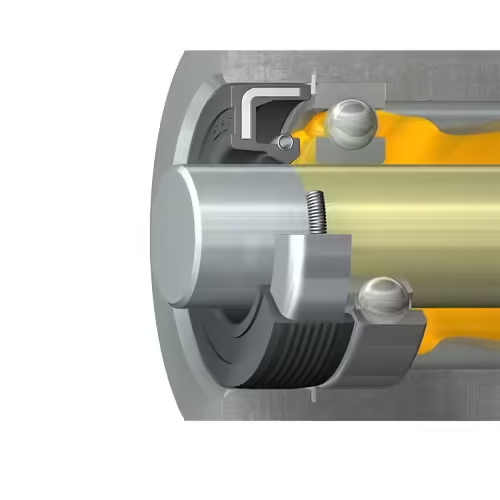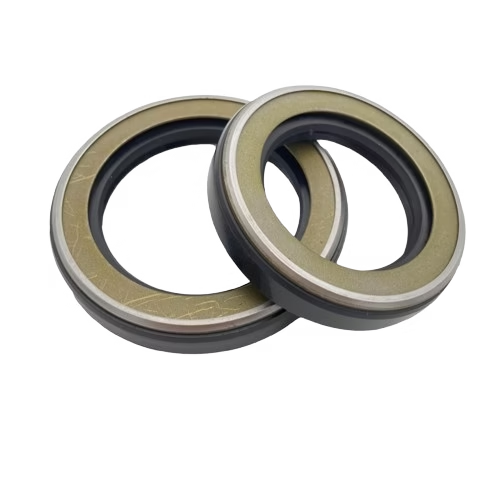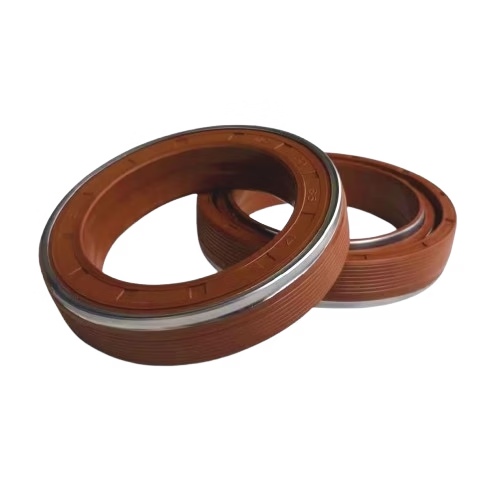
A rotary tiller that leaks oil after seal replacement is not just a maintenance problem. For OEMs, repair companies, and distributors, repeated oil leakage means warranty complaints, gearbox damage, field downtime, and customers questioning the whole machine quality. From my experience, many of these failures are not caused by a “bad oil seal” alone. The real problem is often that a standard TC oil seal is being used in a working environment that is far more aggressive than the seal structure was designed to handle.
Rotary tillers work close to soil, dust, mud, crop residue, sand, and water splash. In this environment, size matching does not mean application matching. A seal with the correct inner diameter, outer diameter, and width may still fail quickly if the lip structure, dust protection, spring support, shaft condition, and rubber material are not suitable.
Quick Answer: Why Do Standard TC Oil Seals Leak in Rotary Tillers?
Standard TC oil seals often leak in rotary tillers because they are not always designed for long-term exposure to heavy dust, soil, mud, crop debris, and abrasive particles. In agricultural machinery, contaminants can enter the sealing area, wear the sealing lip, damage the shaft contact surface, reduce lip contact stability, and finally cause repeated oil leakage.
For rotary tillers working in high-dust and high-mud conditions, seal selection should not be based only on size. The oil seal structure, dust lip design, spring support, rubber material, shaft condition, lubrication, and installation quality must all be evaluated. In severe applications, a DC double-lip, double-spring oil seal with a reinforced dust lip may provide better sealing stability than a standard TC oil seal.
Why Oil Seal Failure Is Common in Rotary Tiller Applications
Rotary Tillers Work in Highly Contaminated Environments
Rotary tillers operate directly near soil and crop residue. The seal area may be exposed to:
- Fine dust
- Mud and wet soil
- Sand and abrasive particles
- Fertilizer residue
- Plant fibers and crop debris
- Water splash
- Gear oil contamination
- Impact and vibration
Here is the point many people miss: the oil seal is not working in a clean gearbox laboratory. It is working in the field, often under shock load, poor cleaning conditions, and unstable shaft movement.
The Seal Is Often Installed Near the Most Contaminated Area
The gearbox output shaft, rotary shaft, or blade shaft area is often close to soil impact and dust accumulation. This makes the oil seal a critical barrier between the gearbox lubricant and the external agricultural environment.
Once mud and abrasive particles collect around the shaft, the dust lip becomes the first defense line. If this lip is weak, unsupported, deformed, or already worn, external contaminants can reach the main sealing lip.
Leakage Is Not Always Caused by Poor Seal Quality
This is where many buyers make mistakes. They replace the same TC oil seal again and again, then blame the supplier when the leakage returns. In many cases, the seal itself is not defective. The problem is that the seal structure does not match the working condition.
A cheaper seal can become more expensive if it fails early. The cost is not only the seal price. It includes oil loss, labor, downtime, customer complaints, gearbox wear, and sometimes bearing damage.
What Is a Standard TC Oil Seal?
Basic Structure of a TC Oil Seal
A standard TC oil seal usually includes:
- Rubber outer diameter
- Metal reinforcement case
- Main sealing lip
- Garter spring on the main lip
- Auxiliary dust lip
TC oil seals are widely used because they are economical, easy to source, and suitable for many general rotating shaft applications.
Main Function of TC Oil Seals
The main function of a TC oil seal is to retain lubricating oil or grease inside the equipment while providing basic protection against external dust.
The main lip controls oil leakage. The auxiliary dust lip helps reduce external contamination. For many clean or moderately dusty applications, this structure works well.
Typical Applications for TC Oil Seals
TC oil seals are commonly used in:
- Motors
- Gearboxes
- Pumps
- Reducers
- Agricultural machinery
- Construction machinery
- General rotating shafts
For standard gearbox sealing, a TC oil seal is often a cost-effective choice. You can view related oil seal products at https://drorubber.com/oil-seals/ for general industrial and machinery applications.
Limitation of Standard TC Seals in Severe Agricultural Conditions
The problem is not that TC oil seals are useless. The problem is using them in the wrong place.
The auxiliary dust lip of a standard TC seal may be enough for moderate dust exposure, but it may not provide enough protection in rotary tillers working continuously in mud, soil, sand, and abrasive particles. The dust lip usually has no spring support, so its contact force may not remain stable when mud accumulation, vibration, shaft runout, or lip wear occurs.
Working Principle of Rotary Shaft Oil Seals in Agricultural Machinery
How the Main Sealing Lip Retains Oil
The main sealing lip contacts the rotating shaft with controlled radial force. The garter spring helps maintain lip pressure and compensates for minor wear during operation.
A stable oil film between the lip and shaft is important. If the lip runs dry, overheats, or is attacked by abrasive particles, it can wear quickly. Once the lip edge is damaged, oil can escape along the shaft surface.
How the Dust Lip Blocks External Contaminants
The dust lip is designed to reduce the entry of external particles. In standard TC oil seals, this dust lip is usually lighter than the main lip and normally does not have spring support.
In rotary tiller applications, the dust lip faces soil, mud, sand, water splash, and crop debris. If it cannot maintain stable shaft contact, contaminants can pass through and reach the main sealing lip.
Why Lip Contact Stability Matters
Lip contact stability directly affects leakage risk. If shaft runout, vibration, mud pressure, or wear causes unstable lip contact, the seal may lose its protective function even when the dimensions are correct.
Size matching does not mean application matching. A 40 × 62 × 10 oil seal, for example, may have very different performance depending on lip geometry, spring design, rubber compound, and dust protection structure.
Why Standard TC Oil Seals Leak in Dusty Rotary Tiller Machinery
Cause 1: Insufficient Dust Lip Protection
In rotary tillers, dust and soil particles constantly attack the seal area. A standard TC dust lip may not be strong enough to stop abrasive contaminants from entering the sealing interface.
When the dust lip loses contact or wears out, the main lip becomes exposed to contamination. That is when leakage risk increases quickly.
Cause 2: Abrasive Wear on the Sealing Lip
Dust, sand, and mud can act like grinding media. Once they enter the lip contact area, they gradually wear the rubber lip and reduce sealing pressure.
This type of failure may not appear immediately. The machine may work for a period, then leakage starts as the lip edge loses its sharp sealing function.
Cause 3: Shaft Surface Damage
A contaminated sealing zone can damage the shaft surface. Scratches, grooves, rust, or roughness on the shaft can destroy the oil film and create leakage paths.
My practical advice is simple: never install a new seal on a damaged shaft and expect a miracle. If the shaft already has grooves from the old seal, the new seal may leak quickly.
Cause 4: Dust Lip Deformation Under Mud and Debris
Mud accumulation may press against the dust lip and cause deformation. If the dust lip cannot recover or maintain contact, contaminants can enter more easily.
This is especially common when the seal is installed in an exposed area without enough external protection.
Cause 5: Vibration and Shaft Runout
Rotary tillers often operate under impact load. Shaft runout, vibration, and bearing wear can reduce sealing stability and increase lip wear.
Even a good seal cannot compensate forever for poor shaft condition or excessive movement.
Cause 6: Incorrect Seal Selection Based Only on Size
Many buyers choose oil seals only by inner diameter, outer diameter, and thickness. This is a low-level but very common mistake.
For dusty agricultural applications, buyers must also confirm:
- Seal structure
- Lip design
- Dust lip strength
- Spring support
- Rubber material
- Shaft speed
- Shaft surface condition
- Mud and dust exposure
- Installation direction
- Gear oil compatibility
Failure Analysis Table: Common Leakage Causes in Rotary Tiller Oil Seals
| Failure Cause | Typical Symptom | Possible Technical Reason | Recommended Check | Buyer Decision Advice |
|---|---|---|---|---|
| Dust lip wear | Leakage after short service time | Dust and sand entered the seal area | Inspect dust lip and external contamination | Consider reinforced dust lip or DC structure |
| Main lip damage | Oil leakage around shaft | Abrasive particles damaged sealing lip | Check lip edge and shaft contact area | Do not replace with same structure blindly |
| Shaft groove | Repeated leakage after replacing seal | Shaft surface already worn | Inspect roughness and groove depth | Repair shaft or use shaft sleeve |
| Seal hardening | Lip cracking or poor elasticity | High temperature, oil incompatibility, aging | Check rubber material and oil type | Consider HNBR, FKM, or special compound |
| Seal deformation | Uneven lip contact | Poor installation or housing tolerance issue | Check installation tools and bore condition | Improve installation process |
| Mud accumulation | External lip blocked or deformed | Heavy mud and soil impact | Inspect exposed shaft area | Add external protection or reinforced seal |
| Spring displacement | Sudden leakage | Shock, vibration, or incorrect assembly | Inspect spring position and seal structure | Consider double-spring structure |
TC Oil Seal vs DC Double-Lip Double-Spring Oil Seal
Why DC Oil Seals Can Be More Suitable for Rotary Tillers
Compared with a standard TC oil seal, a DC oil seal can provide stronger two-way sealing ability. A DC structure usually has two main lips and two springs, which helps improve sealing force and lip stability on the shaft.
For rotary tillers, this matters because the seal must not only retain gear oil. It must also resist external dust, mud, and abrasive soil.
Reinforced Dust Lip Design for High-Dust Applications
Based on buyer feedback from rotary tiller applications, standard TC seals may fail because the dust lip is too weak for heavy soil and dust exposure.
A reinforced dust lip can help improve resistance against external contaminants. In severe agricultural applications, the dust-side lip should not be treated as a small secondary feature. It is one of the most important parts of the sealing system.
Additional Spring Support on the Dust Lip
Adding spring support to the dust-side lip can help the lip maintain more stable contact with the shaft surface. This reduces the chance of mud, dust, and abrasive particles entering the sealing area.
This is not only a price issue. It is a reliability issue. If the dust-side lip loses contact, the main lip will face contamination directly.
When DC Structure Is Better Than TC Structure
A DC oil seal is more suitable when the application has:
- High dust exposure
- Mud or soil impact
- Frequent outdoor operation
- Repeated leakage with standard TC seals
- Shaft vibration or unstable working conditions
- Higher demand for two-way sealing protection
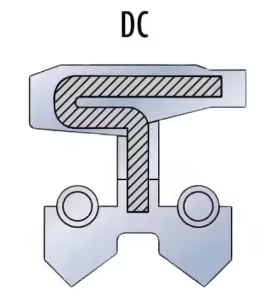
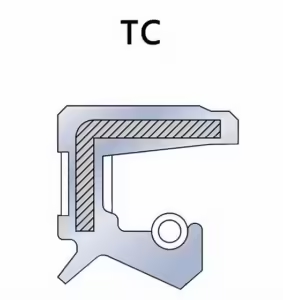
Structure Comparison Table: TC Oil Seal vs DC Oil Seal
| Item | Standard TC Oil Seal | DC Double-Lip Double-Spring Oil Seal | Practical Meaning for Buyers |
|---|---|---|---|
| Main sealing lip | Single main lip | Double main lips | DC provides stronger sealing support |
| Spring design | One spring on main lip | Two springs | Better contact stability under vibration |
| Dust protection | Basic auxiliary dust lip | Stronger sealing and dust blocking ability | More suitable for soil and mud exposure |
| Lip contact stability | Moderate | Higher | Lower risk of contaminant entry |
| Resistance to mud and dust | Limited in severe conditions | Better for harsh agricultural environments | Better choice for rotary tillers |
| Cost | Lower | Higher | TC saves initial cost; DC may reduce failure cost |
| Suitable environment | General rotating shaft applications | Dusty, muddy, abrasive rotary shaft applications | Choose based on working condition, not only price |
| Typical use | Gearboxes, motors, pumps | Rotary tillers, agricultural gearboxes, exposed shafts | DC is more suitable for severe field operation |
Practical Case Study: Rotary Tiller Leakage Caused by Standard TC Seal Failure
Customer Application Background
A rotary tiller customer experienced repeated oil leakage while using a standard TC oil seal. The machinery operated for long periods in soil, dust, mud, and impurity-heavy environments.
The customer initially focused on seal size. The dimensions were correct, but leakage still happened repeatedly.
Initial Seal Problem
Based on the application information, the original TC oil seal appeared to have insufficient dust resistance for the working environment. During operation, soil and fine abrasive particles likely entered the sealing area. The sealing lip was gradually worn by contaminants, which caused repeated leakage.
Technical Analysis
The failure was not simply a dimensional issue. The key problem was that the standard TC structure could not provide enough dust protection and lip support under the actual agricultural working conditions.
Possible risk factors included:
- Weak dust lip contact force
- Abrasive soil particles entering the lip area
- Mud accumulation around the shaft
- Shaft surface wear
- Unstable lip contact caused by vibration
- Insufficient external contamination protection
Recommended Seal Improvement
After reviewing the application environment, the original TC oil seal was replaced with a DC double-main-lip, double-spring oil seal structure.
The improved design included:
- Double main lips for stronger two-way sealing
- Double springs for more stable lip contact force
- Thickened dust lip for better resistance against mud and dust
- Additional spring support on the dust-side lip
- Improved contact stability between the dust lip and shaft surface
Result After Replacement
After changing to the improved DC oil seal structure, the customer’s leakage problem was significantly reduced. This case shows that in high-dust agricultural machinery, oil seal selection should not be based only on standard dimensions.
Seal structure, dust resistance, lip support, shaft condition, and operating environment must be considered together.
Material Selection for Rotary Tiller Oil Seals
NBR Oil Seals for General Agricultural Gear Oil Applications
NBR is commonly used because it offers good oil resistance, reasonable wear resistance, and cost efficiency. It is suitable for many standard agricultural gearbox applications.
Typical reference range:
| Material | Typical Temperature Range |
|---|---|
| NBR | Approx. -30°C to +100°C, depending on compound and working conditions |
NBR is usually the first choice when the application uses standard gear oil, the temperature is moderate, and cost control is important.
FKM Oil Seals for Higher Temperature or Chemical Exposure
FKM may be selected when the seal is exposed to higher temperatures, aggressive oil additives, fuel, or chemical environments.
Typical reference range:
| Material | Typical Temperature Range |
|---|---|
| FKM | Approx. -20°C to +200°C, depending on compound and working conditions |
However, FKM is not automatically better for every rotary tiller. If the main problem is abrasive mud and dust, seal structure and shaft protection may be more important than simply changing from NBR to FKM.
For buyers comparing rubber compounds, the material selection guide at https://drorubber.com/fkm-vs-nbr-oil-seals/ can help evaluate temperature, oil resistance, and cost differences.
When to Consider Special Compounds
Special rubber compounds may be needed when the application involves:
- High abrasive dust
- Fertilizer or chemical exposure
- Long outdoor storage
- High shaft speed
- Poor lubrication
- High temperature gearbox operation
- Mixed oil and mud contamination
Material selection should not be separated from structure selection. A good compound with a weak dust lip may still fail in severe rotary tiller applications.
Material Comparison Table for Agricultural Oil Seals
| Material | Oil Resistance | Dust/Abrasion Resistance | Temperature Range | Cost Level | Suitable Use | Buyer Decision Advice |
|---|---|---|---|---|---|---|
| NBR | Good | Moderate to good | Approx. -30°C to +100°C | Low to medium | General agricultural gearbox seals | Best cost-performance choice for standard conditions |
| HNBR | Very good | Better than standard NBR | Approx. -30°C to +150°C | Medium to high | Higher durability agricultural machinery | Consider when NBR ages or wears too quickly |
| FKM | Excellent | Moderate | Approx. -20°C to +200°C | High | High-temperature or chemically demanding applications | Use when temperature or oil additives justify the cost |
| ACM | Good for hot oil | Moderate | Approx. -20°C to +150°C | Medium | Transmission and gearbox oil environments | Suitable for certain hot oil applications |
Key Engineering Factors Before Selecting a Rotary Tiller Oil Seal
Shaft Diameter and Housing Size
Basic dimensions must be confirmed:
- Shaft diameter
- Housing bore diameter
- Seal width
- Chamfer design
- Installation depth
These dimensions are necessary, but they are only the starting point.
Shaft Surface Roughness
The shaft surface must be smooth enough to support stable sealing but not so polished that it cannot retain a proper oil film.
Recommended check points include:
- Shaft scratches
- Spiral machining marks
- Rust
- Grooves from old seals
- Uneven wear
If spiral machining marks exist, oil may be pumped along the shaft surface and cause leakage.
Shaft Hardness and Wear Resistance
In abrasive agricultural environments, a soft or worn shaft can quickly develop grooves. Shaft sleeves or improved shaft treatment may be required.
Replacing only the rubber seal without repairing a damaged shaft is one of the fastest ways to repeat the same failure.
Shaft Speed and Temperature
Higher shaft speed increases friction heat. The selected rubber material and lip design must handle the working speed and temperature.
Excessive temperature can accelerate rubber aging, hardening, cracking, and compression set.
Lubrication Condition
Poor lubrication causes heat buildup and lip wear. Gear oil condition should be checked regularly, especially if water or soil contamination is possible.
Dirty oil or milky oil may indicate contamination, water ingress, or internal sealing problems.
Pressure Condition
Most standard radial shaft seals are designed for low-pressure applications. If internal gearbox pressure is high, a special pressure-resistant seal design may be needed.
Pressure can force oil past the lip even when the seal size is correct.
External Contamination Level
For rotary tillers, contamination level is a decisive factor. The seal must be selected according to dust, mud, soil, water, and debris exposure.
This is why a seal that works well in a clean reducer may fail quickly on a rotary tiller blade shaft.
When a Standard TC Oil Seal Is Still Acceptable
A standard TC oil seal may still be suitable when:
- Dust exposure is light or moderate
- The seal is protected by an external cover
- Shaft runout is controlled
- Gearbox pressure is low
- Lubrication is stable
- Operating hours are not severe
- Replacement intervals are acceptable
For price-sensitive applications with controlled contamination, TC seals can still be a reasonable choice.
When Not to Use a Standard TC Oil Seal
A standard TC oil seal may not be the best choice when:
- The machine works directly in soil or mud
- Leakage happens repeatedly after replacement
- The dust lip wears quickly
- The shaft area is exposed to sand or crop debris
- The machine works outdoors for long periods
- The application has vibration, impact, or shaft runout
- The customer requires longer service life and fewer maintenance stops
In these conditions, choosing the cheapest TC seal may reduce the purchase cost but increase the total failure cost.
Standard Seal vs Customized Oil Seal Solution
Why Standard Size Does Not Mean Standard Performance
Two oil seals with the same dimensions can perform very differently depending on:
- Lip design
- Spring force
- Rubber material
- Case structure
- Dust protection design
- Grease between lips
- Contact angle
- Sealing direction
This is why professional seal selection should start from working conditions, not only from a size list.
When a Customized Seal Is Required
A customized oil seal may be needed when:
- Standard TC seals leak repeatedly
- The seal works in high-dust or muddy conditions
- The shaft has special movement or vibration
- The customer needs longer maintenance intervals
- The equipment has limited installation space
- The working medium is not standard gear oil
- A reinforced dust lip or special spring design is required
DRO Rubber Seals helps buyers review size, material, structure, shaft condition, working medium, drawings, samples, failure photos, and custom requirements before production. For applications where standard products cannot solve repeated leakage, custom seal development can reduce trial-and-error purchasing risk. You can review custom rubber seal solutions at https://drorubber.com/
Customizable Design Options
Possible customization options include:
- DC double-lip double-spring structure
- Thickened dust lip
- Additional spring on dust lip
- Special rubber compound
- Improved lip angle
- Reinforced metal case
- Modified outer diameter design
- Special grease between lips
- Cassette-style sealing solution for severe contamination
Standard TC Seal vs Customized DC Seal Decision Table
| Application Condition | Standard TC Seal | Customized DC Seal | Selection Advice |
|---|---|---|---|
| Clean gearbox environment | Suitable | Usually not necessary | TC is more cost-effective |
| Light dust exposure | Suitable | Optional | TC may be acceptable |
| Heavy dust and mud | Not recommended | Recommended | DC structure reduces contamination risk |
| Repeated leakage | Risk remains | Better solution | Review shaft and structure together |
| Need longer service life | Limited | Better | Higher initial cost may be justified |
| High maintenance cost | May increase downtime | Helps reduce downtime | Consider lifecycle cost |
| Shaft contamination risk | Higher | Lower | Reinforced lip is important |
| Initial cost priority | Lower cost | Higher initial cost | TC fits low-risk applications |
| Total lifecycle cost priority | May be higher due to failures | Often more cost-effective | DC may reduce repeated repair cost |
Installation Notes for Rotary Tiller Oil Seals
Inspect the Shaft Before Installing a New Seal
Replacing the seal without checking the shaft can cause repeated leakage. The shaft should be checked for grooves, rust, scratches, and rough surfaces.
If the old seal has already worn a groove into the shaft, the new lip may run on the same damaged track.
Avoid Damaging the Lip During Installation
Use proper installation tools and avoid forcing the seal over sharp edges, keyways, or burrs.
A small lip cut during installation can cause early leakage, even if the seal design is correct.
Apply Lubrication Before Assembly
The sealing lip should not run dry during initial operation. Proper lubrication reduces early lip wear and friction heat.
For double-lip designs, suitable grease between lips may help reduce dry running and improve contamination resistance.
Control Installation Depth and Direction
Incorrect installation direction can cause immediate leakage. The main lip should face the oil side unless the seal design or application requires otherwise.
Protect the Seal from Dirt During Installation
In agricultural maintenance environments, dirt can easily enter the seal area during assembly. Clean installation conditions are important.
Installing a new seal with dust already on the shaft is not maintenance. It is just preparing the next leakage.
Maintenance Recommendations for Agricultural Oil Seals
Clean Mud Accumulation Around the Shaft Area
Mud buildup around the seal can increase pressure on the dust lip and accelerate wear.
Regular cleaning is especially important after operation in wet soil or heavy mud.
Check Gear Oil Condition
Milky oil, dirty oil, or oil mixed with soil particles may indicate contamination and seal failure risk.
If gear oil contamination is ignored, the gearbox may suffer bearing and gear wear even before visible leakage becomes serious.
Replace Worn Shafts or Use Shaft Sleeves
A new seal installed on a worn shaft may fail quickly. Shaft repair should be considered when grooves are visible.
A shaft sleeve may be more economical than replacing the full shaft in some repair situations.
Monitor Leakage Frequency
Repeated leakage is usually a sign of system-level problems, not only seal failure.
When leakage returns after multiple replacements, check shaft condition, bearing play, pressure, installation direction, and seal structure.
Buyer Mistakes to Avoid When Ordering Rotary Tiller Oil Seals
Mistake 1: Selecting Only by Size
Oil seal size is necessary, but not sufficient. Buyers should also confirm structure, lip design, material, and working environment.
Mistake 2: Ignoring Dust and Mud Conditions
A seal that works well in a clean gearbox may fail quickly in rotary tiller field conditions.
Mistake 3: Replacing the Seal Without Checking the Shaft
If the shaft is already grooved or damaged, any new seal may leak again.
Mistake 4: Choosing the Lowest-Cost Seal for Severe Applications
Low initial cost may lead to higher maintenance costs, downtime, and customer complaints.
Mistake 5: Using the Same Seal for All Agricultural Machines
Different machinery requires different sealing solutions. Rotary tillers, harvesters, tractors, seeders, and construction equipment may face different contamination, speed, temperature, and vibration conditions.
What Information Buyers Should Provide Before Ordering
To recommend the correct oil seal, buyers should provide the following information.
Basic Seal Dimensions
- Inner diameter
- Outer diameter
- Width
- Shaft diameter
- Housing bore diameter
Working Conditions
- Shaft speed
- Operating temperature
- Gear oil or grease type
- Pressure condition
- Dust and mud exposure
- Water exposure
- Working hours per day
- Seasonal usage pattern
Equipment Information
- Rotary tiller model
- Gearbox structure
- Shaft position
- Seal installation direction
- Existing seal type
- Failure photos if available
Failure Description
- Leakage position
- Leakage time after installation
- Lip wear condition
- Shaft surface condition
- Whether leakage happens repeatedly
- Whether mud or dust enters the seal area
The more complete this information is, the lower the selection risk. Guessing seal design from size alone is not professional procurement.
Cost vs Performance: Is a DC Oil Seal Worth the Higher Cost?
Initial Cost Is Not the Only Decision Factor
A DC double-lip double-spring oil seal usually costs more than a standard TC seal, but it may reduce replacement frequency, oil leakage, downtime, and maintenance labor.
This is not about buying the most expensive seal. It is about matching the seal cost to the real failure risk.
Total Cost of Leakage in Agricultural Machinery
Leakage can cause:
- Gear oil loss
- Gearbox wear
- Bearing damage
- Machine downtime
- Warranty claims
- Customer complaints
- Field repair costs
For OEMs, repeated leakage can also damage brand reputation. For distributors, it can increase after-sales pressure. For repair companies, it can result in repeat labor and unhappy customers.
When Higher Seal Cost Is Justified
A higher-performance seal is usually justified when:
- The machine works in severe dust, mud, and abrasive soil
- Standard TC seals have already leaked repeatedly
- Maintenance access is difficult
- Downtime cost is high
- Warranty complaints are expensive
- Longer service intervals are required
- Shaft contamination risk is high
In these cases, a DC oil seal or customized reinforced dust lip seal may be more cost-effective over the full service life.
Recommended Seal Selection Logic for Rotary Tillers
For General Gearbox Sealing
Use standard TC oil seals when the environment is relatively clean and contamination is controlled.
This is suitable when the seal is not directly exposed to mud, sand, crop debris, or water splash.
For Dusty Agricultural Operation
Use reinforced dust lip oil seals or double-lip structures when dust exposure is frequent.
This can help reduce contaminant entry and protect the main sealing lip.
For Heavy Mud and Abrasive Soil
Use DC double-lip double-spring oil seals, reinforced dust lips, or customized sealing structures.
For this level of contamination, the dust-side sealing function becomes critical.
For Severe Long-Life Requirements
Consider:
- Customized seal design
- Improved rubber material
- Additional dust protection
- Shaft sleeve protection
- Cassette-style sealing solutions
- Better external guarding
- Improved installation process
A seal is only one part of the system. Shaft, housing, lubrication, contamination control, and installation quality must work together.
FAQ
Why does my rotary tiller oil seal keep leaking?
Repeated leakage may be caused by dust lip wear, shaft grooves, abrasive soil contamination, poor installation, incorrect seal structure, high shaft runout, or damaged shaft surface. Do not judge the seal only by size.
Is a TC oil seal suitable for rotary tillers?
A TC oil seal may be suitable for light or moderate dust conditions, especially when the seal area is protected. For rotary tillers working continuously in mud, soil, and abrasive dust, a standard TC seal may not provide enough protection.
What oil seal is better than TC for dusty agricultural machinery?
A DC double-lip double-spring oil seal or a customized reinforced dust lip seal may provide better protection in dusty and muddy agricultural machinery.
Why does the dust lip matter in rotary tiller oil seals?
The dust lip helps prevent soil, mud, and abrasive particles from entering the sealing area. If the dust lip fails, the main sealing lip may wear quickly and cause leakage.
Should I replace the shaft when changing the oil seal?
If the shaft has grooves, rust, scratches, or rough surfaces, replacing only the seal may not solve the leakage problem. Shaft repair or a shaft sleeve may be needed.
Can oil seals be customized for agricultural machinery?
Yes. Oil seals can be customized with reinforced dust lips, double springs, special rubber materials, modified lip geometry, reinforced cases, and structures designed for severe contamination.
Practical Purchasing Advice for Rotary Tiller Oil Seals
For rotary tillers, do not buy oil seals only by dimension. Start with the failure environment: dust, mud, soil, shaft condition, operating hours, vibration, lubrication, and leakage history. A standard TC oil seal is acceptable for controlled conditions, but for exposed agricultural shafts, repeated leakage, or abrasive soil operation, a DC double-lip double-spring oil seal or customized reinforced dust lip design is usually a safer decision.
Before ordering, prepare drawings, samples, shaft photos, failure photos, working conditions, and oil type. This helps avoid unnecessary trial orders and reduces the risk of selecting a seal that fits the shaft but fails in the field.
Website: drorubber.com
WhatsApp: +0086 15815831911
WeChat: +0086 13784044874