Introduction
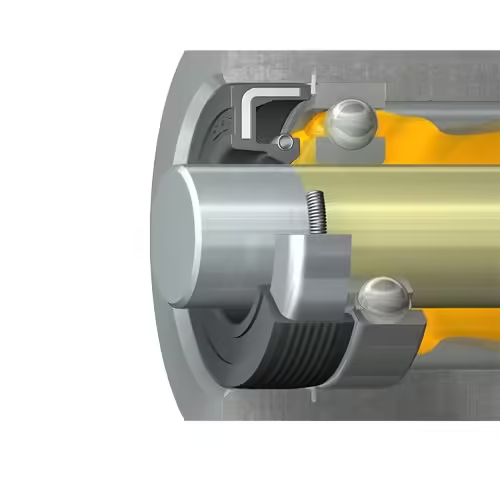
TC and TG oil seals are two commonly used rotary shaft seals in automotive, industrial machinery, pumps, gearboxes, and maintenance applications. At first glance, they may look very similar because both are designed to prevent oil, grease, or lubricant leakage while protecting mechanical systems from dust and contaminants.
However, for engineers, maintenance teams, and purchasing managers, the difference between TC oil seals and TG oil seals is not only about appearance. The outer diameter design, installation behavior, material selection, housing condition, cost, and expected service life can all affect the final sealing performance.
This guide compares TC vs TG oil seals from a practical buyer’s perspective, helping you choose the right seal for OEM production, repair, replacement, or custom industrial applications.
What Are TC and TG Oil Seals?
What Is a TC Oil Seal?
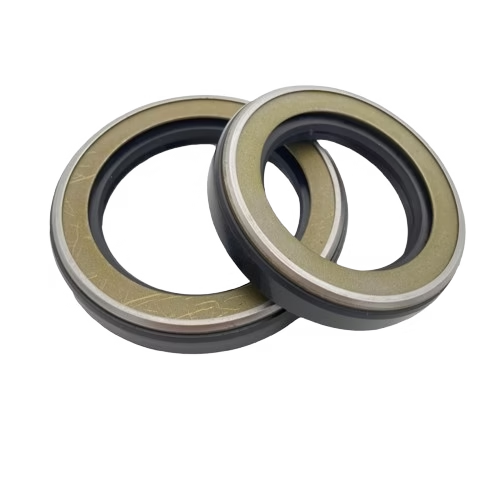
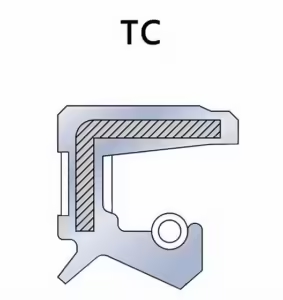
A TC oil seal is a common double-lip rotary shaft seal, usually designed with a rubber-covered outer diameter, a primary sealing lip, a dust lip, and a garter spring.
The main function of a TC oil seal is to retain lubricants inside the equipment while preventing dust, dirt, water, or other contaminants from entering the system. TC oil seals are widely used in engines, gearboxes, pumps, motors, reducers, and general industrial machinery.
In many markets, TC oil seals are considered a standard and cost-effective oil seal type. They are commonly available in NBR, FKM, silicone, and other rubber materials depending on the working environment.
What Is a TG Oil Seal?
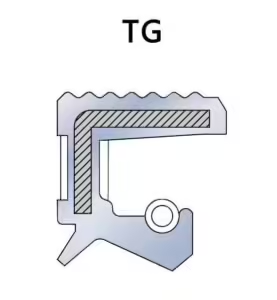
A TG oil seal has a similar basic sealing function to a TC oil seal. It also normally includes a sealing lip, dust lip, garter spring, and metal reinforcement.
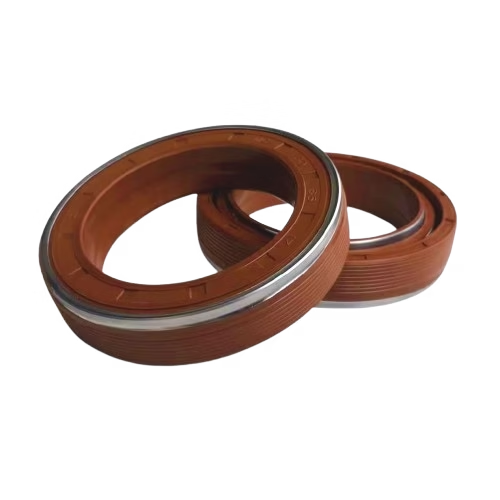
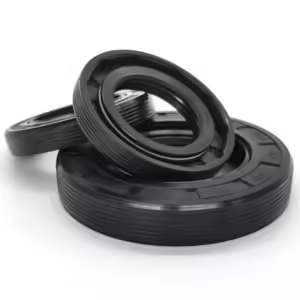
The main difference is usually found in the outer diameter design. Compared with the smooth rubber-covered outer surface of a TC oil seal, a TG oil seal often features a grooved or threaded rubber outer diameter. This design may help improve installation stability and outer diameter contact in some housings.
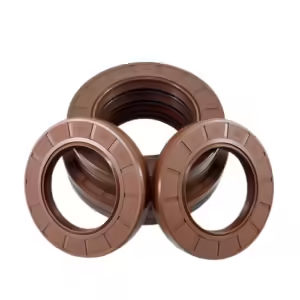
In some markets, TG oil seals are also produced in brown color, which gives them a more premium appearance. However, color should never be the only basis for selection. Buyers should confirm the seal structure, size, material, hardness, and working conditions before placing an order.
TC vs TG Oil Seals: Quick Comparison Table
| Factor | TC Oil Seal | TG Oil Seal | Buyer Decision |
|---|---|---|---|
| Outer diameter design | Smooth rubber-covered outer diameter | Grooved or threaded rubber outer diameter | TG may be better when stronger OD contact or easier installation is needed |
| Lip structure | Usually double lip with spring | Usually similar double lip design with spring | Confirm by drawing, sample, or application |
| Installation | Standard press-fit installation | May offer easier positioning in some housings | TG can help reduce installation difficulty in certain replacement jobs |
| Cost | Usually more economical | Usually slightly higher | TC is better for cost-sensitive bulk orders |
| Appearance | Commonly black | Often black or brown depending on supplier | Color is mainly a market preference, not a performance guarantee |
| Material options | NBR, FKM, VMQ, ACM, etc. | NBR, FKM, VMQ, ACM, etc. | Material selection has a bigger impact on service life than the TC/TG code alone |
| Best use | Standard machinery, OEM production, general replacement | Maintenance, replacement, housings needing stronger OD fit | Choose based on housing, shaft, fluid, temperature, and quantity |
Key Differences Between TC and TG Oil Seals
1. Outer Diameter Design
The most important difference between TC and TG oil seals is the outer diameter.
A TC oil seal usually has a smooth rubber-covered outer surface. This design is suitable for standard housings with good dimensional accuracy and stable assembly conditions.
A TG oil seal usually has a grooved or threaded rubber outer diameter. This design can improve the contact between the seal outer diameter and the housing bore in some applications. It may also make installation easier, especially in maintenance or replacement environments.
For buyers, this means the decision should not be based only on the seal code. You should also consider the housing bore condition, installation method, and whether the application requires stronger outer diameter sealing.
2. Installation and Housing Fit
Installation is one of the main reasons buyers compare TC vs TG oil seals.
TC oil seals work well when the housing bore is properly machined, clean, and within tolerance. For OEM production, where housing dimensions are controlled, TC oil seals are often a reliable and economical choice.
TG oil seals may be preferred when installation stability is more important. The grooved or threaded outer diameter can provide better grip in some housings and may help reduce the risk of seal movement during installation.
However, TG oil seals are not a universal replacement for TC oil seals. If the housing design, shaft size, or working environment is not suitable, changing from TC to TG without confirmation may still cause leakage or fitting problems.
3. Cost and Market Preference
From a purchasing point of view, TC oil seals are usually the more cost-effective choice. They are widely used, easy to source, and suitable for large-volume OEM or aftermarket orders.
TG oil seals may cost slightly more due to their outer diameter design or market positioning. In some regions, brown TG oil seals are viewed as a higher-end option, especially in replacement or retail markets.
For high-volume buyers, the price difference should be evaluated together with:
- Leakage risk
- Installation time
- Replacement frequency
- Downtime cost
- Housing condition
- Material requirements
- Batch quantity
A cheaper seal is not always the lowest-cost solution if it causes frequent leakage or machine downtime.
4. Material Options: NBR, FKM, Silicone, and ACM
The TC or TG code mainly describes the structure and outer design of the oil seal. The material is another key factor that directly affects service life.
For most industrial buyers, material selection is more important than the TC or TG code itself.
| Material | Typical Temperature Range | Oil Resistance | Cost Level | Recommended Applications |
|---|---|---|---|---|
| NBR | -40°C to 120°C | Good for mineral oils and grease | Low | General machinery, pumps, gearboxes, motors |
| FKM | -20°C to 200°C / 250°C | Excellent for high-temperature oil, fuel, and chemicals | High | Engines, high-temperature equipment, chemical exposure |
| VMQ / Silicone | -60°C to 200°C | Moderate oil resistance | Medium | Low-temperature or special temperature applications |
| ACM | -20°C to 150°C | Good for hot oil | Medium | Automotive engines and transmission systems |
If the equipment works under normal oil and moderate temperature conditions, NBR TC or TG oil seals may be enough. If the application involves high temperature, fuel, aggressive oil, or chemical exposure, FKM oil seals are usually a better choice.
Service Life: What Really Affects TC and TG Oil Seal Performance?
The service life of TC and TG oil seals depends on many factors, not only the seal type.
Key factors include:
- Rubber material
- Shaft speed
- Shaft surface roughness
- Working temperature
- Lubricant type
- Pressure condition
- Installation quality
- Housing bore tolerance
- Dust or contamination level
For example, an NBR TC oil seal used in a clean gearbox with moderate temperature may have a long service life. But the same seal used near high-temperature oil or aggressive chemicals may harden, crack, or leak prematurely.
Similarly, a TG oil seal may provide better installation stability in some housings, but if the shaft surface is damaged or the material is wrong, leakage can still happen.
That is why professional oil seal selection should always consider both structure and working conditions.
Failure Risks When Choosing the Wrong TC or TG Oil Seal
Choosing the wrong oil seal can lead to more than simple oil leakage. It may cause equipment downtime, bearing damage, lubricant contamination, and higher maintenance costs.
Common failure risks include:
1. Outer Diameter Leakage
If the outer diameter does not fit the housing properly, oil may leak from the outside of the seal instead of the sealing lip. This can happen when the housing bore is worn, oversized, scratched, or poorly machined.
2. Lip Wear or Shaft Leakage
If the shaft surface is too rough, damaged, rusty, or misaligned, the sealing lip may wear quickly. This causes leakage around the shaft.
3. Rubber Hardening or Cracking
If the material is not suitable for the temperature or oil type, the rubber may harden, crack, or lose elasticity. For example, NBR may not be suitable for long-term high-temperature applications.
4. Spring Displacement
Incorrect installation can cause the garter spring to fall off or shift. Once the spring loses its position, the sealing lip may not maintain enough contact pressure.
5. Wrong Selection Based Only on Color
Some buyers choose TG oil seals because they look more premium, especially brown versions. But color does not guarantee better performance. Material, structure, size, and working conditions are much more important.
When Should Buyers Choose TC Oil Seals?
TC oil seals are usually a good choice when:
- The housing bore is standard and well-machined
- The application does not require special outer diameter grip
- Cost control is important
- The order quantity is large
- The equipment works under normal oil and temperature conditions
- The buyer needs a widely available standard oil seal type
For OEM production and standard industrial machinery, TC oil seals are often the most practical solution. They offer stable sealing performance, competitive pricing, and easy sourcing.
Typical TC Oil Seal Applications
- Gearboxes
- Electric motors
- Pumps
- Reducers
- Agricultural machinery
- Automotive components
- General industrial equipment
When Should Buyers Choose TG Oil Seals?
TG oil seals may be a better choice when:
- Easier installation is needed
- The housing bore requires stronger outer diameter contact
- The application is for repair or replacement
- The market prefers brown or premium-looking oil seals
- The buyer wants a seal with grooved or threaded outer diameter design
- The equipment has frequent maintenance or seal replacement needs
TG oil seals can be useful in applications where installation stability and outer diameter sealing are more important than the lowest unit price.
However, buyers should always confirm whether TG can replace TC in their specific equipment. The safest way is to check the original drawing, sample, or technical requirements.
Real Application Examples
Example 1: Gearbox Replacement Seal
A maintenance customer needs to replace oil seals in an old gearbox. The housing bore has slight wear after long-term use. In this case, a TG oil seal with a grooved outer diameter may provide better outer contact than a smooth OD seal.
However, the buyer still needs to confirm shaft size, housing size, material, and oil type before ordering.
Example 2: OEM Automotive Batch Order
An automotive parts manufacturer needs a large quantity of oil seals for standard assembly. The housing bore is precisely machined, and the working environment is stable.
In this case, TC oil seals may be more suitable because they are cost-effective, widely used, and easy to control in batch production.
Example 3: Pump Shaft Seal
A pump manufacturer needs oil seals for a rotating shaft. The application uses normal lubricating oil and moderate temperature. NBR TC or TG oil seals may both work.
But if the pump operates under high temperature or chemical exposure, the buyer should consider FKM oil seals instead of focusing only on TC vs TG.
Procurement Checklist Before Ordering TC or TG Oil Seals
Before placing an order, buyers should confirm the following details:
| Item to Confirm | Why It Matters |
|---|---|
| Inner diameter | Must match the shaft size |
| Outer diameter | Must match the housing bore |
| Thickness | Affects installation depth and fitting space |
| Material | Determines temperature, oil, and chemical resistance |
| Lip design | Affects dust protection and sealing performance |
| Spring requirement | Important for dynamic shaft sealing |
| Shaft speed | High speed may require special design or material |
| Working temperature | Prevents rubber hardening or failure |
| Fluid type | Oil, grease, fuel, chemical, or water exposure |
| Housing condition | Helps decide TC or TG outer diameter design |
| Quantity and packaging | Important for OEM and distributor orders |
For custom oil seals, buyers should also provide drawings, samples, application photos, or detailed working conditions.
TC vs TG Oil Seals: Which One Is Better?
There is no simple answer. TC and TG oil seals are both useful, but they serve slightly different purchasing needs.
Choose TC oil seals if you need a standard, cost-effective, widely used seal for normal machinery and controlled housing conditions.
Choose TG oil seals if you need easier installation, stronger outer diameter contact, or a seal type that fits specific maintenance or market preferences.
In many cases, the material, shaft condition, housing tolerance, and installation quality will have a bigger impact on performance than the TC or TG code alone.
FAQ: TC and TG Oil Seals
What is the main difference between TC and TG oil seals?
The main difference is usually the outer diameter design. TC oil seals normally have a smooth rubber-covered outer diameter, while TG oil seals often have a grooved or threaded rubber outer diameter.
Are TC and TG oil seals interchangeable?
Sometimes they can be used in similar applications, but they should not be treated as automatically interchangeable. Buyers should confirm the size, housing bore, shaft condition, material, and installation requirements before replacing one with the other.
Is TG oil seal better than TC oil seal?
TG is not always better. TG may offer advantages in installation or outer diameter contact, while TC is often more cost-effective and suitable for standard applications.
Which material is best for TC and TG oil seals?
NBR is commonly used for general oil sealing applications. FKM is better for high temperature, fuel, and chemical resistance. Silicone and ACM may be used for special temperature or automotive applications.
Does the color of an oil seal affect performance?
No. Color itself does not determine sealing performance. The rubber material, structure, dimensions, and working conditions are much more important.
Conclusion
TC and TG oil seals have similar basic sealing functions, but their outer diameter design, installation behavior, cost, and market positioning can be different.
For standard OEM production and cost-sensitive applications, TC oil seals are often the practical choice. For maintenance, replacement, or applications requiring stronger outer diameter contact, TG oil seals may offer advantages.
For professional buyers, the best choice should be based on application data, not only the seal code. Shaft size, housing condition, rubber material, temperature, fluid type, and installation method all need to be considered before ordering.
As a professional oil seal and rubber sealing product manufacturer, DRO Rubber Seals can support custom oil seals, TC oil seals, TG oil seals, O-rings, gaskets, and other sealing solutions for industrial and automotive applications.
For more information, please visit:
Website: drorubber.com
WhatsApp: +0086 15815831911
WeChat: +0086 13784044874