What Is Nitrile? Your Ultimate Buyer’s Guide to NBR O-Rings and Seals
A leaking hydraulic fitting, a hardened fuel seal, a cheap O-ring that lasts three weeks instead of three years — I have seen this too many times. A lot of buyers think NBR is the “safe cheap option,” so they specify nitrile without checking temperature swing, media composition, outdoor exposure, or hardness. Then they pay for shutdowns, rework, warranty claims, and emergency replacements.
Listen to me: nitrile is a very good sealing material, but it is not a miracle material. In the right service, it gives you one of the best cost-to-performance ratios in industrial sealing. In the wrong service, it fails fast, and no one cares that the part was inexpensive.
If you buy O-rings, oil seals, gaskets, or custom molded rubber parts, you need to know where NBR performs well, where it does not, and how to choose the right compound before you place a bulk order.
What Is Nitrile Rubber?
Nitrile rubber is a synthetic elastomer made from acrylonitrile and butadiene. In sealing applications, it is usually called:
- NBR
- Nitrile rubber
- Buna-N
For practical buying and engineering decisions, these names usually refer to the same material family.
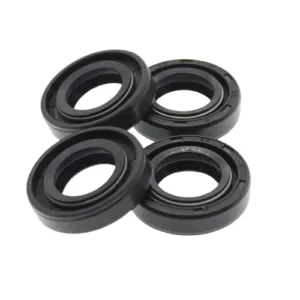
NBR became one of the most commercially important sealing elastomers for a simple reason: it handles petroleum oils, fuels, greases, and many hydraulic fluids at a cost that is far lower than specialty materials like FKM. That is why NBR O-rings and seals are everywhere in automotive systems, hydraulic equipment, pneumatic assemblies, pumps, valves, and general industrial machinery.
How NBR Is Made and Why Buyers Should Care
You do not need a chemistry lecture. You do need to understand one thing: the balance between acrylonitrile content and butadiene content changes how the rubber behaves in the field.
Acrylonitrile content affects real-world performance
When acrylonitrile content goes up, NBR generally gets:
- Better oil and fuel resistance
- Lower gas permeability
- Worse low-temperature flexibility
When acrylonitrile content goes down, NBR generally gets:
- Better flexibility in cold conditions
- Lower resistance to oils and fuels
This matters because many buyers order “NBR 70” as if all 70 Shore A nitrile compounds are the same. They are not. Two NBR O-rings with the same hardness can perform very differently depending on formulation quality, filler package, curing system, and polymer balance.
Compound quality matters more than many buyers realize
A finished NBR seal is not just base polymer. It also includes things like:
- Carbon black
- Plasticizers
- Vulcanizing agents
- Reinforcing additives
- Anti-aging additives
That is why cheap seals can look acceptable on day one and still fail early. The base name “NBR” tells you the family. It does not guarantee compression set resistance, wear life, dimensional stability, or batch consistency.
Key Properties of Nitrile Rubber
1. Oil and fuel resistance
This is the main reason buyers choose NBR. It performs well in contact with:
- Petroleum-based oils
- Lubricants
- Greases
- Many hydraulic fluids
- Diesel
- Gasoline in many standard applications
That makes nitrile one of the default choices for oil sealing, fuel system sealing, and hydraulic sealing.
2. Mechanical strength
NBR offers a solid balance of:
- Tensile strength
- Tear resistance
- Abrasion resistance
- Compression resistance
In plain English, it is tough enough for many static seals and many moderate-duty dynamic applications. That is why NBR works so well in general-purpose industrial service.
3. Temperature performance
Standard NBR typically works around:
- -30°C to +100°C
Special compounds may extend performance toward:
- -40°C on the low side
- +120°C for short-term exposure on the high side
But many people get burned here. Those numbers are not universal guarantees. Actual temperature capability depends on compound design, pressure, fluid, and exposure duration. A seal that survives +100°C in air may not survive the same temperature in a hot aggressive oil with pressure cycling.
4. Compression set and sealing recovery
A seal works because it maintains contact stress. Once it loses elastic recovery, leakage starts.
Quality NBR compounds can offer good compression set resistance for long-term sealing, especially in static oil service. Poor compounds lose force faster, especially under heat and long compression dwell. This is one of the most common hidden reasons cheap NBR becomes expensive.
5. Water resistance
NBR can perform adequately in water and some mild aqueous service. But for long-term hot water, steam, or weather-heavy outdoor service, it is usually not the first material I would recommend. A lot of failures blamed on “bad rubber” are actually bad material choice.
Advantages of NBR O-Rings and Seals
If your application is oil- or fuel-related and the environment is not too aggressive, NBR is often the most economical sensible option.
Why buyers keep choosing NBR
| Advantage | What it means in practice |
|---|---|
| Low material cost | Lower unit price for high-volume procurement |
| Good oil resistance | Reliable sealing in lubricated systems |
| Good mechanical properties | Useful in both static and moderate dynamic service |
| Broad availability | Easy sourcing in standard sizes and custom parts |
| Mature production base | Many factories can mold, extrude, and machine NBR parts |
| Good value for OEM/MRO | Strong balance between cost and practical performance |
For many hydraulic, pneumatic, automotive, and industrial maintenance applications, nitrile is the material that gives you acceptable life without pushing you into premium-elastomer pricing.
Limitations of Nitrile Rubber
This is where many bad purchasing decisions happen.
NBR is not a universal rubber. It has clear weaknesses, and ignoring them is how you end up with cracked seals, swelling, hardening, or early leakage.
NBR performs poorly against
- Ozone
- UV exposure
- Sunlight
- Weathering
- Strong acids
- Ketones
- Esters
- Chlorinated hydrocarbons
- Prolonged steam exposure
What this means for buyers
Do not choose NBR just because it is cheap.
If the seal will sit outdoors, see ozone, cycle in hot water, or face aggressive chemicals, standard nitrile may be the wrong choice. I have seen buyers save pennies on the purchase order and lose thousands on field repairs.
For outdoor sealing or weather exposure, compare it against EPDM seals. For higher temperature oil sealing, compare it against FKM materials. For tougher heat and aging conditions, look at HNBR options.
What Are NBR O-Rings?
An NBR O-ring is a circular elastomer seal designed to prevent leakage between two mating surfaces.
They are widely used in:
- Static face seals
- Static radial seals
- Reciprocating systems
- Low-to-moderate dynamic applications
NBR O-rings are popular because they are simple, cost-effective, easy to source, and dependable in the right media.
Common Types of NBR Seals
NBR O-rings
Used in hydraulic fittings, pneumatic connectors, manifolds, valves, pumps, and general machinery.
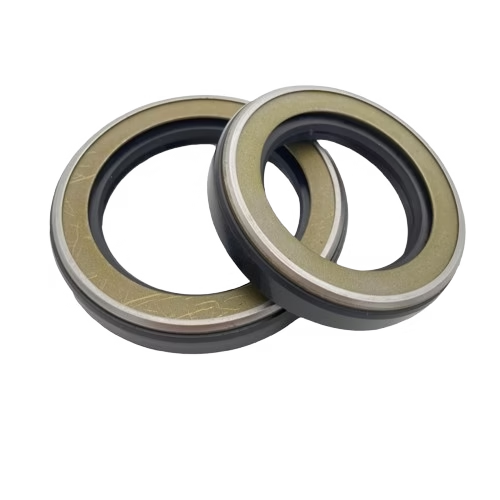
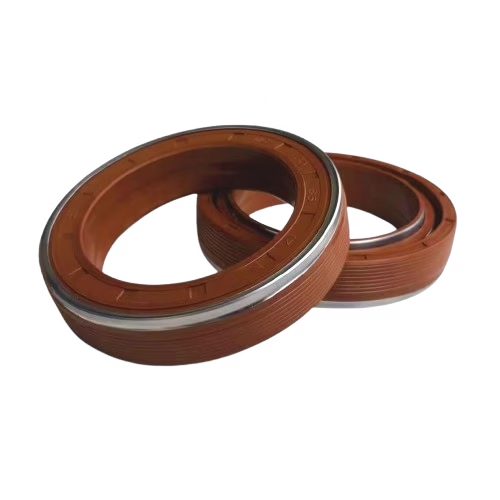
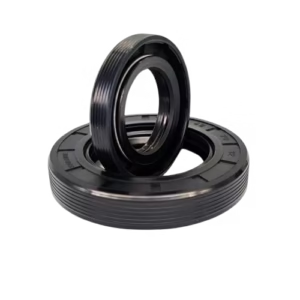
NBR oil seals
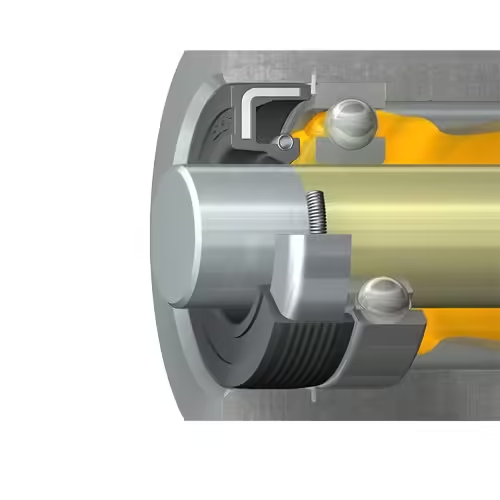
Used on shafts and rotating equipment where oil retention matters. Common in gearboxes, motors, engines, and industrial drives.
NBR gaskets
Used for flanged joints with oils and non-aggressive industrial fluids.
NBR rubber washers
Used for basic sealing and vibration damping in assemblies.
Custom molded NBR parts
These include:
- Diaphragms
- Valve seals
- Bushings
- Rubber plugs
- Custom elastomer components
For OEM programs, custom molding often solves dimensional, hardness, media, and wear-life issues better than forcing a standard part into a non-standard application.
Typical Applications of Nitrile O-Rings and Seals
Automotive industry
NBR is common in:
- Fuel systems
- Engine sealing
- Transmission components
- Lubrication systems
- Hydraulic brake-related components in suitable designs
Hydraulic and pneumatic equipment
This is one of nitrile’s strongest markets. Typical uses include:
- Cylinders
- Pumps
- Valves
- Fittings
- Connectors
Industrial machinery
NBR works well in:
- Compressors
- Gearboxes
- Fluid handling systems
- Heavy-duty industrial machines
Oil and gas equipment
In non-extreme petroleum service, NBR remains a practical and economical sealing choice.
MRO and general manufacturing
For maintenance and replacement work, nitrile is often the first material buyers consider because it is readily available and competitively priced.
NBR vs Other Rubber Materials: What Buyers Need to Know
Material comparison is where real procurement mistakes get avoided.
NBR vs FKM (Viton)
NBR is cheaper. FKM handles higher temperatures and more aggressive chemicals.
| Factor | NBR | FKM |
|---|---|---|
| Cost | Lower | Higher |
| Oil resistance | Good | Excellent |
| High temperature resistance | Moderate | Strong |
| Chemical resistance | Limited to moderate | Much broader |
| Best use case | Cost-sensitive oil sealing | Hot, aggressive chemical service |
My judgment
Choose NBR when the application is oil-based, temperature is moderate, and cost control matters.
Choose FKM when failure risk from heat or chemical attack is expensive. This is not just a material upgrade. It is often a warranty-risk decision.
NBR vs EPDM
NBR handles oils and fuels better. EPDM handles water, steam, ozone, and outdoor weather much better.
| Factor | NBR | EPDM |
|---|---|---|
| Oil and fuel resistance | Good | Poor |
| Water and steam resistance | Limited | Strong |
| Outdoor aging | Poor to moderate | Strong |
| Ozone resistance | Poor | Excellent |
My judgment
Do not use NBR where long-term outdoor weathering or steam is the real challenge. Many people get this wrong because they focus only on initial fluid contact and ignore the environment.
NBR vs Silicone
NBR generally offers better mechanical strength and oil resistance. Silicone offers wider high/low temperature flexibility.
| Factor | NBR | Silicone |
|---|---|---|
| Mechanical strength | Better | Lower |
| Oil resistance | Better | Usually lower |
| Low-temperature flexibility | Moderate | Excellent |
| High-temperature flexibility | Moderate | Excellent |
My judgment
Silicone is often selected for temperature flexibility or special regulated applications. NBR is usually the tougher, more practical industrial workhorse when oil resistance matters.
NBR vs HNBR
HNBR is hydrogenated nitrile rubber. Think of it as a higher-performance cousin of standard NBR.
| Factor | NBR | HNBR |
|---|---|---|
| Cost | Lower | Higher |
| Heat resistance | Moderate | Better |
| Ozone resistance | Limited | Better |
| Aging resistance | Moderate | Better |
| Oil resistance | Good | Good to very good |
My judgment
If your application is pushing temperature, ozone, or service-life expectations, HNBR may be worth the extra cost. If not, standard NBR is often the better value.
Understanding Acrylonitrile Content in NBR
This is one of those details buyers skip until it costs them.
Low ACN NBR
- Better low-temperature flexibility
- Lower oil and fuel resistance
Medium ACN NBR
- Balanced all-around performance
- Often suitable for general industrial use
High ACN NBR
- Better oil and fuel resistance
- Lower low-temperature flexibility
If your application runs in cold climates, fuel-rich service, or both, ask for actual compound data. Do not rely on assumptions.
Standard Hardness of NBR O-Rings and Why It Matters
Shore A hardness is one of the most important purchasing parameters for elastomer seals.
Common NBR hardness levels include:
- 60 Shore A
- 70 Shore A
- 80 Shore A
- 90 Shore A
General hardness selection logic
| Hardness | Typical advantage | Typical risk |
|---|---|---|
| 60 Shore A | Better conformity on uneven surfaces | More extrusion risk under pressure |
| 70 Shore A | Good general-purpose balance | Not ideal for every extreme condition |
| 80 Shore A | Better pressure resistance | Less forgiving on poor gland design |
| 90 Shore A | Strong extrusion resistance | Harder installation, less compliance |
What I usually tell buyers
If you do not have a special pressure, tolerance, or wear issue, 70 Shore A is the normal starting point.
But do not blindly default to 70. Softer compounds seal better on rough or uneven mating surfaces. Harder compounds resist extrusion better in higher-pressure systems. Wrong hardness can ruin a perfectly good material choice.
For pressure-related failures, you should also evaluate groove design, clearance, and whether a backup ring is needed. Material alone cannot fix bad hardware.
Temperature Range of NBR Seals
Standard NBR generally operates in the range of:
- -30°C to +100°C
Some compounds may stretch beyond that, but only under controlled conditions.
What actually affects temperature performance
- Base polymer quality
- Compound recipe
- Working medium
- Pressure
- Cycle frequency
- Exposure time
A buyer who only asks, “What is the temperature range of nitrile?” is asking the wrong question. The right question is: What temperature range can this specific NBR compound handle in my actual fluid and pressure conditions?
That is how experienced buyers reduce failure risk.
Chemical Compatibility of NBR
Usually suitable media
- Mineral oils
- Greases
- Hydraulic fluids
- Diesel
- Gasoline
- Some diluted acids and alkalis
Usually unsuitable media
- Strong oxidizing chemicals
- Ketones
- Esters
- Some aromatic solvents
- Chlorinated hydrocarbons
- High-temperature steam
Practical buying advice
Always verify compatibility before bulk purchase. I do not care how standard the application looks — fluid blends, additives, temperature, and contamination can change the result. One compatibility check is cheaper than one field failure report.
How to Choose the Right NBR O-Ring or Seal
This is the part that actually saves money.
1. Define the working medium
Start with the real fluid, not the simplified fluid name.
“Hydraulic oil” is not enough. “Fuel” is not enough. Ask what additives, contaminants, and temperature range are involved.
2. Determine operating temperature
Record both minimum and maximum service temperatures, including spikes. Cold-start stiffness and heat aging both matter.
3. Confirm pressure and motion
Is it:
- Static
- Reciprocating
- Rotary
- Pulsating pressure
High pressure may require harder compounds or backup rings. Dynamic service may require better wear resistance and more careful surface control.
4. Check size and tolerance
Confirm whether you need:
- AS568 sizes
- Metric sizes
- Custom sizes
Bad groove design and loose tolerances cause leakage even with good material. A surprising number of “material failures” are actually dimension problems.
5. Evaluate hardness and compound grade
Do not just order “NBR O-ring.” Specify:
- Hardness
- Application medium
- Temperature range
- Dynamic or static use
- Required life expectation
6. Consider industry requirements
Some applications need special compliance, traceability, or customer-specific testing.
7. Assess service life expectations
If the seal is easy to replace and downtime is cheap, a standard economical compound may be enough.
If replacement requires shutdown, disassembly, or field labor, spending more on compound quality is usually the better deal.
Common Buying Mistakes to Avoid
I see these mistakes constantly:
Choosing NBR only because it is inexpensive
Cheap is not low-cost when failure drives maintenance labor and downtime.
Ignoring media compatibility
This is one of the fastest ways to get swelling, hardening, or cracking.
Overlooking ozone and outdoor exposure
Standard NBR is not happy living outdoors long term.
Selecting the wrong hardness
Too soft and it extrudes. Too hard and it may not seal or install well.
Using standard NBR in high-temperature service
A lot of buyers stretch nitrile beyond what it should be doing.
Failing to verify dimensions and tolerances
An O-ring that is “close enough” is often not close enough.
Not asking for test data
For serious procurement, request:
- Hardness data
- Tensile and elongation data
- Compression set results
- Material data sheets
- Batch traceability where needed
How to Judge the Quality of an NBR Seal Supplier
Do not evaluate a supplier by unit price alone. That is amateur purchasing.
A reliable supplier should be able to support you with:
- Compound development capability
- Custom molding or tooling expertise
- Dimensional inspection control
- Material data sheets
- Hardness reports
- Tensile and elongation data
- Compression set test results
- Production traceability
What separates a real supplier from a trader with a low quote
A serious seal manufacturer understands application risk. They ask about medium, temperature, pressure, motion, gland design, and service life. A weak supplier just asks for size and quantity.
When you source for OEM production or wholesale distribution, batch consistency matters almost as much as initial performance.
Are Custom NBR Seals Better Than Standard Parts?
Sometimes yes. Sometimes no.
Standard parts are enough when
- The groove follows standard dimensions
- The media is common
- The pressure is moderate
- The service life target is reasonable
- Standard stock sizes fit correctly
Custom NBR seals are the better choice when
- Groove dimensions are non-standard
- Fluid media is unusual
- Wear is high
- You need special hardness
- You need better assembly fit
- You need branded or private-label supply
Custom molding and custom compounding are not about making things complicated. They are about reducing mismatch between the seal and the application.
Frequently Asked Questions About Nitrile and NBR O-Rings
Is nitrile the same as NBR?
Yes. In sealing applications, nitrile rubber is commonly referred to as NBR or Buna-N.
Are NBR O-rings good for oil?
Yes. NBR is one of the most commonly used elastomers for petroleum oil sealing.
Can nitrile seals be used outdoors?
Standard NBR is not ideal for long-term outdoor exposure because ozone, UV, and weathering can degrade it.
What is the temperature limit of nitrile rubber?
Standard compounds typically operate around -30°C to +100°C, though exact limits depend on formulation and service conditions.
Is NBR better than EPDM?
It depends on the job. NBR is better for oils and fuels. EPDM is better for water, steam, ozone, and outdoor exposure.
Is nitrile suitable for fuel systems?
Yes, in many standard fuel-related applications, provided the compound is matched correctly to the fuel composition and operating conditions.
The Real Buyer’s Answer: Is NBR the Right Material for Your Application?
NBR is one of the best-value sealing materials in industrial use. It is economical, proven, easy to source, and highly effective in oil- and fuel-related environments. That is why it remains a standard choice for O-rings, oil seals, gaskets, and custom molded parts.
But hear me on this: nitrile is only a smart choice when the full service conditions support it. If your application includes heat, weathering, ozone, steam, or aggressive chemicals, choosing NBR just to save money is how buyers create failure.
The practical move is simple. Before ordering in volume, send your seal supplier the real application data: medium, temperature range, pressure, motion type, dimensions, hardness requirement, and expected service life. That one step removes most avoidable mistakes.
If you are sourcing NBR O-rings, oil seals, gaskets, or custom molded rubber parts for OEM or wholesale use, submit your drawings, sizes, or application conditions for engineering review before mass procurement. That is how you cut risk and buy correctly the first time.
Contact Us
Website: drorubber.com
WhatsApp: +0086 15815831911
WeChat: +0086 13784044874