A lot of leakage problems start with a lazy assumption: “They’re both oil seals, so either one will work.”
That mistake costs real money.
I’ve seen maintenance teams swap an SC seal into a dusty gearbox, then blame the rubber when the unit starts leaking a few weeks later. I’ve also seen buyers pay extra for TC seals everywhere, even in clean enclosed systems where the extra lip adds cost and friction with little return. Listen to me: this is not just about seal price. It is about contamination risk, shaft condition, service interval, and whether you want to fix the same machine twice.
If you are comparing SC vs. TC oil seals, the right answer depends less on catalog shorthand and more on what the machine actually sees in service.
What Is an Oil Seal and Why Does the Profile Matter?
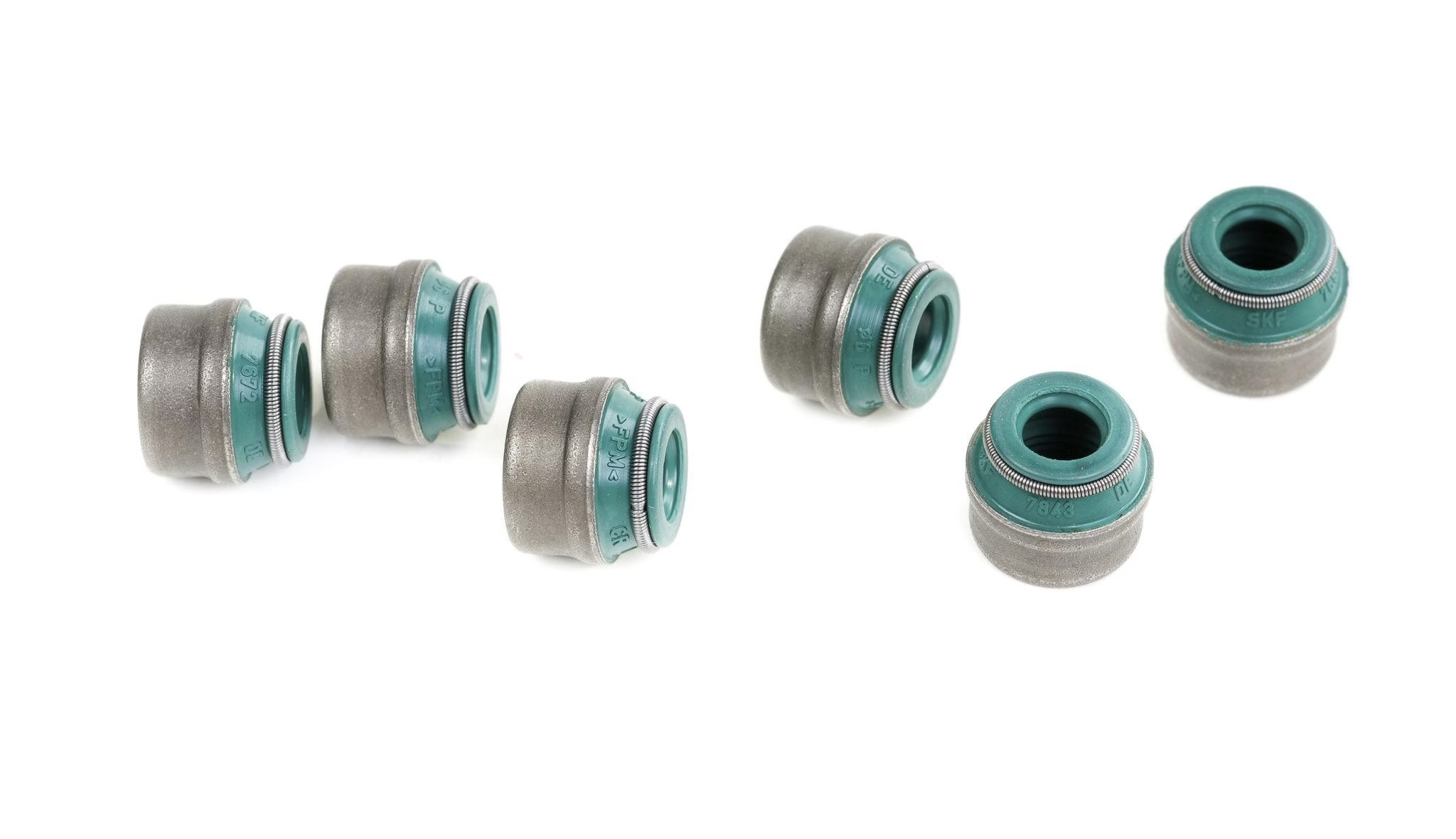
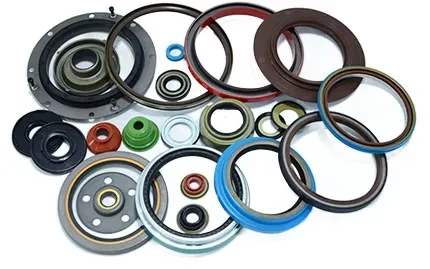
An oil seal, also called a rotary shaft seal or radial lip seal, is used to keep lubricant inside equipment while blocking dust, water, and debris from entering around a rotating shaft.
A typical oil seal includes:
- a sealing lip
- an elastomer body
- a metal insert or reinforcement
- a garter spring on the main lip in many designs
On paper, that sounds simple. In the field, it is not. Small differences in lip structure change:
- leakage resistance
- dirt exclusion
- friction
- shaft wear
- service life
- maintenance cost
That is exactly why the difference between SC oil seals and TC oil seals matters.
SC Oil Seal Structure: Where It Works and Where People Misjudge It
What is an SC oil seal?
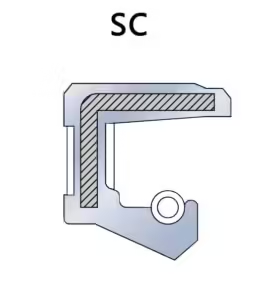
An SC oil seal is generally a single-lip radial shaft seal with:
- one primary spring-loaded sealing lip
- a rubber-covered outside diameter
- a design focused mainly on lubricant retention
In many industry naming systems, the “S” refers to the single sealing lip and the “C” refers to the rubber-coated outer diameter.
What the SC design does well
The SC profile is widely used because it is practical and economical in controlled environments. It usually offers:
- good oil retention
- reliable static sealing in the housing
- simple installation
- lower friction than a dual-lip alternative
- lower purchase cost
Where SC seals make sense
I usually recommend SC seals when the equipment is:
- enclosed
- installed indoors
- operating in relatively clean conditions
- protected from splash water, dust, slurry, or abrasive particles
Typical applications include:
- electric motors
- enclosed gearboxes
- reducers
- industrial pumps
- transmission systems in clean plants
Where SC seals get blamed unfairly
A lot of SC seal “failures” are not really SC design failures. They are application mistakes. The seal was fine. The selection was not.
If the shaft is exposed to dirt, mud, fine powder, metal debris, or washdown conditions, SC is often the wrong call.
TC Oil Seal Structure: Why the Extra Lip Often Saves You More Than It Costs
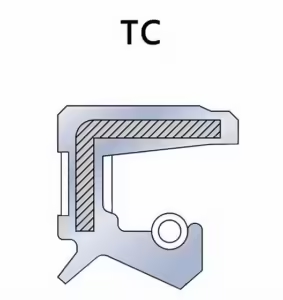
What is a TC oil seal?
A TC oil seal usually has:
- one primary oil sealing lip with garter spring
- one auxiliary dust lip
- a rubber-covered outer diameter
That second lip is the whole story.
The primary lip holds oil or grease in. The secondary lip helps keep dirt, water spray, and airborne contaminants away from the main sealing contact area.
What the TC design does better
Compared with SC, a TC oil seal gives stronger protection in harsh service because it improves:
- dust exclusion
- splash-water resistance
- mud and debris blocking
- shaft contact area protection
- seal reliability in contaminated conditions
Where TC seals are usually the better choice
TC seals are commonly preferred for:
- agricultural machinery
- construction equipment
- wheel hubs and axles
- mining equipment
- quarry systems
- outdoor conveyor drives
- automotive assemblies exposed to road contamination
Many buyers focus only on the unit price difference. That is the wrong place to look. In dirty service, the extra lip often costs less than one unplanned shutdown.
SC vs. TC Oil Seals: Side-by-Side Comparison for Buyers and Engineers
Quick comparison table
| Factor | SC Oil Seal | TC Oil Seal |
|---|---|---|
| Main structure | Single primary lip | Primary lip + auxiliary dust lip |
| Outer diameter | Rubber covered | Rubber covered |
| Lubricant retention | Good | Good |
| Dust exclusion | Limited | Stronger |
| Water/debris resistance | Limited | Better |
| Friction | Lower | Slightly higher |
| Heat generation | Lower in similar conditions | Slightly higher in similar conditions |
| Best environment | Clean, enclosed systems | Dusty, wet, outdoor, contaminated systems |
| Initial cost | Lower | Slightly higher |
| Lifecycle value in dirty service | Often poor | Usually better |
| Common risk | Contaminant ingress | Over-specifying for clean applications |
The real structural difference
The biggest difference is not just “one lip vs. two lips.” The real difference is risk tolerance in dirty environments.
That extra dust lip in a TC seal helps stop contamination before it reaches the critical sealing zone. In real machinery, that often means:
- less abrasive wear
- less shaft damage
- lower leakage risk
- longer service intervals
Does TC always win?
No.
This is where people get sloppy. TC seals are not automatically better in every application.
The tradeoff is that TC designs can add:
- slightly more friction
- slightly more heat
- slightly more drag
- slightly higher cost
In a clean indoor system, that extra protection may not give you any meaningful return.
Performance Difference in Real Machinery, Not Just on a Catalog Page
In clean equipment
In clean, enclosed equipment with stable lubrication and minimal contamination, SC seals are usually enough. They do the job without unnecessary complexity.
That makes SC a smart choice when you want:
- lower purchase cost
- lower drag
- reliable oil retention in controlled service
In dirty or wet equipment
In outdoor or contaminated equipment, TC seals usually outperform SC seals over time.
This matters when the shaft is exposed to:
- dust
- mud
- slurry
- road splash
- metal fines
- humidity
- washdown water
Under these conditions, the auxiliary lip helps protect the main sealing lip and shaft interface from abrasive intrusion.
What this means for service life
In practical terms:
- SC seals can deliver good life in clean systems
- TC seals usually deliver better life in contaminated systems
Not because the rubber is magically better, but because the structure matches reality.
A cheap seal in the wrong environment is not a cheap solution.
When to Choose an SC Oil Seal
SC is usually the right choice when:
1. The equipment runs in a clean indoor environment
Examples include factory gearboxes, enclosed drives, and protected motor systems.
2. The main priority is lubricant retention, not external dirt exclusion
If contamination exposure is low, the extra dust lip may not be necessary.
3. Lower friction matters
For some systems, reducing lip drag and heat is useful.
4. Cost control matters and the operating conditions are stable
This is where SC gives solid value.
Typical SC applications
- electric motors
- clean gearbox assemblies
- reducers
- indoor pumps
- light-duty industrial transmissions
- enclosed machinery with protective housings
When SC is the wrong cheap option
Do not choose SC just because it is cheaper when the machine sees:
- airborne abrasive dust
- muddy splash
- outdoor weather
- road contaminants
- frequent washdown
A lot of buyers save a few dollars on the part and lose far more in downtime.
When to Choose a TC Oil Seal
TC is usually the better choice when:
1. The machine operates in dusty, muddy, or wet conditions
This is the most common reason to move from SC to TC.
2. You need better contaminant exclusion
The auxiliary lip improves protection against external debris.
3. Maintenance access is difficult or expensive
If replacing the seal is labor-intensive, paying slightly more up front often makes sense.
4. Equipment reliability matters more than the lowest part cost
That should be obvious, but many procurement teams still miss it.
Typical TC applications
- tractors and agricultural attachments
- construction machinery
- wheel-end systems
- off-road vehicles
- mining drives
- outdoor conveyors
- quarry equipment
- automotive positions exposed to road debris and water
When TC is overkill
If the unit is fully enclosed, clean, lightly contaminated, and easy to service, TC may not give enough added value to justify the upgrade.
How to Choose Between SC and TC Oil Seals Without Guessing
This is the section buyers should pay attention to. Do not select by habit. Check the actual operating conditions.
1. Operating environment
Ask first: is the machine clean and enclosed, or exposed to contamination?
- Clean indoor environment: SC is often sufficient
- Dusty, wet, muddy, abrasive environment: TC is usually safer
This is often the deciding factor.
2. Lubricant type
Consider whether the seal is retaining:
- oil
- grease
- another lubricant
Lubricant viscosity affects lip lubrication, friction, and leakage behavior.
3. Shaft speed
Higher shaft speed increases:
- lip temperature
- friction
- wear risk
Do not choose profile alone. Speed, material, lubrication, and shaft finish all interact.
4. Pressure condition
Standard SC and TC oil seals are generally intended for low-pressure service.
If the housing sees elevated internal pressure, you may need:
- a pressure-resistant seal design
- support hardware
- a different sealing concept entirely
A standard seal forced into a pressured application is a common and expensive mistake.
5. Shaft surface finish and hardness
A bad shaft will ruin a good seal.
Check:
- shaft roughness
- hardness
- wear grooves
- runout
- alignment
A lot of leakage blamed on seal design is really caused by shaft damage or poor machining.
6. Temperature range
Seal material must match the operating temperature.
As a general guide:
- NBR: cost-effective, good for standard oil sealing service
- FKM: better for higher temperatures and more aggressive media
- Silicone: useful where low-temperature flexibility matters
- HNBR: stronger mechanical and thermal performance in tougher service
Profile selection without material verification is half a job.
7. Installation space
Check:
- housing dimensions
- axial space
- shaft size
- bore tolerance
Do not assume SC and TC profiles are interchangeable just because the nominal dimensions look similar.
8. Maintenance target
If the machine is hard to access or downtime is expensive, the better lifecycle choice may be TC in harsh service even if the initial price is higher.
That is engineering judgment. Not bargain hunting.
Material Selection: Why SC or TC Alone Does Not Guarantee Seal Life
A surprising number of selection errors happen because people focus only on the lip profile and ignore the elastomer.
That is amateur-level thinking.
Common oil seal materials and what they really mean
NBR oil seals
A practical general-purpose choice for many standard oil applications.
Best for:
- cost-sensitive projects
- moderate temperature
- common lubricants
FKM oil seals
Better suited for elevated temperatures and more demanding chemical exposure.
Best for:
- higher thermal load
- more aggressive fluids
- longer life in tougher conditions
Silicone oil seals
Useful where flexibility at low temperatures is important.
Best for:
- cold-start environments
- applications needing low-temperature elasticity
HNBR oil seals
A stronger option where you need improved mechanical durability and heat resistance.
Best for:
- demanding industrial service
- higher stress applications
- tougher duty cycles
The real rule
SC and TC describe structure. Material determines chemical resistance, aging behavior, and heat endurance.
You need both right.
For more on compound selection, check out our guide on what-materials-are-used-for-oil-seals
Common Mistakes When Choosing SC vs. TC Oil Seals
These are the mistakes I see repeatedly.
Choosing SC for contaminated environments
This is probably the most common error. It saves a little at purchase and costs more later.
Choosing TC without checking friction impact
In some higher-speed or low-drag applications, the extra lip is not free. It adds contact.
Ignoring shaft condition
A worn or grooved shaft can destroy sealing performance regardless of whether you choose SC or TC.
Ignoring material compatibility
Good profile, wrong elastomer, early failure.
Using standard seals in pressurized systems
Standard radial lip seals are not pressure seals unless specifically designed for that duty.
Assuming same size means same performance
Two seals with the same dimensions can behave very differently based on lip design, material, spring quality, and workmanship.
Poor installation
Many “bad seals” were damaged during assembly.
A proper related internal article here would be:
- Top 7 Causes of Oil Seal Leakage After Installation
- How to Inspect a Shaft Before Replacing an Oil Seal
Practical Application Examples: Which Seal Type Fits Better?
Electric motor in a clean indoor production line
Recommended: SC
Reason: contamination is limited, housing is protected, and lower friction is useful.
Agricultural rotary equipment exposed to dust and mud
Recommended: TC
Reason: the extra dust lip helps keep abrasive contamination away from the main sealing zone.
Automotive wheel-end application
Recommended: TC in many cases
Reason: road splash, grit, water, and debris create a contamination-heavy environment.
Factory gearbox in a controlled indoor setting
Recommended: SC
Reason: if the environment is stable and enclosed, SC is usually the more economical choice.
Outdoor conveyor drive system
Recommended: TC
Reason: exposure to dirt, moisture, and airborne particles makes the extra protection worthwhile.
Installation and Maintenance: Even the Right Seal Fails If the Job Is Sloppy
Selection is only half the work. Installation quality decides whether the seal gets a fair chance.
Before installation, check:
- shaft surface finish
- shaft hardness
- wear grooves
- bore condition
- chamfer quality
- alignment
- cleanliness of all mating parts
During installation:
- lubricate the sealing lip properly
- use correct pressing tools
- avoid lip inversion
- protect the lip from sharp shaft edges
- do not damage the garter spring
- press squarely, not crooked
During maintenance:
- inspect for leakage traces
- check for shaft groove formation
- monitor contamination buildup
- verify that operating temperature is within material limits
A lot of repeat leakage has nothing to do with SC or TC. It comes from bad shaft prep and careless fitting.
Which One Is Better: SC or TC?
Here is the practical answer.
Choose SC oil seals when:
- the environment is clean
- the system is enclosed
- contamination exposure is low
- lower friction and lower cost matter
Choose TC oil seals when:
- the environment is dusty, wet, muddy, or abrasive
- the shaft sees outdoor contamination
- maintenance is expensive
- you need stronger protection against dirt ingress
The better seal is the one that matches the machine’s real operating condition.
Not the one someone grabbed from shelf stock.
Reduce Selection Risk Before You Place the Order
Before buying SC or TC oil seals, stop comparing part price alone. Check the environment, shaft condition, lubricant, speed, temperature, and service target. That five-minute review prevents a lot of leakage, warranty complaints, and unnecessary replacement work.
If you want a lower-risk recommendation, send the shaft size, housing size, medium, speed, temperature, and working environment to your seal supplier and ask for a profile-and-material review, not just a quote.
For custom selection support or bulk purchasing, direct readers to:
- Oil Seal Product Page
- Custom Rotary Seal Solutions
- Failure Analysis Support for Leaking Seals
For high-quality oil seals and technical support, visit drorubber.com.
WhatsApp: +0086 15815831911
WeChat: +0086 13784044874