Introduction
Oil seals are not all made from the same rubber. In real industrial use, the material of an oil seal often determines whether the seal will last for months or fail within weeks.
For buyers, maintenance teams, and equipment manufacturers, material selection is not only about temperature range. It also affects oil compatibility, wear resistance, service life, cost, and failure risk. Choosing the wrong material can lead to leakage, shaft contamination, lip hardening, swelling, and unexpected downtime.
This guide explains the most common oil seal materials, where each one performs best, and how to choose the right option for your operating environment.
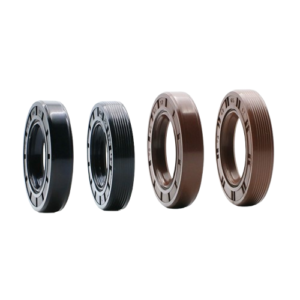
Why Oil Seal Material Matters
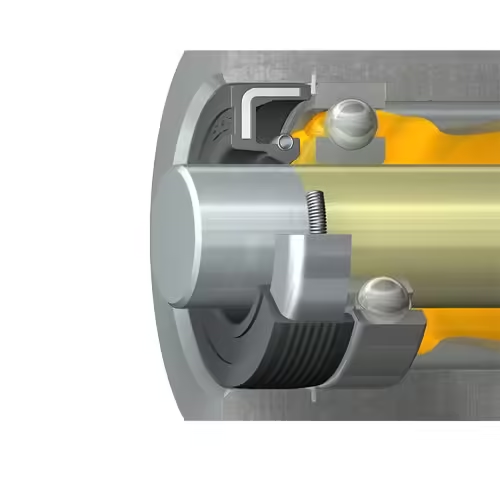
An oil seal works in direct contact with a rotating shaft while exposed to lubricant, heat, friction, and external contaminants. Even if the seal design is correct, poor material selection can still cause early failure.
The material affects:
- Resistance to oil, fuel, grease, and chemicals
- Temperature capability
- Wear resistance at the sealing lip
- Elasticity and compression retention
- Aging resistance against ozone, air, and outdoor exposure
- Overall sealing life and maintenance cost
In short, the right material improves sealing reliability. The wrong one increases leakage risk and replacement frequency.
Common Materials Used for Oil Seals
NBR (Nitrile Rubber) — The Standard Choice for General Oil Sealing
NBR is the most widely used oil seal material in automotive and industrial equipment. It offers a practical balance of oil resistance, mechanical strength, and cost.
Typical properties of NBR
- Typical temperature range: -40°C to +120°C
- Good resistance to mineral oils, grease, and hydraulic fluids
- Good abrasion resistance
- Economical and easy to process
Typical applications
- Gearboxes
- Pumps
- Electric motors
- Agricultural machinery
- General automotive oil sealing
Main limitation
NBR is not the best choice for very high temperatures, aggressive chemicals, or long-term exposure to ozone and weather.
Best for: standard industrial applications where cost control matters and operating conditions are moderate.
FKM (Fluoroelastomer / Viton®) — For High Temperature and Harsh Media
FKM is commonly selected when NBR can no longer provide enough thermal or chemical resistance. It is a higher-grade material used in demanding sealing environments.
Typical properties of FKM
- Typical temperature range: -20°C to +200°C, with some compounds higher
- Excellent resistance to oils, fuels, synthetic lubricants, and many chemicals
- Better heat aging resistance than NBR
- Good long-term stability in harsh environments
Typical applications
- Automotive transmission systems
- Engine crankshaft and camshaft seals
- Chemical pumps
- High-temperature gear systems
- Industrial equipment using aggressive lubricants
Main limitation
FKM is more expensive than NBR, and in lower-temperature applications its cost may not always be justified.
Best for: high-temperature, chemically demanding, or long-service applications where reliability matters more than initial seal cost.
ACM (Polyacrylate Rubber) — A Mid-Range Option for Hot Oil Environments
ACM is used in some automotive and transmission applications where hot oil resistance is needed, but full FKM performance is not required.
Typical properties of ACM
- Typical temperature range: -25°C to +150°C
- Good resistance to hot oil and oxidation
- Better heat resistance than NBR
- Moderate mechanical strength
Typical applications
- Automotive transmission seals
- Engine-related sealing points
- Applications with continuous hot oil contact
Main limitation
ACM has weaker low-temperature flexibility and limited water resistance compared with some other elastomers.
Best for: medium-to-high temperature oil applications where buyers need a balance between NBR cost and FKM performance.
Silicone Rubber — For Low Temperature Flexibility
Silicone is sometimes used where low-temperature flexibility is more important than wear resistance.
Typical properties of silicone
- Typical temperature range: -60°C to +200°C
- Excellent flexibility at low temperatures
- Good resistance to aging and weather
- Suitable for certain clean or specialty applications
Typical applications
- Low-temperature machinery
- Food-related or special equipment
- Light-duty sealing environments
Main limitation
Silicone generally has lower tear strength and wear resistance than NBR or FKM, so it is not usually the first choice for heavy-duty dynamic oil sealing.
Best for: cold environments or special-use applications where flexibility is critical.
EPDM — Good for Water and Weather, Not for Petroleum Oils
EPDM performs well in water, steam, ozone, and outdoor exposure, but it is generally not suitable for petroleum-based oils and fuels.
Typical properties of EPDM
- Typical temperature range: -40°C to +150°C
- Excellent resistance to water, steam, weather, and ozone
- Good aging resistance
Typical applications
- Water pumps
- Outdoor sealing systems
- Brake fluid environments
- Some chemical systems not involving mineral oil
Main limitation
Poor compatibility with most mineral oils and lubricating oils.
Best for: water-based or outdoor sealing environments, not standard oil sealing.
PTFE — For Chemical Resistance and Low Friction
Although PTFE is not an elastomer like NBR or FKM, it is widely used in advanced oil seal designs, especially where chemical resistance and shaft speed are critical.
Typical properties of PTFE
- Typical temperature range: -60°C to +260°C
- Excellent chemical resistance
- Very low friction coefficient
- Suitable for dry running or high-speed conditions in some designs
Typical applications
- High-speed rotary shafts
- Chemical processing equipment
- Dry or poorly lubricated environments
- Special compressor and pump sealing
Main limitation
PTFE seals usually require more precise shaft finish and hardware design. Initial cost is also higher.
Best for: advanced industrial applications where friction, media resistance, or speed is the key issue.
FFKM — For Extreme Conditions Only
FFKM is a premium sealing material used in highly specialized industries.
Typical properties of FFKM
- Temperature capability can reach up to 300°C+ depending on grade
- Outstanding chemical resistance
- Extremely high cost
Typical applications
- Semiconductor processing
- Aerospace
- High-purity chemical systems
- Extreme media environments
Main limitation
Very expensive and unnecessary for standard industrial oil seals.
Best for: critical environments where failure cost is far higher than material cost.
Oil Seal Material Comparison Table
| Material | Typical Temp Range | Oil Resistance | Chemical Resistance | Wear Resistance | Cost Level | Typical Use |
|---|---|---|---|---|---|---|
| NBR | -40°C to 120°C | Good | Moderate | Good | Low | General industrial and automotive |
| FKM | -20°C to 200°C | Excellent | Excellent | Good | High | High-temp and aggressive media |
| ACM | -25°C to 150°C | Good | Moderate | Moderate | Medium | Transmission and hot oil systems |
| Silicone | -60°C to 200°C | Moderate | Moderate | Fair | Medium | Low-temp and specialty use |
| EPDM | -40°C to 150°C | Poor for mineral oils | Good in water/steam | Moderate | Medium | Water and weather exposure |
| PTFE | -60°C to 260°C | Excellent | Excellent | Very good in proper design | High | High-speed and chemical systems |
| FFKM | up to 300°C+ | Excellent | Excellent | Good | Very High | Semiconductor, aerospace, extreme duty |
Cost vs Performance — Which Material Gives the Best Value?
For most buyers, the best oil seal material is not the most expensive one. It is the one that delivers the lowest total operating cost.
When NBR gives the best value
If your equipment runs in standard oil lubrication, moderate temperature, and normal shaft speed, NBR usually offers the best cost-performance ratio. It is affordable, widely available, and suitable for high-volume production.
When FKM is worth the extra cost
If the seal is exposed to continuous heat, synthetic oil, fuel, or aggressive chemicals, using NBR to save money often becomes more expensive later. Rework, downtime, leakage, and warranty claims can cost far more than the material upgrade.
When PTFE or FFKM should be considered
These materials are usually not chosen for price. They are selected because ordinary elastomers will not survive the environment. In such cases, reliability matters more than initial part cost.
Real-World Application Scenarios
Automotive transmission seals
Transmission systems often combine high temperature, automatic transmission fluid, and continuous shaft motion. In these conditions, NBR may work in standard-duty designs, while FKM or ACM is often preferred for longer life and better thermal stability.
Industrial gearboxes
For enclosed gearboxes running mineral oil at moderate temperature, NBR is usually the most practical and cost-effective option. If heat build-up is high or service intervals are long, FKM becomes a safer upgrade.
Chemical pumps
If the media includes solvents, additives, or aggressive fluids, buyers should consider FKM or PTFE rather than standard NBR. Chemical swelling is one of the fastest ways to destroy a sealing lip.
Outdoor and water-exposed equipment
Where weather, moisture, and ozone are dominant factors, EPDM may be suitable, but only if petroleum oil compatibility is not required.
What Happens If You Choose the Wrong Oil Seal Material?
Material mismatch is one of the most common reasons for premature seal failure.
Typical failure modes include:
- Lip hardening caused by excessive heat
- Swelling due to incompatible lubricant
- Cracking from ozone or environmental aging
- Softening and wear under chemical attack
- Leakage due to loss of elasticity
- Shortened service life under high shaft speed
For buyers, this means more than just replacing a seal. It can also mean:
- product recalls
- machine downtime
- oil contamination
- bearing damage
- higher maintenance labor cost
That is why material selection should be treated as a purchasing decision, not just a rubber choice.
How to Choose the Right Oil Seal Material
1. Check the actual operating temperature
Do not select material based only on peak temperature. Use the continuous working temperature and consider heat generated by friction at the lip.
2. Confirm the lubricant or media
Mineral oil, synthetic oil, fuel, grease, ATF, water, steam, and chemicals all interact differently with seal materials.
3. Evaluate shaft speed and pressure
Higher speed usually means more heat. Higher pressure may require not only a different material, but also a different seal design.
4. Consider service life expectations
For low-cost equipment with frequent maintenance, NBR may be enough. For critical machinery with long service intervals, FKM or PTFE may deliver better long-term value.
5. Balance price with downtime risk
A cheaper seal is not cheaper if it fails early. Buyers should compare total lifecycle cost, not just purchase price.
Buyer’s Guide — A Simple Material Selection Logic
If your priority is low cost and standard oil resistance, choose NBR.
If your priority is higher temperature and better chemical resistance, choose FKM.
If your system uses hot oil but budget is between NBR and FKM, consider ACM.
If your application needs very low-temperature flexibility, consider silicone.
If your environment is water, steam, and ozone, consider EPDM.
If your application involves high speed, aggressive media, or very low friction, consider PTFE.
If your operating environment is extreme and failure is unacceptable, consider FFKM.
Our Material Options for Oil Seal Manufacturing
At DRO, we commonly manufacture oil seals in NBR and FKM for standard industrial and automotive requirements. These two materials cover the majority of market demand and allow efficient production for both standard and customized designs.
For special applications, we can also support custom production in materials such as:
- ACM
- Silicone
- EPDM
- PTFE-based designs
- FFKM for selected high-end projects
This allows buyers to match seal material with actual working conditions rather than forcing one compound into every application.
Conclusion
The materials used for oil seals are not interchangeable. NBR remains the standard choice for general oil sealing because it is economical and reliable in normal working conditions. FKM is preferred when temperature and chemical resistance become critical. ACM, silicone, EPDM, PTFE, and FFKM each serve more specific environments where standard materials may fail.
For OEM buyers, distributors, and maintenance teams, the right approach is to select oil seal material based on operating temperature, lubricant compatibility, shaft speed, service life target, and total cost of failure.
If you are sourcing oil seals for a new project or replacing an existing seal with repeated leakage issues, material review is often the first place to start.
Email: [email protected]
Website: drorubber.com
WhatsApp: +0086 15815831911
WeChat: +0086 13784044874