Quick Answer: What Is the Best Oil Seal for a Rotary Tiller?
A rotary tiller oil seal should be selected according to shaft size, housing bore, working speed, gearbox oil compatibility, mud and dust exposure, shaft condition, operating temperature, and the actual working environment.
For most rotary tiller gearboxes and rotary shafts, a double-lip oil seal or dust-lip oil seal made from NBR is commonly used in standard agricultural conditions. It offers good oil resistance, reasonable wear resistance, and cost-effective performance.
For higher temperature, aggressive gearbox oil, longer working hours, or premium service life requirements, FKM oil seals may be considered.
A good rotary tiller oil seal should do four things well:
- Retain gear oil or grease
- Block mud, dust, water, and soil particles
- Maintain stable lip contact under vibration
- Protect bearings and gearbox components from contamination
Quick Selection Summary
| Working Condition | Recommended Seal Type | Common Material | Key Reason |
|---|---|---|---|
| Normal soil and gear oil | TC double-lip oil seal | NBR | Cost-effective and reliable |
| Mud, dust, water splash | Oil seal with dust lip | NBR / FKM | Better contamination protection |
| High temperature gearbox | Double-lip oil seal | FKM | Better heat and oil resistance |
| Worn shaft surface | Custom sealing solution or shaft sleeve | NBR / FKM | Reduces leakage risk |
| Heavy-duty tillage | Reinforced or custom oil seal | NBR / FKM | Improved durability |
What Is a Rotary Tiller Oil Seal?
Basic Definition
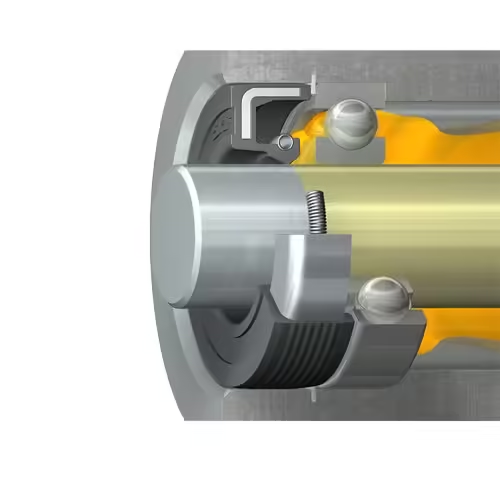
A rotary tiller oil seal is a rotary shaft seal used to prevent lubricating oil or grease from leaking out of the gearbox, bearing housing, or rotary shaft area. At the same time, it blocks soil, dust, mud, and water from entering the internal mechanism.
In simple words, it keeps oil inside and keeps dirt outside.
This sounds simple, but in agricultural machinery, this job is not easy. A rotary tiller works close to the ground. The seal is often exposed to soil particles, water splash, mud, fertilizer residue, weeds, vibration, and shock load.
That is why choosing the wrong oil seal can lead to repeated leakage very quickly.
Main Functions in Rotary Tiller Equipment
Retain Gear Oil or Lubricant
The seal keeps gear oil or grease inside the gearbox or bearing chamber. Without enough lubrication, gears, bearings, and shafts will wear much faster.
Prevent Soil, Mud, and Dust Ingress
Rotary tillers operate directly in soil. Fine dust and abrasive particles can easily reach the shaft area. If these particles pass through the seal, they may damage the bearing and contaminate the lubricant.
Protect Bearings and Gearbox Components
A failed oil seal does not only mean oil leakage. It may also mean bearing damage, oil degradation, shaft wear, and gearbox failure.
Extend Maintenance Intervals
A properly selected seal reduces leakage, downtime, repeated replacement, and total maintenance cost.
For a repair shop, this means fewer complaints.
For an OEM buyer, this means better machine reliability.
For a farmer, this means less time wasted in the field.
Why Oil Seal Selection Is Critical for Rotary Tillers
Rotary Tillers Operate in Harsh Agricultural Conditions
Rotary tillers are not clean machines. They work in dust, mud, wet soil, dry soil, stones, crop residue, and sometimes chemically treated land.
The shaft may also face vibration, shock load, and slight misalignment. These conditions are much harsher than many ordinary industrial rotary shaft applications.
A normal-looking oil seal may not survive long if the structure, rubber material, shaft surface, and installation are not suitable.
Premature Seal Failure Can Damage More Than the Seal
Some buyers focus only on the oil seal price. That is a mistake.
A cheap oil seal may save a few cents, but if it fails early, it can cause:
- Gearbox oil loss
- Bearing overheating
- Shaft surface wear
- Gear damage
- Machine downtime
- Customer complaints
- Higher repair cost
In agricultural machinery, the failure cost is often much higher than the seal cost.
The Right Seal Improves Total Service Life
Long service life does not depend only on rubber material. It depends on the full sealing system:
- Seal structure
- Lip design
- Rubber compound
- Shaft surface condition
- Housing bore accuracy
- Lubrication
- Installation method
- Mud and dust protection
- Gearbox pressure control
A good oil seal installed on a badly worn shaft may still leak. A good material with the wrong lip design may also fail. This is why buyers should evaluate the complete working condition, not only the seal appearance.
How a Rotary Tiller Oil Seal Works
Sealing Lip Contact with the Rotating Shaft
The main sealing lip keeps controlled contact pressure against the rotating shaft surface. This contact prevents oil from leaking out while allowing the shaft to rotate.
The pressure must be balanced. Too little pressure causes leakage. Too much pressure increases friction, heat, and lip wear.
Spring-Loaded Lip Design
Many rotary shaft oil seals use a garter spring behind the main sealing lip. The spring helps maintain lip tension, especially during continuous rotation or after slight wear.
For rotary tiller gearboxes, spring quality matters. A weak or unstable spring can reduce sealing performance.
Dust Lip or Auxiliary Lip Protection
A secondary dust lip helps block mud, dust, water splash, and crop residue before they reach the main sealing lip.
For rotary tillers, a dust lip is not decoration. It is often necessary.
Single-lip seals may work in clean internal positions, but for exposed agricultural shafts, a double-lip seal is usually a safer choice.
Oil Film Formation
A thin lubricant film between the shaft and sealing lip reduces friction and heat.
If the lip runs dry, the rubber may harden, crack, burn, or wear quickly. This is why the sealing lip should be lubricated before installation.
Common Rotary Tiller Oil Seal Types
Single-Lip Oil Seal
A single-lip seal is mainly used for oil retention in relatively clean environments.
It is usually not ideal for exposed rotary tiller positions where dust, mud, and water are common.
Double-Lip Oil Seal
A double-lip oil seal includes a main oil sealing lip and an additional dust lip.
This is one of the most common choices for agricultural rotary tiller applications because it provides both oil retention and contamination protection.
TC Oil Seal
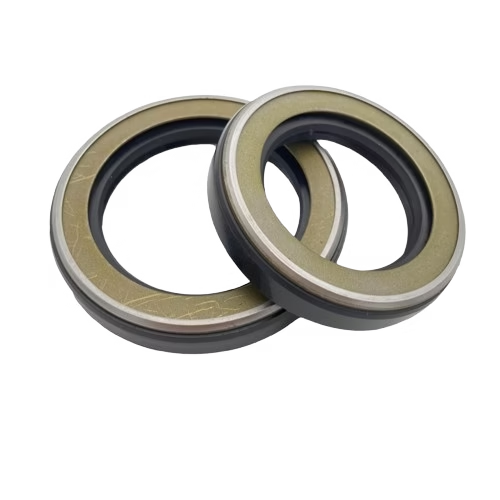
The TC oil seal is a widely used rubber-covered double-lip rotary shaft seal. It offers good sealing performance, easy installation, and reasonable cost.
For many rotary tiller gearboxes and agricultural shaft positions, TC oil seals are a practical standard choice.
Metal-Cased Oil Seal
Metal-cased oil seals may provide stronger housing retention. However, they require a suitable bore condition.
If the housing bore is rough, corroded, or slightly damaged, a rubber-covered seal may sometimes provide better fitting flexibility.
Custom Rotary Shaft Seal
Custom seals may be needed when the shaft size, housing design, pressure condition, contamination level, or operating environment is outside standard oil seal capability.
For heavy-duty agricultural machinery, custom lip design, reinforced structure, or special material may improve service life.
Oil Seal Structure Comparison
| Seal Type | Main Advantage | Limitation | Suitable Rotary Tiller Use |
|---|---|---|---|
| Single-lip seal | Lower cost | Poor dust protection | Clean internal gearbox positions |
| Double-lip seal | Oil retention + dust exclusion | Slightly higher friction | Common rotary tiller shafts |
| TC oil seal | Easy installation, good sealing | Limited pressure resistance | Standard tiller gearbox and shaft |
| Metal-cased seal | Strong outer case | Requires accurate housing | Rigid housings with stable bore |
| Custom seal | Designed for specific risk | Higher tooling or MOQ | Severe wear, special dimensions, harsh field use |
Key Factors When Choosing a Rotary Tiller Oil Seal
1. Confirm the Correct Seal Size
The first rule is simple: the size must be correct.
Oil seals are usually described as:
ID × OD × Width
For example:
35 × 52 × 7 mm
This means:
- Inner Diameter: 35 mm
- Outer Diameter: 52 mm
- Width: 7 mm
Inner Diameter
The inner diameter must match the shaft diameter. If the ID is too large, the lip pressure may be insufficient and leakage may occur. If the ID is too small, the lip may wear quickly or generate excessive heat.
Outer Diameter
The outer diameter must fit the housing bore tightly enough to prevent outside leakage or seal movement.
A loose OD may cause the seal to rotate in the housing. A too-tight OD may deform the seal during installation.
Seal Width
The width must match the available installation space.
A wider seal may improve stability in some cases, but it can interfere with assembly if the housing space is limited.
Buyer note: Buyers should provide seal size in the format ID × OD × Width, such as 35 × 52 × 7 mm.
2. Check Shaft Surface Condition
The shaft surface directly affects oil seal life.
Even a high-quality oil seal may fail quickly if the shaft is scratched, rusted, eccentric, or worn.
Shaft Roughness
The shaft contact surface should be smooth enough to prevent lip cutting, but not polished like a mirror.
Excessive roughness accelerates lip wear. Poor surface finish can destroy the sealing edge in a short time.
Shaft Wear Groove
A worn groove at the sealing position creates a leakage path.
In this case, simply replacing the seal may not solve the problem. Buyers may need to:
- Reposition the seal
- Repair the shaft
- Use a shaft sleeve
- Choose a modified sealing solution
Shaft Runout and Misalignment
Rotary tillers may experience vibration and shock load. Excessive shaft runout causes uneven lip contact and early leakage.
If the shaft shakes too much, even a good seal will suffer.
3. Select the Right Rubber Material
NBR for Standard Agricultural Use
NBR oil seals are commonly used for rotary tiller applications because NBR offers:
- Good mineral oil resistance
- Good wear resistance
- Good cost performance
- Suitable performance for many agricultural machinery applications
For most standard rotary tiller gearboxes using normal gear oil, NBR is usually the first choice.
FKM for High Temperature or Severe Oil Conditions
FKM oil seals offer better heat resistance and chemical resistance than NBR.
FKM may be used when:
- Gearbox temperature is higher
- Oil additives are aggressive
- Working hours are longer
- Longer service life is required
- The buyer wants a premium sealing solution
FKM costs more, but in demanding applications, it may reduce downtime and replacement frequency.
ACM for Some Lubricating Oil Applications
ACM may be considered for certain oil and heat conditions. However, it is less common than NBR and FKM in many agricultural replacement applications.
Avoid Choosing Material by Price Alone
The lowest-cost material is not always the cheapest solution.
If the seal faces high temperature, incompatible oil, abrasive dust, or long operating hours, low-grade material may fail quickly.
A failed seal may cost much more than the price difference between NBR and FKM.
Material Comparison for Rotary Tiller Oil Seals
| Material | Typical Temperature Range | Oil Resistance | Abrasion Resistance | Cost Level | Recommended Use |
|---|---|---|---|---|---|
| NBR | Approx. -30°C to +100°C | Good | Good | Low to medium | Standard rotary tiller applications |
| FKM | Approx. -20°C to +200°C | Excellent | Moderate to good | High | High temperature or premium service life |
| ACM | Approx. -20°C to +150°C | Good for some oils | Moderate | Medium | Selected gearbox oil applications |
| Silicone | Approx. -50°C to +200°C | Limited for many oils | Poor to moderate | Medium to high | Not usually preferred for abrasive tiller shafts |
4. Match the Seal to the Lubricant
The oil seal material must be compatible with the gearbox oil, grease, or lubricant used in the rotary tiller.
Mineral Gear Oil
NBR is often suitable for many standard mineral oils used in agricultural machinery.
Synthetic Oil or Additive-Rich Oil
FKM may be more reliable when the oil contains stronger additives, when operating temperature is high, or when chemical resistance requirements are higher.
Grease-Lubricated Positions
For grease applications, lip design and friction control are important. Even with grease, insufficient lubrication at the lip can still cause heat and wear.
5. Consider Dust, Mud, and Water Exposure
External contamination is one of the main reasons rotary tiller oil seals fail.
Dry Dusty Soil
Fine dust can act like grinding powder. A dust lip helps reduce abrasive particle entry.
Wet Muddy Soil
Wet mud can pack around the shaft area. The seal should resist water splash, mud pressure, and soil abrasion.
Fertilizer or Chemical Exposure
If the tiller operates in chemically treated soil, rubber material compatibility should be reviewed carefully.
6. Evaluate Shaft Speed and Temperature
Higher shaft speed increases friction heat at the sealing lip.
If the temperature rises beyond the rubber’s capability, the lip may harden, crack, lose elasticity, or wear quickly.
Low to Medium Speed Rotary Shafts
NBR double-lip seals are commonly suitable when lubrication and shaft condition are acceptable.
High Heat Gearbox Areas
FKM or improved seal design may be required if the gearbox operates at elevated temperature for long periods.
7. Check Pressure Conditions
Standard rotary oil seals are generally designed for low-pressure sealing.
If internal pressure builds up due to blocked vents, excess oil, or heat expansion, leakage may occur even when the seal size is correct.
Gearbox Ventilation
A blocked breather can increase internal pressure and force oil past the seal lip.
Overfilled Gearbox
Too much oil may increase leakage risk, especially during continuous operation.
Common Causes of Rotary Tiller Oil Seal Failure
Abrasive Dust and Soil Particles
Fine soil particles can damage the sealing lip and shaft contact surface.
Incorrect Seal Size
Wrong inner diameter, outer diameter, or width can cause poor sealing, loose fit, or excessive lip pressure.
Poor Shaft Surface
Rust, scratches, wear grooves, or eccentric rotation can quickly damage the lip.
Improper Installation
Hammering the seal unevenly, damaging the lip, or installing the seal in the wrong direction can lead to immediate leakage.
Material Incompatibility
A seal material that is not compatible with the oil or temperature may swell, harden, crack, or lose elasticity.
Gearbox Pressure Build-Up
Blocked vents or overfilled oil chambers may force lubricant past the seal.
Failure Analysis Table
| Failure Symptom | Possible Cause | Recommended Check | Corrective Action |
|---|---|---|---|
| Oil leakage soon after installation | Wrong size or damaged lip | Check ID, OD, width, and lip condition | Replace with correct seal |
| Leakage after short use | Shaft groove or rough shaft | Inspect shaft contact area | Repair shaft or use sleeve |
| Lip hardening or cracking | Excessive temperature | Check gearbox heat and oil type | Use better material such as FKM |
| Mud inside bearing area | Poor dust protection | Check external contamination | Use double-lip or protected design |
| Seal pushed out | Housing fit issue or pressure | Check bore and breather | Correct housing fit and ventilation |
| Uneven lip wear | Shaft runout or misalignment | Measure shaft movement | Repair shaft or bearing support |
Rotary Tiller Oil Seal Material Selection Guide
When to Choose NBR Oil Seals
Choose NBR when the rotary tiller operates under normal agricultural temperatures, uses standard gear oil, and requires a cost-effective replacement seal.
NBR is suitable for many standard agricultural oil seal applications.
When to Choose FKM Oil Seals
Choose FKM when the application involves higher temperature, longer operating hours, stronger oil additives, or higher service life expectations.
FKM is not necessary for every rotary tiller, but it is useful when ordinary NBR seals fail too quickly because of heat or oil conditions.
When Standard Materials May Not Be Enough
A custom material or structure may be required when the seal faces:
- Severe mud
- Chemical exposure
- High shaft speed
- Poor lubrication
- Abnormal pressure
- Serious shaft wear
- Heavy-duty field operation
Hardness Considerations
Many oil seals use rubber hardness around 70 Shore A, but the best hardness depends on lip design, shaft speed, pressure, and contamination level.
A harder rubber is not always better.
If the rubber is too hard, the lip may lose flexibility and fail to follow shaft movement. In rotary tiller applications with vibration, flexibility is important.
Standard Oil Seal vs Custom Rotary Tiller Seal
When a Standard Oil Seal Is Suitable
A standard oil seal is suitable when the shaft, housing, oil, temperature, and working conditions are within normal design limits.
For common replacement needs, a standard NBR TC oil seal is often enough.
When a Custom Seal Is Required
A custom oil seal may be required when the application is more difficult.
The Original Seal Size Is Non-Standard
Some agricultural machinery uses special dimensions that are not always available from standard catalogs.
The Working Environment Is Extremely Dirty
Additional dust protection, special lip geometry, or reinforced design may improve service life.
The Shaft Has Wear or Runout Issues
A modified design may help compensate for real equipment conditions, although serious shaft damage should still be repaired.
OEM Production Requires Stable Quality
OEM buyers may require consistent material, tolerance, packaging, batch traceability, and stable long-term supply.
Standard vs Custom Solution
| Selection | Best For | Advantage | Limitation |
|---|---|---|---|
| Standard oil seal | Common replacement needs | Fast delivery, lower cost | Limited design flexibility |
| Material upgrade | Higher temperature or oil resistance | Longer service life | Higher unit cost |
| Custom lip design | Severe dust or mud | Better field performance | Requires technical confirmation |
| Custom size | Non-standard shaft/housing | Exact fit | Tooling or MOQ may apply |
| OEM seal solution | Machinery manufacturers | Stable supply and specification control | Requires drawings or samples |
How to Choose the Right Rotary Tiller Oil Seal Step by Step
Step 1: Identify the Installation Position
Determine whether the seal is used in the gearbox, blade shaft, bearing housing, PTO connection, or another rotary shaft location.
Different positions may face different oil, dust, speed, and temperature conditions.
Step 2: Measure the Seal or Equipment Dimensions
Measure:
- Shaft diameter
- Housing bore
- Seal width
If the old seal has markings, record them clearly. For example:
35 × 52 × 7 mm
Step 3: Confirm the Working Medium
Check whether the seal contacts:
- Gear oil
- Grease
- Water
- Mud
- Dust
- Fertilizer residue
- Chemical exposure
Material selection must match the medium.
Step 4: Evaluate Operating Conditions
Review:
- Temperature
- Shaft speed
- Working hours
- Vibration
- Dust level
- Mud exposure
- Pressure condition
Step 5: Inspect Shaft and Housing Condition
Check for:
- Scratches
- Corrosion
- Looseness
- Eccentricity
- Wear grooves
- Damaged bore surfaces
A new seal cannot solve every mechanical problem.
Step 6: Select Seal Type and Material
Choose the structure and rubber material based on the actual application environment.
For normal conditions, NBR double-lip seals are often suitable.
For higher heat or demanding service life, FKM may be considered.
For severe mud or special equipment, custom design may be better.
Step 7: Confirm Installation Direction
The main sealing lip should generally face the oil or lubricant side.
The dust lip should face the outside contamination side.
Installing the seal backward is a common and very avoidable mistake.
Step 8: Test and Monitor After Installation
After installation, check for:
- Oil leakage
- Abnormal heat
- Noise
- Oil level reduction
- Mud entry
Early inspection helps prevent serious gearbox damage.
Installation Notes for Longer Oil Seal Service Life
Clean the Shaft and Housing Before Installation
Remove soil, old oil, rust, burrs, and metal particles before fitting the new seal.
Never install a new seal into a dirty bore and expect long service life.
Lubricate the Sealing Lip
Apply suitable oil or grease to the lip before installation to reduce dry friction at start-up.
Dry running can damage the sealing lip very quickly.
Avoid Damaging the Lip During Assembly
Use protective tools when passing the seal over keyways, threads, or sharp shaft edges.
A small cut on the lip may cause immediate leakage.
Press the Seal Evenly
The seal should be installed squarely into the housing.
Uneven installation can distort the case and sealing lip.
Do Not Reuse a Removed Oil Seal
Once removed, the seal may be deformed or damaged. Reuse increases leakage risk.
Confirm Breather and Oil Level
A blocked gearbox breather or overfilled oil chamber can cause leakage even when the seal is correct.
If the gearbox pressure is too high, oil will find a way out.
Cost vs Performance: How Buyers Should Decide
Low-Cost Seal vs Long-Life Seal
A low-cost seal may be acceptable for light-duty repair.
But for frequent field operation, OEM production, or heavy-duty tillage, the lowest-cost seal may not be the best choice.
Material Upgrade Cost
FKM costs more than NBR, but it may reduce downtime when heat, oil additives, or long working hours are key concerns.
Failure Cost Is Often Higher Than Seal Cost
For rotary tillers, seal failure can cause oil loss, bearing damage, gearbox wear, and machine downtime.
Buyers should evaluate total maintenance cost, not only unit price.
A seal is a small part, but it protects expensive parts.
Buyer Decision Table
| Buyer Priority | Recommended Choice | Reason |
|---|---|---|
| Lowest replacement cost | Standard NBR TC oil seal | Suitable for normal repair |
| Longer service interval | High-quality NBR or FKM double-lip seal | Better durability |
| Severe mud and dust | Double-lip or custom protected seal | Better contamination control |
| OEM stable production | Controlled specification oil seal | Consistent quality |
| Old equipment repair | Seal + shaft inspection | Prevent repeat leakage |
Buyer Mistakes to Avoid
Choosing Only by Outer Appearance
Two oil seals may look similar but differ in material, lip design, spring quality, and dimensional tolerance.
A black rubber seal is not automatically the same as another black rubber seal.
Ignoring Shaft Wear
Replacing only the seal without checking the shaft may cause repeated leakage.
This is one of the most common mistakes in repair work.
Using the Wrong Material
NBR, FKM, ACM, and silicone have different oil resistance, temperature resistance, and abrasion resistance.
Material should be selected according to the working medium and temperature, not only price.
Installing the Seal in the Wrong Direction
Incorrect lip direction can cause oil leakage and poor dust protection.
The oil lip should generally face the oil side. The dust lip should face the outside contamination side.
Buying Without Confirming Working Conditions
A supplier needs application details to recommend the correct seal, especially for OEM or heavy-duty agricultural use.
Without working condition information, the recommendation is only a guess.
What Information Should Buyers Provide Before Ordering?
Seal Dimensions
Provide inner diameter, outer diameter, and width.
Example:
35 × 52 × 7 mm
Application Position
Explain whether the seal is used in:
- Gearbox
- Blade shaft
- Bearing housing
- Drive shaft
- PTO connection
Working Medium
Confirm whether the seal contacts:
- Gear oil
- Grease
- Water
- Mud
- Dust
- Fertilizer residue
- Chemical exposure
Operating Conditions
Provide temperature, shaft speed, pressure, vibration level, and working hours if available.
Material Requirement
Specify NBR, FKM, or other material if already known.
If you are not sure, provide the working conditions and let the supplier recommend.
Sample, Drawing, or Photo
For custom seals or unclear dimensions, samples and drawings help confirm structure and tolerance.
A clear photo of the old seal and installation position is also useful.
Order Quantity and Packaging Requirement
OEM buyers and distributors should confirm:
- Quantity
- Labeling
- Packaging
- Delivery requirement
- Batch traceability
- Custom marking if needed
Practical Case Study: Repeated Oil Leakage on a Rotary Tiller Gearbox
Typical Application Scenario
A customer reported repeated oil leakage on a rotary tiller gearbox after replacing the oil seal during field operation.
The equipment worked in dusty soil, with mud and crop residue around the shaft area.
Possible Causes
The possible causes included:
- Shaft wear groove
- Incorrect seal size
- Damaged installation lip
- Blocked gearbox breather
- Overfilled gearbox oil
- Single-lip seal used in a muddy environment
Recommended Checks
Check the Shaft Contact Area
Look for scratches, rust, or grooves at the sealing line.
If a groove exists, the new seal lip may sit in the same damaged position and leak again.
Check the Seal Direction
Confirm that the main lip faces the oil side.
The dust lip should face the outside mud and dust side.
Check Gearbox Pressure
Inspect the breather and oil level.
If pressure builds up inside the gearbox, oil may be forced past the sealing lip.
Check Seal Structure
For muddy conditions, a double-lip seal is usually more suitable than a single-lip seal.
In severe agricultural environments, a reinforced or custom protected design may be considered.
Likely Risk Factors
If the shaft is worn and the seal is replaced without repair, leakage may return even when the new oil seal is correctly selected.
Many people blame the seal too quickly. In fact, the shaft, bore, pressure, and installation should also be checked.
Recommended Solution
Use the correct double-lip oil seal, inspect or repair the shaft surface, lubricate the lip before installation, and confirm gearbox ventilation.
For repeated leakage in dusty or muddy conditions, a seal with better dust protection or a custom lip design may provide longer service life.
When Should You Not Use a Standard Rotary Tiller Oil Seal?
High Internal Pressure Applications
Standard oil seals are not designed for significant pressure.
If the application has internal pressure, a pressure-resistant sealing design may be required.
Severely Damaged Shaft or Housing
If the shaft or housing surface is seriously damaged, replacing the seal alone may not solve leakage.
The mechanical condition must be repaired first.
Extreme Chemical Exposure
Special rubber compounds may be needed where fertilizer chemicals, fuel, or aggressive fluids are present.
Heavy Mud Packing Around the Shaft
If mud packs heavily around the shaft area, additional sealing protection or a custom sealing structure may be needed.
A normal oil seal may not be enough.
Relevant Standards and Quality Considerations
DIN 3760 and DIN 3761 for Rotary Shaft Seals
DIN 3760 and DIN 3761 are commonly referenced standards for rotary shaft seals, including dimensions and technical requirements.
For OEM buyers, these standards help define basic seal expectations.
ASTM D2000 for Rubber Material Classification
ASTM D2000 may be used to define rubber material properties for industrial buyers and OEM projects.
It helps specify rubber type, hardness, heat resistance, oil resistance, and other performance requirements.
Supplier Quality Control Points
Dimensional Inspection
Check ID, OD, width, lip geometry, and tolerance.
Material Verification
Confirm rubber compound, hardness, and oil resistance.
Spring and Lip Quality
The spring should provide stable lip pressure, and the sealing lip should be clean and free from defects.
Batch Consistency
OEM buyers should pay attention to consistent performance across batches.
A good sample is not enough. Stable batch quality is more important for long-term supply.
FAQ
1. What type of oil seal is best for a rotary tiller?
A double-lip oil seal, such as a TC oil seal, is commonly suitable because it helps retain oil while blocking dust, mud, and soil particles.
2. Is NBR suitable for rotary tiller oil seals?
Yes. NBR is suitable for many standard rotary tiller applications using mineral gear oil and normal agricultural operating temperatures.
3. When should I use FKM instead of NBR?
FKM is recommended when the application has higher temperature, aggressive oil additives, longer service hours, or higher durability requirements.
4. Why does my rotary tiller oil seal keep leaking?
Common causes include wrong seal size, worn shaft surface, poor installation, blocked gearbox breather, overfilled oil, or unsuitable seal material.
5. Which direction should a rotary tiller oil seal face?
The main sealing lip usually faces the oil or lubricant side, while the dust lip faces the external mud and dust side.
6. Can I use a standard oil seal for all rotary tillers?
Not always. Non-standard dimensions, severe mud exposure, shaft wear, or OEM requirements may require a custom oil seal solution.
7. What information should I provide when buying rotary tiller oil seals?
Provide seal size, shaft diameter, housing bore, working medium, application position, temperature, shaft speed, quantity, and sample or drawing if available.
8. How can I extend rotary tiller oil seal service life?
Use the correct material and structure, inspect the shaft surface, install the seal correctly, lubricate the lip, control contamination, and maintain proper gearbox ventilation.
Conclusion
Choosing the right rotary tiller oil seal is not only about finding the same size. Buyers should consider seal structure, rubber material, shaft condition, mud and dust exposure, gearbox oil, operating temperature, installation direction, and pressure control.
For normal agricultural use, a high-quality NBR TC double-lip oil seal is often a practical and cost-effective choice. For higher temperature, longer working hours, or more demanding gearbox conditions, FKM may provide better service life.
For severe mud, worn shafts, special dimensions, or OEM production, a custom rotary shaft seal solution may be more reliable than a standard catalog seal.
DRO Rubber supplies oil seals, O-rings, and custom rubber sealing solutions for agricultural machinery, rotary tillers, gearboxes, hydraulic equipment, and industrial applications.
Website: drorubber.com
WhatsApp: +0086 15815831911
WeChat: +0086 13784044874