Oil seal leakage is one of the most common problems I see in gearboxes, pumps, motors, agricultural machinery, and construction equipment. Many buyers blame the oil seal first. But after 20 years in sealing applications, I can tell you this clearly: many oil seal failures are not caused by the seal itself.
Wrong material, poor installation, scratched shaft surfaces, unsuitable lip design, and low-grade rubber compounds can all cause leakage. For buyers, maintenance teams, and OEM engineers, understanding a few key facts about oil seals can reduce downtime, avoid repeated repair, and prevent unnecessary purchasing mistakes.
1. Oil Seals Are Designed to Prevent Lubricant Leakage
The main function of an oil seal is to retain oil or grease inside a mechanical system while preventing dust, water, mud, and other contaminants from entering.
Oil seals are widely used in:
- Engines
- Gearboxes
- Pumps
- Electric motors
- Agricultural machinery
- Construction equipment
- Industrial transmission systems
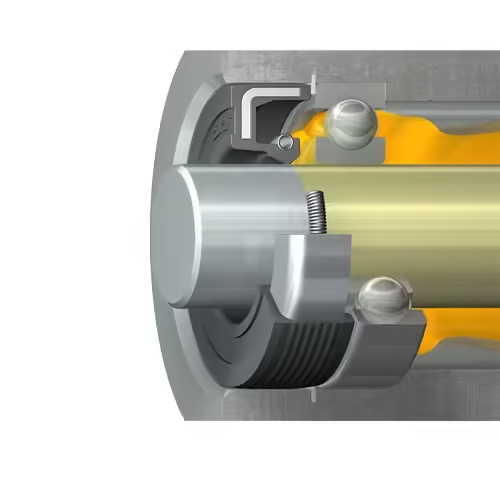
In rotating shaft applications, the sealing lip contacts the shaft surface and forms a controlled sealing interface. A reliable oil seal helps maintain lubrication, reduce friction, protect bearings and gears, and improve equipment service life.
What Happens When an Oil Seal Fails?
| Failure Result | Practical Impact |
|---|---|
| Lubricant leakage | Bearings and gears lose stable lubrication |
| Overheating | Friction increases and parts wear faster |
| Contamination | Dust, water, or mud enters the system |
| Shaft wear | The sealing track becomes damaged |
| Equipment downtime | Maintenance and labor costs increase |
For buyers, the cheapest oil seal is not always the lowest-cost option. A low-price seal may save a little on purchasing, but one leakage failure can cost far more in repair, downtime, and customer complaints.
2. Material Selection Directly Affects Oil Seal Performance
Oil seal material is one of the most important selection factors. The rubber compound must match the working environment, including oil type, temperature, shaft speed, pressure, and chemical exposure.
A standard NBR oil seal may work well in normal mineral oil applications. But if the equipment operates under high temperature, aggressive oil additives, or heavy-duty conditions, NBR may harden, crack, swell, or lose sealing force too early.
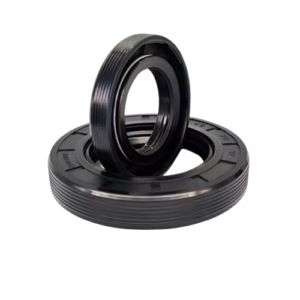
Common Oil Seal Material Comparison
| Material | Strength | Limitation | Suitable Applications |
|---|---|---|---|
| NBR | Good resistance to mineral oil and grease; cost-effective | Limited high-temperature and chemical resistance | General industrial equipment, gearboxes, motors |
| FKM / Viton | Excellent high-temperature and chemical resistance | Higher cost | Engines, high-temperature machinery, demanding oil environments |
| HNBR | Better heat, oil, and wear resistance than standard NBR | Higher cost than NBR | Automotive, hydraulic systems, heavy-duty equipment |
| EPDM | Good resistance to water, steam, and some chemicals | Not suitable for mineral oil | Water pumps, steam-related sealing, special chemical systems |
| Silicone | Good flexibility at high and low temperatures | Lower wear resistance in some dynamic applications | Special temperature conditions, light-duty sealing |
When Should You Choose a Lower-Cost Material?
NBR is usually suitable when:
- The medium is mineral oil or grease
- The working temperature is moderate
- Shaft speed and pressure are not extreme
- The application is standard industrial use
- Replacement is easy and downtime cost is low
FKM or HNBR should be considered when:
- The temperature is high
- Oil additives are aggressive
- Equipment is difficult to repair
- Failure may damage bearings, gears, or shafts
- The application requires long service life
A common purchasing mistake is treating NBR as a universal oil seal material. NBR is useful and economical, but it is not suitable for every working condition.
3. Oil Seal Structure Influences Sealing Efficiency
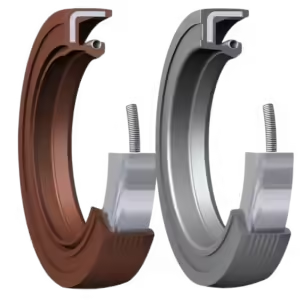
Oil seals may look simple, but their structure directly affects sealing performance. A standard oil seal usually includes a sealing lip, metal case, garter spring, and sometimes a dust lip.
Main Structural Parts of an Oil Seal
| Component | Function | Why It Matters |
|---|---|---|
| Sealing lip | Contacts the shaft and retains oil | Lip geometry affects leakage control and friction |
| Garter spring | Maintains radial force on the lip | Helps the lip keep stable contact with the shaft |
| Metal case | Supports installation and dimensional stability | Helps maintain a secure fit in the housing bore |
| Dust lip | Blocks external dust, mud, and particles | Important for dirty working environments |
Common Oil Seal Types
| Type | Feature | Typical Use |
|---|---|---|
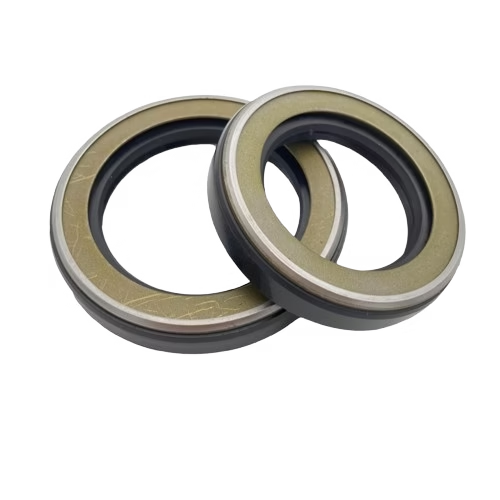
| TC oil seal | Double lip with spring | Common rotating shaft sealing with dust protection |
| SC oil seal | Single lip with spring | Internal oil retention in cleaner environments |
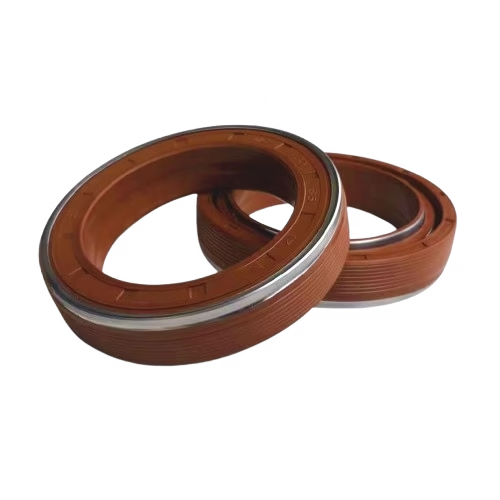
| TB oil seal | Rubber-covered outer diameter, double lip | Better housing sealing and external protection |
| SB oil seal | Rubber-covered outer diameter, single lip | General oil retention applications |
| TA oil seal | Metal case, double lip | Stable installation in specific housing designs |
Structure should not be chosen only by habit. For dusty environments such as tractors, excavators, and agricultural gearboxes, a dust lip is often necessary. For clean internal systems, a single-lip design may be enough and may reduce friction.
Choosing the wrong structure can make a good material fail early. In many cases, the rubber compound is not the problem. The lip design simply does not match the application.
4. Correct Installation Is Essential for Long Service Life
Even a premium oil seal can fail quickly if it is installed incorrectly. I have seen high-grade FKM oil seals leak within hours because the seal was hammered into the housing without proper tools.
That is not a material problem. That is installation damage.
Common Oil Seal Installation Mistakes
| Installation Mistake | Result |
|---|---|
| Scratched shaft surface | Lip damage and leakage |
| Uneven installation | Lip distortion and poor sealing contact |
| No lubricant on the sealing lip | Dry friction during startup |
| Wrong installation direction | Immediate leakage |
| Spring falls off during assembly | Loss of radial sealing force |
| Dirty housing bore | Poor outer diameter sealing |
Practical Installation Checklist
Before installation, check:
- The shaft surface is smooth and free from burrs
- The housing bore is clean and dimensionally correct
- The sealing lip is lubricated before assembly
- The installation tool presses the seal evenly
- The seal direction matches the oil side
- The lip is not twisted, folded, or damaged
- The shaft lead-in chamfer will not cut the sealing lip
Many oil seal leakage complaints are actually caused by installation errors. Before blaming the seal, always check the shaft surface, installation method, seal direction, and housing condition.
How to Choose the Right Oil Seal for Your Application
Do not select an oil seal by size alone. Size is only the starting point.
A proper oil seal selection should include:
| Selection Factor | Why It Matters |
|---|---|
| Shaft diameter | Determines lip contact area |
| Housing bore diameter | Affects outer diameter fit |
| Seal width | Must match installation space |
| Working temperature | Determines material selection |
| Shaft speed | Affects heat generation and lip wear |
| Lubricant type | Some oils can attack certain rubber compounds |
| Pressure condition | Standard oil seals are not designed for high pressure |
| External contaminants | Determines whether a dust lip is needed |
| Required service life | Helps decide between economical and higher-grade materials |
When Are Standard Oil Seals Suitable?
Standard oil seals are suitable when:
- Application conditions are common
- Temperature, speed, and oil type are normal
- Equipment is easy to maintain
- Existing seal design has proven reliable
- Cost control is important
When Should You Choose Custom Oil Seals?
Custom oil seals are better when:
- Standard seals fail repeatedly
- Shaft or housing dimensions are special
- Equipment works in mud, dust, water, or high temperature
- OEM projects require stable long-term supply
- Failure cost is much higher than seal cost
This is not only a price issue. If the equipment is difficult to disassemble, choosing a cheaper seal may save little at the purchasing stage but create serious maintenance risk later.
Manufacturer’s Advice: Do Not Buy Oil Seals Only by Size
A common buyer inquiry is:
I need a 35 × 52 × 7 oil seal. Please quote.
This information is not enough.
For the same size, the correct oil seal may be NBR, FKM, HNBR, TC type, SC type, dust-lip design, high-speed design, or a customized structure. If you only compare price by size, you may not be comparing the same product.
A better inquiry should include:
We need an oil seal for a gearbox shaft, size 35 × 52 × 7 mm, mineral gear oil, working temperature around 90°C, medium dust environment, shaft speed 1,500 rpm, used in agricultural machinery.
With this information, a manufacturer can recommend the right material, lip structure, and quality level. Without it, selection becomes guesswork.
Practical Purchasing Recommendation
Before placing an oil seal order, send your supplier the size, oil type, working temperature, shaft speed, working environment, and failure history. This simple step can prevent wrong material selection, poor structure choice, and repeated leakage.
For gearboxes, motors, pumps, agricultural machinery, and construction equipment, choose the oil seal based on working conditions first, then compare price. If you need help selecting the right material and structure, send your application details to our engineering team.
Website: drorubber.com
WhatsApp: +0086 15815831911
WeChat: +0086 13784044874