I have seen too many engine repair jobs go wrong because someone looked at blue exhaust smoke and immediately blamed the piston rings. Then they spend money on the wrong repair, only to find the oil consumption is still there.
Valve stem seals are small parts, but do not let the size fool you. When they harden, crack, or lose sealing control, they can cause blue smoke, oil burning, carbon deposits, spark plug fouling, failed emissions tests, and long-term engine damage.
So, is it worth replacing valve stem seals?
In many cases, yes — but only when the engine is still mechanically healthy. If the piston rings, cylinder walls, or valve guides are already badly worn, replacing valve stem seals alone may become a half-repair. That is where many people waste money.
What Are Valve Stem Seals and Why Do They Matter?
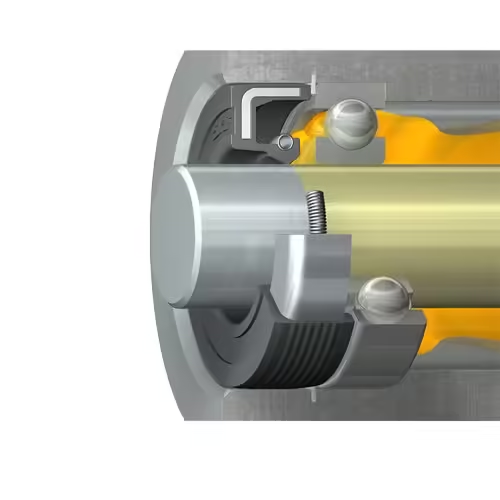
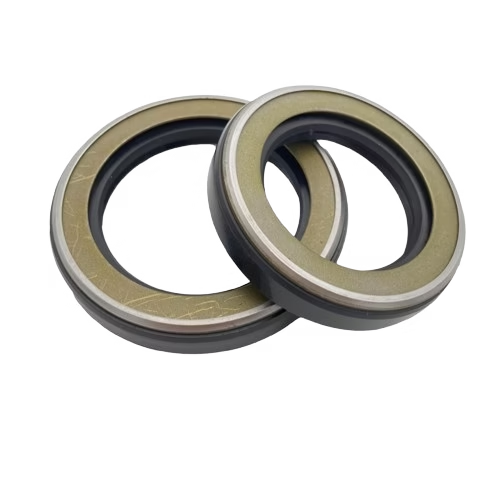
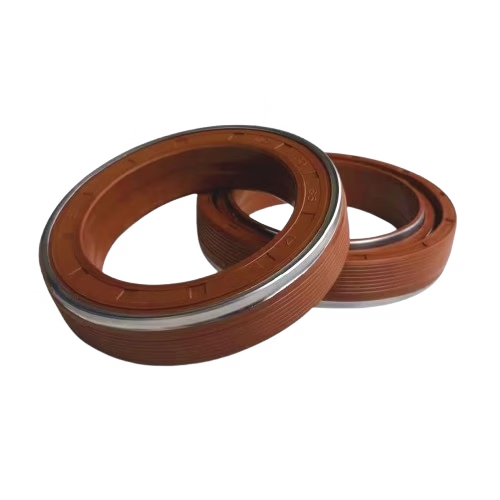
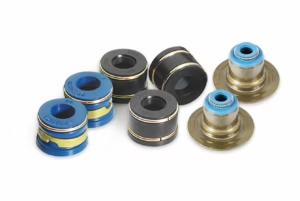
Valve stem seals are precision rubber or elastomeric seals installed around the valve stems inside an internal combustion engine. Their job is to control how much oil passes between the valve stem and valve guide.
They do not completely block oil. That is a common misunderstanding. A good valve stem seal allows just enough lubrication for valve movement while preventing excessive oil from entering the combustion chamber.
When this oil control fails, the engine starts burning oil.
Typical results include:
- Blue smoke from the exhaust
- Higher oil consumption
- Carbon buildup on valves and pistons
- Spark plug contamination
- Rough idle or misfire
- Oxygen sensor and catalytic converter damage
- Failed emissions inspection
This is not just a smoke problem. It is a long-term engine cleanliness and reliability problem.
For related sealing material selection, see our internal guide:
Rubber Material Comparison for Oil-Resistant Seals
Common Symptoms of Bad Valve Stem Seals
Blue Smoke After Startup
This is the classic sign.
When the vehicle sits overnight, oil leaks past worn valve stem seals and collects near the valve area. When the engine starts, that oil burns in the combustion chamber and produces blue smoke.
If the smoke appears mainly after startup and then reduces, valve stem seals should be high on the suspect list.
Blue Smoke After Idling or During Deceleration
I pay close attention to this one.
During long idling or engine braking, intake vacuum can pull oil past weak valve stem seals. If blue smoke appears when the throttle is opened again, the seals may no longer be controlling oil properly.
Increased Oil Consumption Without External Leaks
If the engine is losing oil but there are no visible leaks under the vehicle, the oil is probably being burned internally.
Bad valve stem seals are one possible cause. Piston rings are another. Do not guess. Diagnose it.
Carbon Deposits and Spark Plug Fouling
Excess oil in the combustion chamber creates carbon deposits on valves, pistons, spark plugs, and exhaust components.
This can lead to poor combustion, misfire, unstable idle, and higher maintenance costs.
Failed Emissions Test
Burning oil can contaminate the exhaust system and increase emissions. In some cases, the real cost is not the seal replacement — it is the catalytic converter damage that comes later.
Is It Worth Replacing Valve Stem Seals?
In Most Healthy Engines, Yes
Replacing valve stem seals is usually worth it when:
- Engine compression is still good
- Piston rings are not badly worn
- Cylinder walls are still in reasonable condition
- The vehicle still has practical or resale value
- Oil consumption is increasing
- Blue smoke is affecting emissions compliance
- Spark plugs or oxygen sensors are being contaminated
The seals themselves are not usually expensive. The labor is the real cost because the repair requires access to the valve train.
Listen to me on this: do not judge this repair only by the price of the parts. A cheap seal can still become an expensive mistake if it fails early and the engine must be opened again.
When Valve Stem Seal Replacement Is Not Worth It
There are cases where I would not recommend replacing valve stem seals alone.
It May Not Be Worth It If:
- Compression is low
- Leak-down testing shows ring or cylinder wall wear
- The engine burns oil heavily under acceleration
- Valve guides are badly worn
- The engine already has severe internal wear
- The vehicle value is lower than the repair cost
- The customer plans to scrap or sell the vehicle soon
Many people get trapped here. They replace the valve stem seals because the parts are cheap, but the real problem is piston ring wear. Then they complain the repair “did not work.”
The repair did not fail. The diagnosis failed.
Valve Stem Seals vs Piston Rings: Diagnosis Comes First
Blue smoke does not automatically mean bad valve stem seals. Piston rings can also allow oil into the combustion chamber.
Here is the practical difference.
| Symptom / Test Result | More Likely Valve Stem Seal Issue | More Likely Piston Ring Issue |
|---|---|---|
| Blue smoke mainly after startup | Yes | Possible |
| Blue smoke after long idle | Yes | Possible |
| Blue smoke under hard acceleration | Possible | More likely |
| Low compression | Less likely | More likely |
| High crankcase pressure | Less likely | More likely |
| Oil on spark plugs | Possible | Possible |
| Heavy oil consumption all the time | Possible | More likely |
| Engine has high mileage and poor power | Possible | More likely |
Recommended Diagnosis Before Replacement
A proper workshop should check:
- Compression test
- Leak-down test
- Spark plug condition
- Oil consumption pattern
- Exhaust smoke timing
- Valve guide wear
- PCV system condition
I have seen valve stem seals blamed when the PCV valve was the real issue. That is a basic mistake, but it still happens.
Valve Stem Seal Material Comparison: Cheap Rubber vs High-Performance Elastomer
Material selection matters because valve stem seals work in a hostile environment: hot oil, friction, thermal cycling, fuel vapor, additives, and constant valve movement.
Common Valve Stem Seal Materials
| Material | Heat Resistance | Oil Resistance | Typical Use | Buyer’s Comment |
|---|---|---|---|---|
| Natural Rubber | Low | Poor to moderate | Low-cost, non-critical use | Not suitable for modern high-temperature engines |
| NBR | Moderate | Good | Standard oil seal applications | Cost-effective but limited at higher temperatures |
| ACM | Good | Good | Automotive oil environments | Better aging resistance than NBR |
| Silicone | Good heat resistance | Moderate oil resistance | Some high-temp applications | Not always ideal for oil-heavy sealing |
| FKM / Fluoroelastomer | Excellent | Excellent | High-temperature engines | Higher cost, better long-term stability |
My Practical Recommendation
For low-temperature, low-load engines, NBR may be acceptable if the application is not demanding.
For modern engines, turbocharged engines, high-temperature working conditions, or long service life requirements, FKM valve stem seals are usually the safer choice.
This is not just about buying “better rubber.” It is about reducing repeat labor. If the engine must be opened again because a cheap seal hardened early, the customer pays far more than the price difference between NBR and FKM.
Cost vs Performance: Where Buyers Often Make the Wrong Decision
Valve stem seals are a classic example of a low-cost part with high labor exposure.
The seal may be inexpensive, but accessing it can require major disassembly. That changes the buying logic.
Cost Decision Table
| Option | Part Cost | Labor Risk | Service Life | Best For | Risk Level |
|---|---|---|---|---|---|
| Low-cost generic seals | Low | High if failure repeats | Unstable | Temporary repair, low-value engine | High |
| Standard NBR seals | Low to medium | Moderate | Acceptable in normal conditions | Budget repair, moderate temperature | Medium |
| ACM seals | Medium | Lower | Good | Automotive oil exposure | Medium-low |
| FKM valve stem seals | Higher | Lowest repeat-repair risk | Long | High-temperature or long-life repair | Low |
A buyer who only compares unit price is missing the real cost.
The real question is:
How much does it cost if this seal fails again?
For engine repair, repeat labor is usually more expensive than the seal itself. Many people learn this too late.
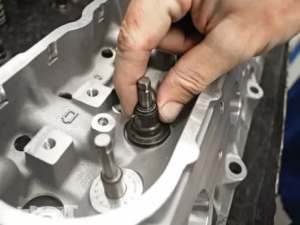
Can Valve Stem Seals Be Replaced Without Removing the Cylinder Head?
Yes, in some engines.
With the right tools, compressed air can be used to hold the valves in place while the seals are replaced. This can reduce labor time and repair cost.
But do not treat this as a universal method.
It Depends On:
- Engine design
- Valve train accessibility
- Technician skill
- Workshop tools
- Valve guide condition
- Risk of dropping a valve into the cylinder
If the valve guides are badly worn, replacing seals without inspecting the head may only hide the real issue for a short time.
When the engine has severe wear, removing the cylinder head may be the better long-term decision.
What Happens If You Do Not Replace Bad Valve Stem Seals?
You can drive with bad valve stem seals for a while. Many people do.
But the damage usually gets more expensive over time.
Possible Long-Term Consequences
| Problem | What It Means in Real Use |
|---|---|
| Higher oil consumption | More frequent oil top-ups and higher operating cost |
| Spark plug fouling | Misfire, rough idle, poor fuel economy |
| Carbon buildup | Reduced combustion efficiency and performance |
| Oxygen sensor contamination | Incorrect air-fuel readings |
| Catalytic converter damage | Expensive exhaust system repair |
| Failed emissions inspection | Legal and registration problems in some markets |
| Poor resale value | Visible blue smoke lowers buyer confidence immediately |
Do not ignore blue smoke just because the engine still runs. Engines often keep running while damage is quietly building.
Real Application Scenarios: Should You Replace or Not?
Scenario 1: Good Engine, Blue Smoke After Startup
Recommendation: Replace valve stem seals.
If compression is good and the smoke mainly appears after startup, the repair is usually worth it.
Use good-quality seals, preferably ACM or FKM depending on engine temperature and budget.
Scenario 2: High-Mileage Engine With Low Compression
Recommendation: Do full engine diagnosis first.
Replacing valve stem seals alone may not solve the problem. Piston rings, cylinder walls, or valve guides may also be worn.
This is where cheap repair logic becomes expensive.
Scenario 3: Commercial Vehicle or Fleet Engine
Recommendation: Use higher-grade seals.
Downtime matters. Labor matters. Repeat repair matters.
For fleet maintenance, I would rather pay more for stable sealing performance than save a little on low-grade rubber and risk another teardown.
Scenario 4: Low-Value Old Vehicle
Recommendation: Compare repair cost against vehicle value.
If the engine is otherwise weak and the vehicle has little market value, replacement may not be financially sensible unless the owner wants to keep the vehicle running for personal reasons.
Scenario 5: Performance or High-Temperature Engine
Recommendation: Choose FKM valve stem seals.
Turbocharged engines, high operating temperatures, and aggressive oil conditions demand better material stability.
This is not the place to gamble with cheap rubber.
How to Choose High-Quality Valve Stem Seals
A reliable valve stem seal is not only about the rubber compound. Manufacturing precision matters just as much.
Key Quality Requirements
| Requirement | Why It Matters |
|---|---|
| Oil resistance | Prevents swelling, softening, and chemical breakdown |
| Heat resistance | Reduces hardening and cracking |
| Low compression set | Maintains sealing force over time |
| Accurate inner diameter | Controls oil film correctly |
| Stable sealing lip geometry | Prevents over-lubrication or dry friction |
| Good curing control | Avoids early aging and inconsistent hardness |
| Surface finish control | Reduces leakage and installation damage |
A poor-quality valve stem seal may look fine when new. The problem appears after heat, oil, and time expose weak material or poor molding control.
As a sealing engineer, I care more about consistency than one perfect sample. One good sample means nothing if the batch quality is unstable.
For custom sealing projects, see:
Automotive Rubber Sealing Solutions
Buyer’s Checklist Before Ordering Valve Stem Seals
Before purchasing replacement valve stem seals, confirm these points:
| Check Item | Why It Matters |
|---|---|
| Engine model and valve size | Prevents dimensional mismatch |
| Working temperature | Determines material choice |
| Engine oil type | Affects rubber compatibility |
| Valve stem diameter | Critical for sealing lip fit |
| Valve guide condition | Worn guides can defeat new seals |
| OEM or custom requirement | Impacts tooling and tolerance control |
| Quantity and batch consistency | Important for repair shops and distributors |
| Material certificate requirement | Needed for professional procurement |
Do not order valve stem seals only by appearance. Similar-looking seals can have different rubber materials, hardness, lip designs, and temperature performance.
That is how wrong parts enter the supply chain.
Final Practical Recommendation
Replacing valve stem seals is worth it when the engine has good compression, the valve guides are not badly worn, and the symptoms clearly point to oil leaking past the valve stems.
It is not worth treating valve stem seals as a magic fix for every blue smoke problem. Diagnose first. Then choose the seal material based on engine temperature, oil exposure, repair value, and expected service life.
For most serious repairs, especially where labor cost is high, choose a stable ACM or FKM valve stem seal instead of gambling on the cheapest rubber part. The seal is small, but the cost of doing the job twice is not small at all.
For professional valve stem seals, custom rubber sealing solutions, or material selection support, contact drorubber.com.
WhatsApp: +0086 15815831911
WeChat: +0086 13784044874