Rubber gaskets and rubber seals are often mentioned together in industrial purchasing, equipment maintenance, and mechanical design. In many cases, buyers use the two terms interchangeably.
However, from an engineering and procurement point of view, they are not exactly the same.
A rubber gasket is usually used between two stationary surfaces to prevent leakage. A rubber seal is a broader category that may include gaskets, O-rings, oil seals, lip seals, door seals, shaft seals, extruded profiles, and custom molded sealing components.
For engineers, OEM buyers, and maintenance teams, understanding the difference helps avoid wrong material selection, early leakage, repeated replacement, and unnecessary equipment downtime.
This guide explains the difference between rubber gaskets and rubber seals, including their functions, materials, standards, compression set, applications, installation tips, and selection criteria.
What Is a Rubber Gasket?
A rubber gasket is a sealing component placed between two mating surfaces. It is compressed between parts such as flanges, covers, housings, pipe joints, pump bodies, or machine panels.
The main function of a rubber gasket is to create a static seal. When compressed, the gasket fills small surface imperfections, machining marks, scratches, or uneven contact areas. This prevents liquids, gases, dust, or other media from passing through the joint.
Common Types of Rubber Gaskets
Rubber gaskets are usually simpler in structure than dynamic seals, but they can still be customized according to the shape of the mating surface.
Common types include:
- Flat rubber gaskets
- Flange gaskets
- Ring gaskets
- Full-face gaskets
- Raised-face gaskets
- Custom die-cut gaskets
- Sponge rubber gaskets
- Adhesive-backed rubber gaskets
- Molded rubber gaskets
Rubber gaskets are widely used in pipelines, pumps, valves, electrical cabinets, HVAC equipment, automotive covers, lighting enclosures, battery boxes, and industrial machinery.

What Is a Rubber Seal?
A rubber seal is a broader sealing component designed to prevent leakage, contamination, pressure loss, dust ingress, vibration, or environmental intrusion.
Unlike a gasket, a rubber seal may be used in both static and dynamic sealing applications. Some seals work by compression between fixed parts, while others work around shafts, pistons, doors, grooves, or moving mechanical components.
Common Types of Rubber Seals
Rubber seals often have more complex shapes than flat gaskets. They may include lips, grooves, hollow profiles, U-channels, or precision-molded sealing surfaces.
Common types include:
- O-rings
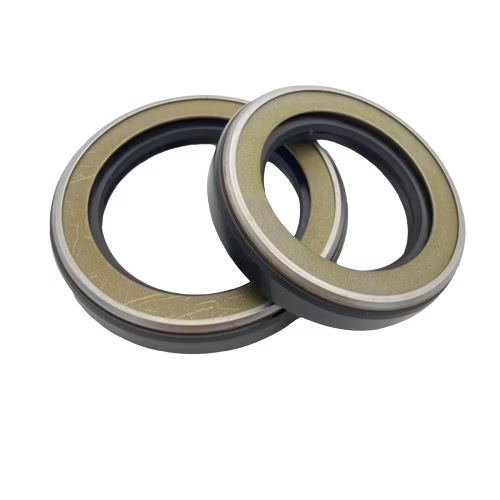
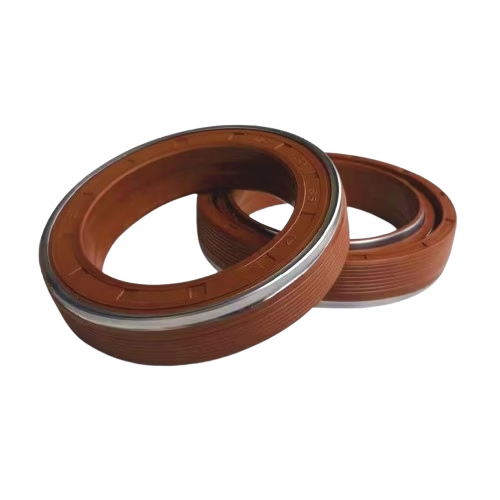
- Oil seals
- Lip seals
- Shaft seals
- Piston seals
- Rod seals
- Door seals
- Window seals
- Extruded rubber seals
- U-channel seals
- Weatherstrips
- Custom molded rubber seals
Rubber seals are commonly used in automotive systems, hydraulic cylinders, pneumatic equipment, rotating shafts, marine equipment, industrial doors, machinery, and enclosure protection.
Rubber Gasket vs Rubber Seal: Main Difference
The main difference is simple:
A rubber gasket is normally used between two stationary surfaces. A rubber seal is a broader sealing category that can be used in both stationary and moving applications.
In other words, a rubber gasket can be considered one type of rubber seal, but not every rubber seal is a gasket.
For example, a pipe flange gasket is a rubber seal. But an oil seal installed around a rotating shaft is not usually called a gasket.
Rubber Gasket vs Rubber Seal Comparison Table
| Item | Rubber Gasket | Rubber Seal |
|---|---|---|
| Main Function | Prevent leakage between mating surfaces | Prevent leakage, contamination, pressure loss, dust, or environmental intrusion |
| Application Type | Mainly static sealing | Static and dynamic sealing |
| Typical Shape | Flat, ring-shaped, sheet-cut, flange-shaped | O-ring, lip seal, shaft seal, profile, strip, molded shape |
| Installation Position | Between two compressed surfaces | Around shafts, grooves, doors, pistons, housings, or joints |
| Movement Involved | Usually no movement | May involve sliding, rotation, compression, vibration, or repeated movement |
| Design Complexity | Usually simpler | Often more complex |
| Common Examples | Flange gasket, pipe gasket, cover gasket | O-ring, oil seal, door seal, shaft seal, piston seal |
| Typical Cost | Usually lower for simple flat designs | Can be higher depending on profile, mold, tolerance, and function |
| Main Failure Risks | Leakage due to poor compression, wrong material, or uneven bolt load | Leakage, wear, friction failure, hardening, extrusion, or loss of elasticity |
Are Rubber Gaskets a Type of Rubber Seal?
Yes. A rubber gasket can be considered a type of rubber seal because its purpose is to prevent leakage or ingress.
But in technical communication, especially when talking with suppliers, engineers, or OEM buyers, it is better not to treat the two terms as exactly the same.
A gasket usually means a part compressed between two fixed surfaces.
A seal may refer to many different products, including gaskets, O-rings, oil seals, shaft seals, door seals, extruded profiles, and dynamic sealing components.
This distinction matters when sending drawings, requesting quotations, or selecting materials for production.
How Rubber Gaskets Work
Rubber gaskets work mainly through compression.
When a gasket is placed between two mating surfaces and tightened, the rubber deforms slightly. This deformation allows the gasket to fill small gaps, surface scratches, machining marks, and uneven contact areas.
Once compressed correctly, the gasket creates a sealing barrier.
Key Factors Affecting Rubber Gasket Performance
The sealing performance of a rubber gasket depends on several technical factors:
- Compression ratio
- Bolt load or clamping force
- Rubber hardness
- Gasket thickness
- Surface finish of mating parts
- Material compatibility
- Temperature resistance
- Chemical resistance
- Compression set
- Dimensional tolerance
If the gasket is under-compressed, leakage may occur. If it is over-compressed, the gasket may crack, squeeze out, or lose elasticity over time.
For industrial buyers, gasket selection should not be based only on size. The working environment, compression condition, material, and service life requirement are just as important.
How Rubber Seals Work
Rubber seals may work through compression, interference fit, contact pressure, elastic recovery, or sliding contact.
Different seal types work in different ways:
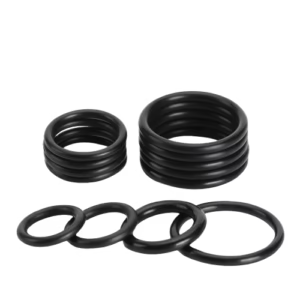
- An O-ring seals by being compressed in a groove.
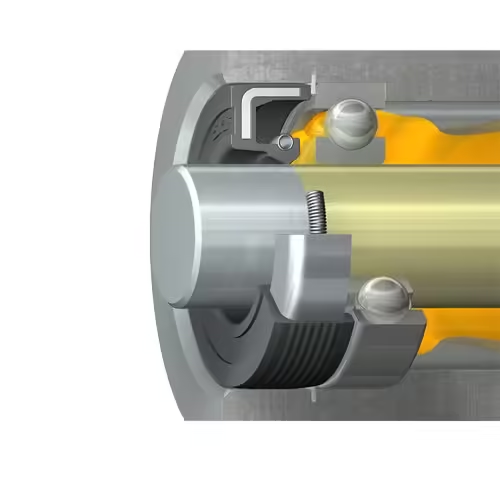
- An oil seal works through contact between the sealing lip and a rotating shaft.
- A door seal works by compression between the door and frame.
- A piston seal controls fluid leakage under reciprocating movement.
- An extruded rubber seal follows the shape of a frame, channel, or enclosure.
For dynamic sealing, the challenge is more complex. The seal must prevent leakage while controlling friction, wear, heat generation, and long-term aging.
Key Factors Affecting Rubber Seal Performance
Important factors include:
- Groove design
- Contact pressure
- Lubrication
- Shaft speed
- Pressure direction
- Rubber resilience
- Wear resistance
- Installation tolerance
- Temperature change
- Oil, fuel, chemical, ozone, or UV exposure
For moving parts, choosing the wrong seal can quickly lead to leakage, lip wear, shaft damage, or equipment shutdown.
Common Rubber Materials for Gaskets and Seals
Material selection is one of the most important decisions when buying rubber gaskets or rubber seals.
Different materials have different resistance to oil, fuel, water, steam, chemicals, heat, ozone, weathering, and compression set.
Rubber Material Comparison Table
| Material | Typical Temperature Range | Oil / Fuel Resistance | Weather / Ozone Resistance | Compression Set Resistance | Common Applications |
|---|---|---|---|---|---|
| NBR / Nitrile | -30°C to 100/120°C | Good | Poor to moderate | Moderate | Oil seals, hydraulic seals, fuel gaskets, machinery seals |
| EPDM | -40°C to 120/150°C | Poor for petroleum oils | Excellent | Good | Water system gaskets, HVAC seals, outdoor seals, door seals |
| Silicone | -50°C to 200°C | Limited for oils | Good | Good at high temperature | Food-grade seals, oven gaskets, electrical insulation, high-temperature gaskets |
| FKM / Fluoroelastomer | -20°C to 200/250°C | Excellent | Excellent | Very good | Fuel systems, chemical seals, engines, aerospace, high-performance sealing |
| SBR | -30°C to 100°C | Poor | Poor to moderate | Moderate to poor | General-purpose gaskets, pads, washers |
| CR / Neoprene | -35°C to 110°C | Moderate | Good | Moderate | Marine seals, industrial gaskets, cable protection, outdoor seals |
Material Selection Tip for Buyers
For general oil sealing, NBR is often the most economical choice.
For outdoor, water, steam, or weather exposure, EPDM is usually better.
For high temperature, fuel, aggressive chemicals, or demanding industrial applications, FKM may provide longer service life, although the unit cost is higher.
For food-grade, high-temperature, or clean sealing environments, silicone is often considered, especially when FDA-related requirements are involved.
This is where cost and performance must be considered together. A cheaper rubber material may reduce the purchase price, but if it causes early leakage or frequent replacement, the total cost can become much higher.
Why Compression Set Matters for Rubber Gaskets and Seals
Compression set refers to the ability of rubber to recover its original shape after being compressed for a long time.
For rubber gaskets and rubber seals, this is one of the most important performance indicators. If the rubber loses elasticity after long-term compression, the sealing force will drop. Once the sealing force becomes too low, leakage may occur even if the gasket or seal still looks complete from the outside.
In simple terms:
Lower compression set usually means better long-term sealing performance.
Compression set is especially important for:
- Flange gaskets under constant bolt load
- O-rings installed in grooves
- Door and enclosure seals under repeated compression
- High-temperature rubber gaskets
- Hydraulic and pneumatic sealing parts
- Food-grade or water-system seals that cannot be replaced frequently
For buyers, compression set should be considered together with temperature, medium, hardness, and expected service life.
A rubber material with poor compression set resistance may be cheaper, but it can lose sealing force faster during long-term use.
Standards and Certifications for Rubber Gaskets and Seals
When selecting rubber gaskets and rubber seals for industrial, automotive, food-grade, or fluid system applications, buyers should not only compare material names. International standards and certifications can also help confirm whether the rubber component is suitable for the required working environment.
Common Standards and Certifications
| Standard / Certification | What It Relates To | Why It Matters for Buyers |
|---|---|---|
| ASTM D2000 | Classification system for rubber materials in automotive and industrial applications | Helps define rubber type, hardness, tensile strength, heat resistance, oil resistance, aging performance, and material requirements |
| ISO 3601 | O-ring dimensions, tolerances, quality acceptance criteria, and housing design guidance | Important for standard O-rings used in hydraulic, pneumatic, and general sealing applications |
| FDA | Food contact suitability in the U.S. market | Important for rubber seals used in food processing, packaging, and sanitary equipment |
| NSF | Water, food, and public-health-related certification | Commonly required for seals used in drinking water systems, food equipment, and sanitary applications |
| DIN 3760 / DIN 3761 | Rotary shaft lip seal dimensions and requirements | Useful for oil seals and rotary shaft sealing applications |
| ISO 6194 | Rotary shaft lip-type seals | Often referenced for shaft seal design, dimensions, vocabulary, and test methods |
Why Standards Matter in Procurement
For OEM buyers, standards are useful because they make technical requirements clearer.
For example:
- An O-ring used in a hydraulic groove may need to follow ISO 3601 dimensions and tolerance requirements.
- A rotary shaft oil seal may be designed according to DIN 3760, DIN 3761, or ISO 6194.
- A rubber material requirement may be described using ASTM D2000.
- A gasket used in food-processing equipment may need FDA-compliant silicone, EPDM, or other suitable materials.
- A seal used in drinking-water equipment may require NSF-related compliance, depending on the market and application.
For custom rubber gasket and seal projects, buyers should confirm whether the application requires a specific standard, certification, or material test report before production.
This helps reduce communication mistakes and avoids receiving parts that fit the drawing but fail the actual compliance requirement.
Cost vs Performance: Which Option Should Buyers Choose?
In industrial purchasing, the lowest unit price is not always the best decision.
A simple flat gasket used in a low-pressure water system may not need an expensive material. But a shaft seal used in hot oil, fuel, or chemical equipment requires better material, better design, and tighter quality control.
Cost and Performance Comparison
| Buyer Priority | Recommended Direction | Example |
|---|---|---|
| Lowest cost | SBR, basic NBR, die-cut gasket | General pads, non-critical covers, simple flange sealing |
| Balanced cost and performance | NBR, CR, EPDM | Pumps, valves, water systems, machinery covers |
| Long service life | EPDM, FKM, high-grade NBR | Outdoor equipment, hydraulic systems, fuel systems |
| High temperature resistance | Silicone, FKM | Engine areas, ovens, heat-exposed machinery |
| Oil and fuel resistance | NBR, FKM | Automotive, hydraulic, fuel systems |
| Chemical resistance | FKM, special compounds | Chemical processing, aggressive fluids |
| Dynamic sealing | Precision O-rings, oil seals, lip seals | Shafts, pistons, hydraulic and pneumatic systems |
| Food or water contact | FDA or NSF-related material options | Food equipment, water systems, sanitary sealing |
For OEM buyers, the right question is not only:
“How much is one gasket?”
A better question is:
How long will this gasket or seal last in the real working environment?
Typical Applications of Rubber Gaskets
Rubber gaskets are mainly used where two fixed surfaces must be sealed.
Common Rubber Gasket Applications
- Pipe flange sealing
- Pump and valve connections
- Manhole covers
- Electrical cabinet sealing
- HVAC duct sealing
- Water treatment systems
- Automotive engine covers
- Battery box sealing
- Lighting enclosure sealing
- Industrial machine covers
Real Application Example
In a pump housing, a flat rubber gasket may be installed between the cover and the body. If the gasket material is compatible with the fluid and the compression is correct, it can provide stable sealing for a long time.
But if the gasket is too soft, too thin, over-compressed, or exposed to incompatible oil or chemicals, it may deform, crack, or leak.
For this type of application, the buyer should confirm the medium, temperature, bolt load, gasket thickness, and compression set resistance before purchasing.
Typical Applications of Rubber Seals
Rubber seals are used in a wider range of applications, especially where movement, dust protection, pressure control, or environmental sealing is required.
Common Rubber Seal Applications
- Automotive door and window sealing
- Hydraulic cylinder sealing
- Pneumatic equipment
- Shaft and bearing protection
- Oil retention systems
- Marine equipment sealing
- Industrial enclosure sealing
- Conveyor systems
- Glass and panel sealing
- Machinery vibration isolation
Real Application Example
In a rotating shaft application, an oil seal must hold oil inside the housing while keeping dust or contaminants out. The seal lip must maintain contact with the shaft, but it must not generate excessive friction.
If the material, lip design, spring load, shaft surface, or installation direction is wrong, the seal may fail quickly.
This is why dynamic rubber seals usually require more careful design than simple static gaskets.
How to Choose Between a Rubber Gasket and a Rubber Seal
The correct choice depends on the sealing structure, working medium, temperature, pressure, movement condition, and service life requirement.
Choose a Rubber Gasket When:
A rubber gasket is usually suitable when:
- Two flat or flanged surfaces need to be sealed
- The application is mainly static
- The part is installed between covers, housings, tanks, pipe joints, or enclosures
- Compression is created by bolts, clamps, or fixed assembly pressure
- The sealing path is relatively simple
Typical examples include pipe flange gaskets, pump cover gaskets, electrical box gaskets, and custom die-cut rubber gaskets.
Choose a Rubber Seal When:
A rubber seal is usually better when:
- The application involves movement
- The part must seal around a shaft, piston, groove, door, window, or irregular profile
- The seal needs to resist vibration, friction, dust, water, oil, or pressure changes
- The design requires a lip, hollow profile, O-ring groove, or custom molded structure
- Long-term elastic recovery is important
Typical examples include oil seals, O-rings, door seals, shaft seals, piston seals, and extruded rubber profiles.
Selection Checklist for Buyers and Engineers
Before ordering rubber gaskets or rubber seals, confirm the following details.
Application Conditions
- Is the application static or dynamic?
- What medium needs to be sealed: oil, water, fuel, air, steam, chemicals, or dust?
- What is the operating temperature?
- Is there pressure? If yes, what is the pressure range?
- Is the part exposed to ozone, UV, outdoor weather, or chemicals?
- Is there vibration, sliding, rotation, or repeated opening and closing?
- Does the product need to follow ASTM, ISO, DIN, FDA, NSF, or other requirements?
Product Requirements
- What material is required: NBR, EPDM, FKM, silicone, CR, or SBR?
- What hardness is needed?
- What tolerance is required?
- Is compression set resistance important?
- Is it a flat gasket, molded seal, extruded profile, O-ring, or oil seal?
- Is a drawing, sample, or 3D file available?
- What is the expected service life?
- What is the annual demand or production volume?
For custom projects, providing only a photo is usually not enough. A drawing, sample, material requirement, hardness, working condition, and expected quantity will help the manufacturer give a more accurate recommendation.
How to Install Rubber Gaskets and Seals Correctly
Even a high-quality rubber gasket or rubber seal can fail early if it is installed incorrectly. Proper installation helps maintain sealing force, reduce material damage, and extend service life.
This is especially important for O-rings, oil seals, flange gaskets, hydraulic seals, and custom rubber sealing components.
1. Clean the Installation Surface
Before installation, clean the mating surface, groove, shaft, flange, or housing.
Dust, metal chips, old adhesive, rust, burrs, and sharp edges can damage the rubber surface or prevent proper compression.
For flange gaskets and flat rubber gaskets, the sealing surface should be smooth and free from deep scratches.
2. Check the Size and Material Before Assembly
Do not install a gasket or seal only because the size looks close.
Before assembly, confirm:
- Inner diameter
- Outer diameter
- Thickness
- Profile shape
- Hardness
- Material
- Temperature resistance
- Oil, fuel, water, steam, or chemical compatibility
For O-rings, the groove size and compression ratio should also be checked.
For oil seals, shaft diameter, housing bore, shaft speed, lip direction, and installation depth must be confirmed.
3. Avoid Over-Stretching or Twisting
O-rings and rubber seals should not be overstretched during installation.
Excessive stretching can reduce sealing force and cause early failure. Twisting can also create uneven compression, especially in O-ring grooves.
When installing O-rings, make sure the ring sits evenly in the groove without twisting.
4. Use Proper Lubrication When Needed
For dynamic seals, O-rings, and oil seals, proper lubrication can reduce friction during installation and initial operation.
However, the lubricant must be compatible with the rubber material.
If the wrong lubricant is used, the rubber may swell, soften, crack, or lose sealing performance.
5. Control Compression and Bolt Load
For flange gaskets and cover gaskets, uneven tightening is a common cause of leakage.
Bolts should be tightened gradually and evenly, usually in a cross pattern. This helps distribute compression across the gasket surface.
Too little compression may cause leakage. Too much compression may crush the gasket, reduce elasticity, or cause extrusion.
6. Protect Sealing Lips and Edges
For oil seals and lip seals, the sealing lip should not be scratched during installation.
Sharp shaft edges, keyways, threads, or burrs can cut the lip. In many cases, a guide sleeve or installation tool is recommended to protect the sealing lip.
7. Do Not Reuse Damaged or Aged Seals
A used rubber gasket or seal may look acceptable, but its elasticity may already be reduced.
If the rubber has cracks, hardening, swelling, flattening, or permanent deformation, it should be replaced.
Reusing damaged seals may save a small cost at first, but it can lead to leakage, machine downtime, or higher maintenance costs later.
Manufacturing Methods for Rubber Gaskets and Rubber Seals
Different rubber products require different production methods. The right process depends on design complexity, quantity, material, and tolerance.
Die Cutting
Die cutting is suitable for flat rubber gaskets, washers, pads, and sheet-based sealing parts.
It is efficient for simple shapes and medium-to-large production quantities.
Compression Molding
Compression molding is commonly used for custom molded rubber gaskets and seals with specific shapes, thicknesses, or structural features.
It is suitable for many industrial rubber parts, especially when the structure is not too complex.
Injection Molding
Injection molding is suitable for high-volume rubber seals that require accurate dimensions and consistent quality.
It is often used for precision molded seals, O-rings, and complex rubber components.
Extrusion
Extrusion is commonly used for continuous rubber sealing profiles, such as door seals, window seals, U-channel seals, sponge rubber strips, and frame seals.
Splicing and Vulcanization
Splicing is used to connect extruded profiles into rings, frames, or closed-loop seals.
Compared with simple adhesive bonding, vulcanized joints usually provide better strength and sealing reliability.
Common Mistakes When Selecting Rubber Gaskets and Rubber Seals
Many sealing failures happen because the part is selected only by size or appearance.
Common Selection Mistakes
- Using a gasket in a dynamic sealing application
- Choosing the wrong rubber material for oil, fuel, steam, or chemicals
- Choosing NBR for outdoor ozone exposure
- Choosing EPDM for petroleum oil sealing
- Ignoring compression set in long-term static sealing
- Using excessive or insufficient compression
- Selecting rubber hardness without considering pressure and assembly force
- Overlooking groove design for O-rings or seals
- Ignoring temperature limits
- Not checking ASTM D2000 material classification for industrial rubber requirements
- Using non-certified rubber materials for food-grade or drinking-water applications
- Ignoring ISO 3601 groove and dimensional guidance for O-rings
- Installing O-rings with twisting or excessive stretching
- Tightening flange gaskets unevenly
- Using incompatible lubricants during installation
- Reusing aged or permanently compressed rubber seals
- Copying an old sample without checking the actual working condition
For procurement teams, these mistakes can lead to repeated complaints, machine downtime, higher maintenance cost, and shorter product life.
Custom Rubber Gaskets and Rubber Seals
Many industrial applications cannot use standard rubber parts. Custom rubber gaskets and custom rubber seals are often required when the equipment has special dimensions, materials, profiles, or sealing conditions.
A professional rubber gasket and seal manufacturer can produce parts according to drawings, samples, material requirements, hardness, color, tolerance, and working environment.
Custom Options Include:
- Custom rubber material formulation
- Custom hardness
- Custom size and profile
- Molded rubber parts
- Die-cut rubber gaskets
- Extruded rubber seals
- Sponge or solid rubber structures
- Adhesive-backed gaskets
- Reinforced rubber seals
- Vulcanized frame seals
- Custom O-rings and oil seals
For OEM projects, it is best to provide:
- 2D drawing or 3D file
- Sample photos
- Material requirement
- Hardness requirement
- Working temperature
- Working medium
- Pressure condition
- Standard or certification requirement
- Annual quantity
- Packaging requirement
This allows the supplier to recommend the right material, production process, and cost structure.
Rubber Gasket vs Rubber Seal: Which One Do You Need?
If your application only needs to seal two fixed surfaces, a rubber gasket may be enough.
If your application involves movement, shaft rotation, groove sealing, door compression, oil retention, or dust protection, you likely need a more specific rubber seal.
The best choice depends on the full sealing environment, not just the part name.
Quick Selection Guide
| Application | Recommended Product |
|---|---|
| Pipe flange sealing | Rubber gasket |
| Pump cover sealing | Rubber gasket |
| Rotating shaft sealing | Oil seal |
| Hydraulic cylinder sealing | Piston seal or rod seal |
| Groove sealing | O-ring |
| Door or cabinet sealing | Extruded rubber seal |
| Fuel system sealing | NBR or FKM rubber seal |
| Outdoor water sealing | EPDM gasket or EPDM seal |
| Food equipment sealing | FDA-related silicone or EPDM option |
| Drinking water system sealing | NSF-related material option, depending on application |
FAQ: Rubber Gaskets and Rubber Seals
What is the main difference between a rubber gasket and a rubber seal?
A rubber gasket is usually used between two stationary surfaces, while a rubber seal is a broader term that can include both static and dynamic sealing components such as O-rings, oil seals, lip seals, shaft seals, and extruded profiles.
Is a rubber gasket considered a rubber seal?
Yes. A rubber gasket can be considered one type of rubber seal because it prevents leakage or ingress. However, not every rubber seal is a gasket.
Which rubber material is best for oil sealing?
NBR is commonly used for general oil sealing because it offers good oil resistance and cost efficiency. For high-temperature oil, fuel, or chemical exposure, FKM is usually a better choice.
Why is compression set important for rubber seals?
Compression set shows how well rubber can recover after long-term compression. If compression set is poor, the rubber may lose elasticity and sealing force, which can lead to leakage.
Which standard is commonly used for O-rings?
ISO 3601 is commonly referenced for O-ring dimensions, tolerances, quality acceptance criteria, and housing design guidance.
Which standard is used for rubber material classification?
ASTM D2000 is commonly used to classify rubber materials for automotive and industrial applications. It helps define material type, hardness, tensile strength, heat resistance, oil resistance, aging resistance, and other performance requirements.
Can rubber gaskets be used in food-grade applications?
Yes, but the material may need to meet FDA or NSF-related requirements, depending on the application, market, and contact medium. Silicone and EPDM are commonly used in many food-grade or water-related sealing applications.
Can one rubber seal material work for all applications?
No. Rubber material must be selected according to the medium, temperature, pressure, environment, movement, and service life requirement. For example, EPDM is good for water and weather exposure but not suitable for petroleum oils. NBR is good for oil but weaker in ozone and outdoor exposure.
Conclusion
Rubber gaskets and rubber seals both prevent leakage and protect equipment, but they are not exactly the same.
A rubber gasket is generally used between two static mating surfaces. A rubber seal is a broader category that includes both static and dynamic sealing components.
In simple terms:
All rubber gaskets can be considered rubber seals, but not all rubber seals are rubber gaskets.
For buyers, the most important step is not only choosing the name of the product, but choosing the right structure, material, hardness, tolerance, compression set resistance, standard requirement, and production process for the actual working condition.
At DRO Rubber Seals, we provide custom rubber gaskets, rubber seals, O-rings, oil seals, extruded rubber profiles, molded rubber parts, and industrial sealing solutions based on your drawings, samples, and application requirements.
For custom rubber gasket and rubber seal projects, you can send us your drawing, sample, material requirement, or working condition for evaluation.
Website: drorubber.com
WhatsApp: +0086 15815831911
WeChat: +0086 13784044874