If you have worked around pumps, gearboxes, engines, hydraulic equipment, or flanged piping long enough, you learn one thing very quickly: sealing problems rarely start big. Most of the time, they begin with a small leak, a bit of hardening, a lip worn earlier than expected, or a gasket that looked fine on paper but did not last in actual service.
That is why sealing selection should never be treated as a simple purchasing job. A seal is not just a rubber part. It is a working component that has to live with heat, pressure, oil, chemicals, shaft movement, flange load, weather, and whatever else the equipment throws at it. If the material is wrong, or the fit is wrong, or the installation is careless, the system will usually tell you sooner or later.
In day-to-day industrial work, the sealing parts we see most often are O-rings, oil seals, and gaskets. They do different jobs, but the selection logic is similar. You need to look at the medium, the temperature, the movement, the surface condition, and the real service environment. Not the ideal one. The real one.
Start with the Application, Not the Catalog
A mistake many buyers make is to start with a drawing and a size table. Size matters, of course, but it is not where the real decision begins.
The first questions should be simple:
- What is the seal actually in contact with?
- What temperature does it really see in operation?
- Is the system static, slow-moving, or running at speed?
- Is there dust, water, steam, UV, or chemical exposure?
- How difficult is replacement once the machine is back in service?
- Is the customer buying on piece price, or on service life?
These questions tell you more than any catalog shortcut.
O-Rings: Simple in Appearance, Easy to Misjudge
People often think O-rings are straightforward because they are such common parts. In reality, O-rings are easy to get wrong. The ring itself may be fine, but if the groove is not right, if the squeeze is too high, if the material does not suit the medium, or if the rubber takes a compression set too early, the seal will not last.
An O-ring works by being compressed between two surfaces. That compression is what creates the seal. In a lot of standard applications, around 15% to 25% compression is common. Too little, and you risk leakage. Too much, and the ring runs hotter, drags more, and ages faster.
That is why I always say this: when an O-ring fails early, do not blame the material first. Check the groove, check the squeeze, check the assembly practice, and then look at the compound.
Common O-Ring Materials in Real Use
| Material | Typical Temperature Range | What It Does Well | Where It Struggles | Common Use |
|---|---|---|---|---|
| NBR | -40°C to +120°C | Handles oil and fuel well, economical, widely used | Not great in ozone, sunlight, or outdoor weathering | Hydraulic systems, general oil sealing, automotive applications |
| FKM | -20°C to +200°C | Very good in heat and aggressive media | Costs more | High-temperature oil systems, chemical equipment, demanding industrial service |
| EPDM | -50°C to +120°C | Good with water, steam, ozone, and weathering | Not suitable for petroleum oils | Outdoor equipment, water systems, cooling circuits |
| Silicone | -60°C to +200°C | Very flexible in low and high temperatures | Not the best in abrasive or heavy dynamic service | Static sealing, special temperature applications |
NBR is still the workhorse in a lot of general industrial sealing. It is not glamorous, but it does the job where oil resistance matters and the temperature is reasonable. FKM is what you move to when heat and chemical resistance become more serious. EPDM is the better answer when water, steam, and weathering matter more than oil. Silicone has its place too, especially where low-temperature flexibility is important, but I would not treat it as a cure-all.
The real mistake is not choosing a cheaper material. The real mistake is choosing a cheaper material in a service condition where it has no real chance of lasting.
What Shortens O-Ring Life
In actual service, O-rings usually fail for familiar reasons:
- heat aging
- compression set
- wrong material for the medium
- poor groove design
- twisting during assembly
- cuts from sharp edges
- ozone or UV exposure
- repeated temperature cycling
A ring can look acceptable when removed, but if it has gone hard or lost recovery, it has already told you the story. Rubber does not have to crack to be finished. Sometimes it just stops behaving like rubber.
Oil Seals: More Than a Size and a Lip
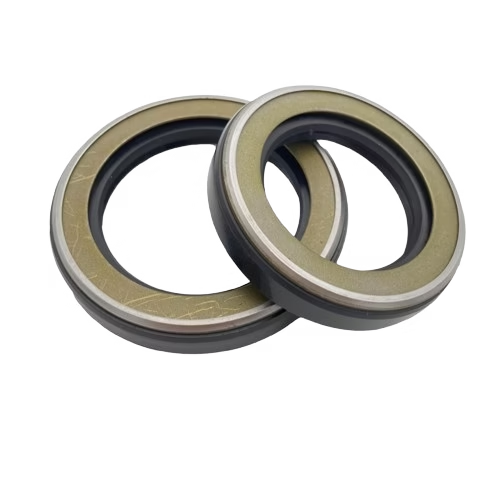
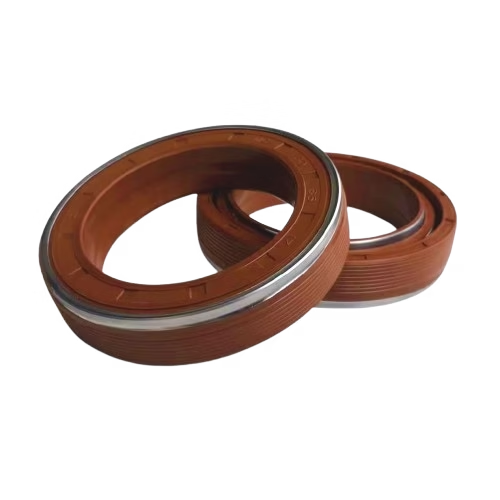
Oil seals are often treated too casually in purchasing. Someone checks the shaft size, the housing size, and the width, and then assumes the job is done. In practice, that is only the start.
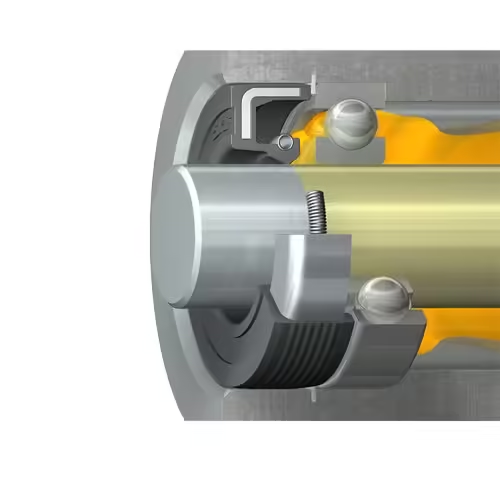
An oil seal has to keep lubricant in and contamination out while running against a rotating shaft. That means the lip is doing real work. Lip load, shaft finish, speed, temperature, alignment, and contamination all matter.
If the shaft is rough, the lip wears early. If the shaft is too smooth, lubrication at the contact zone may not behave as expected. If the lip gets damaged during installation, you may not even notice it until the unit is running and the leak shows up.
What I Look At First in Oil Seal Selection
When choosing an oil seal, I pay attention to five things before anything else:
1. Medium
What oil or grease is involved? Is there any chemical exposure?
2. Temperature
Not just ambient temperature. Real running temperature.
3. Shaft speed
Standard compounds may be acceptable at moderate speed, but higher speed means more heat at the lip.
4. Shaft condition
Surface finish, hardness, wear pattern, and any burrs near the lead-in area.
5. Environment
Dust, slurry, water spray, vibration, and outdoor exposure all change what “good enough” really means.
Common Oil Seal Materials
| Material | Temperature Capability | Oil Resistance | General Comment |
|---|---|---|---|
| NBR | Moderate | Good | Standard choice for many general oil sealing jobs |
| Polyacrylate | Higher hot-oil resistance than NBR | Good | Often useful in hotter oil environments |
| Silicone | Wide temperature flexibility | Fair to moderate depending on media | Better for special temperature needs than abrasive service |
| FKM | High | Excellent | Strong choice where heat and media are more demanding |
For a lot of ordinary service, NBR is still the practical answer. But once temperatures rise, or the machine is hard to access, or downtime is costly, FKM often pays for itself. That is the sort of decision experienced buyers understand: the cheaper seal is not always the cheaper job.
Installation Is Where Many Oil Seals Are Lost
A surprising number of oil seal failures begin before the machine is even restarted.
Common installation mistakes include:
- pushing the seal over a sharp shaft edge without protection
- installing the lip dry
- driving the seal in crooked
- ignoring shaft wear or grooves
- contaminating the lip before assembly
- failing to inspect the housing bore
A simple installation sleeve or cone can save a seal. A bit of proper lubrication can save a lip. A square installation can save a return job.
In the workshop, these things look small. In service, they become the difference between a clean machine and an early leak.
Gaskets: Do Not Choose by Temperature Alone
High-temperature gasket selection is another area where people oversimplify. Someone looks at a temperature chart, picks the material with the highest number, and assumes it is the safest choice. That is not how it works.
A gasket has to seal under bolt load, flange condition, thermal cycling, pressure variation, and media exposure. Temperature matters, but it is only one part of the story.
Common Gasket Materials in Practice
| Material | Typical Temperature Range | Main Strength | Main Concern | Common Service |
|---|---|---|---|---|
| CNAF | Up to around 400°C | Balanced cost and performance | Not for the most severe heat | General piping and medium-duty industrial service |
| Graphite | Very high, depending on atmosphere | Excellent in high-temperature and high-pressure service | Can suffer in oxidizing conditions | Steam, process piping, chemical and refinery service |
| Mica / Thermiculite | Very high | Better oxidation resistance in severe heat | Higher cost | Exhaust, combustion, and very hot environments |
| Rubber-based sheet | Usually up to 120–150°C | Economical, easy to handle | Limited for high heat | Water lines and lower-temperature service |
Graphite is an excellent gasket material in many applications, but it is not magic. In oxidizing environments, it may not be your best answer. That is when materials like mica or thermiculite deserve a closer look.
Again, the same lesson applies: do not ask only, “How hot is it?” Ask, “What else is happening there?”
Spiral Wound Gaskets
Where temperature, pressure, and media severity all rise together, spiral wound gaskets are often a reliable choice. They combine metal winding with a softer filler, which gives them a good balance of resilience and sealing strength.
They are commonly used in steam systems, chemical plants, petrochemical service, and other bolted joints where simpler gasket materials are not enough. But even a good spiral wound gasket will not forgive poor flange condition or careless bolt loading.
Installation Still Matters More Than Fancy Materials
Over the years, one lesson keeps repeating itself: installation quality is often more important than material upgrades people spend time arguing about.
Clean surfaces matter.
Correct torque matters.
Bolt sequence matters.
Proper alignment matters.
Checking flange flatness matters.
Not rushing the job matters.
For covers and flanges, tightening in stages is still the sensible approach. A cross pattern, building up load gradually, is better than drawing one side down hard and hoping for the best. In many jobs, tightening to 50%, then 75%, then final torque is a practical way to avoid uneven loading.
The best material in the wrong assembly will still disappoint you.
Maintenance Tells You What the Design Paper Did Not
Seals and gaskets leave clues. If you look at used parts carefully, they will usually tell you why they failed.
A hard O-ring tells one story.
A worn oil seal lip tells another.
A gasket crushed unevenly tells another.
A flange that leaks repeatedly at the same point usually tells you to stop blaming the gasket and inspect the joint.
This is why routine inspection matters. A good maintenance habit includes:
- checking for early leakage
- watching for hardening or loss of flexibility
- recording replacement intervals
- inspecting shaft wear patterns
- checking flange load history where possible
- looking for heat, vibration, or contamination trends
In industrial service, prevention is almost always cheaper than interruption.
Real-World Environment Changes Everything
Seals do not run in laboratory conditions.
A seal near the sea sees corrosion and humidity.
A seal on outdoor equipment sees UV and ozone.
A seal in hot cycling service sees repeated expansion and contraction.
A seal in dusty equipment sees contamination that gradually works its way into the contact area.
That is why the application environment should never be treated as background information. It is part of the selection decision.
If the equipment lives outdoors, EPDM may make more sense than NBR in weather-exposed conditions. If the shaft area is dirty, a dust lip may be worth the added protection. If the service runs hot and is hard to maintain, paying more for the better compound is usually the sensible move.
Final Thoughts
A good sealing decision comes from understanding the job, not from guessing the part.
Whether you are choosing an O-ring, an oil seal, or a gasket, the right approach is the same:
- understand the medium
- check the real working temperature
- consider movement, pressure, and speed
- look at the surrounding environment
- match the material to service, not to habit
- install it properly
- inspect it honestly after use
That is how you get longer service life and fewer callbacks.
In the end, reliable sealing is rarely about one magic material. It comes from making sound choices early and paying attention to the details that people usually skip.
Contact Us
Website: drorubber.com
WhatsApp: +86 15815831911
WeChat: +86 13784044874