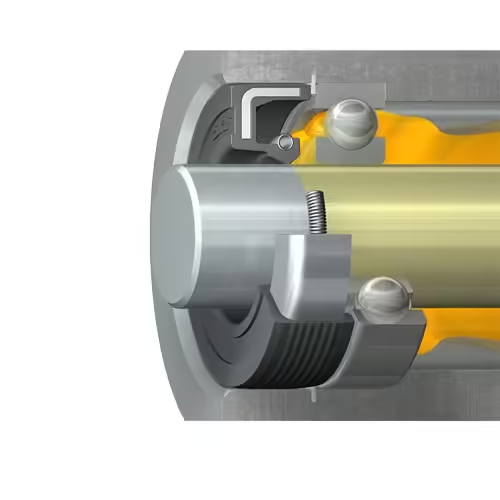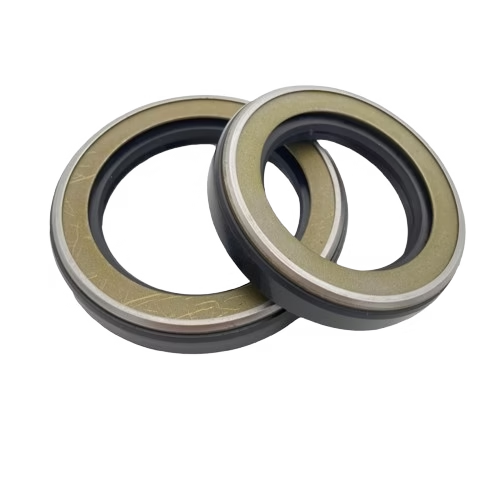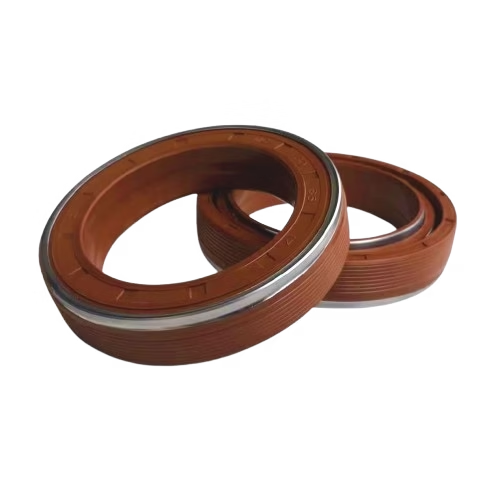
When choosing sealing materials, FKM and NBR are two of the most common options. Both are widely used in oil seals, O-rings, and other rubber sealing parts, but they are designed for different working conditions.
In simple terms, NBR is usually the more economical choice for general industrial applications, while FKM is better suited for higher temperatures, more aggressive media, and longer service life requirements.
For buyers and engineers, the real question is not which material is better on paper, but which one fits the actual operating environment and budget. This guide compares FKM and NBR from a practical sealing perspective to help you make the right choice.
What Is the Difference Between FKM and NBR?
FKM is a fluoroelastomer known for strong resistance to heat, oil, fuel, and chemicals. It is commonly used in high-performance sealing applications where failure is costly.
NBR, or nitrile rubber, is one of the most widely used sealing materials in the industry. It offers good oil resistance, reliable mechanical properties, and a much lower cost than FKM.
In many standard sealing jobs, NBR is more than enough. But when temperature, chemical exposure, or maintenance demands become more severe, FKM often performs better over the long term.
FKM vs NBR Comparison Table
| Property | NBR | FKM |
|---|---|---|
| Full Name | Nitrile Butadiene Rubber | Fluoroelastomer |
| Typical Temperature Range | -30°C to +120°C | -20°C to +230°C |
| Oil Resistance | Good | Excellent |
| Fuel Resistance | Good | Excellent |
| Chemical Resistance | Moderate | Excellent |
| Compression Set | Moderate | Lower |
| Low-Temperature Flexibility | Better | Lower than NBR |
| Cost | Lower | Higher |
| Typical Applications | General sealing | High-performance sealing |
This comparison shows why both materials remain important in the sealing industry. They may look similar in basic applications, but the difference becomes much clearer in harsh working conditions.
FKM vs NBR in Temperature Resistance
Temperature is one of the main reasons buyers switch from NBR to FKM.
NBR Temperature Range
NBR generally works well from -30°C to +120°C. It is suitable for many hydraulic systems, pumps, gearboxes, and general industrial equipment operating under normal conditions.
However, under continuous heat, NBR can harden faster and lose elasticity, which may shorten seal life.
FKM Temperature Range
FKM is commonly used from -20°C to +230°C. It performs much better in hot oil, engine systems, chemical equipment, and other environments where heat is difficult to avoid.
Selection Tip
If the operating temperature stays within a normal range, NBR is often the more economical choice. If the seal is exposed to long-term heat, FKM is usually the safer option.
FKM vs NBR in Oil and Chemical Resistance
NBR is well known for its good resistance to petroleum-based oils, greases, and standard fuels. That is why it is widely used in oil seals, O-rings, and general machinery.
FKM has a clear advantage when the medium becomes more aggressive. It performs better in hot oils, fuels with additives, and many chemicals that can shorten the life of standard rubber materials.
For standard oil sealing, NBR is often sufficient. For higher temperatures and more demanding chemical environments, FKM usually provides better long-term sealing stability.
FKM vs NBR for Oil Seals
For rotary oil seals, material selection should not be based on price alone. Temperature, shaft speed, lubrication, and maintenance cost all matter.
When NBR Oil Seals Are a Good Choice
NBR oil seals are commonly used in:
- electric motors
- gear reducers
- pumps
- agricultural machinery
- general industrial equipment
They are a practical choice when:
- temperature is moderate
- the medium is standard lubricating oil
- shaft speed is not extreme
- replacement is easy and low-cost
When FKM Oil Seals Are Better
FKM oil seals are more suitable for:
- high-temperature engines
- high-speed rotating equipment
- chemical pumps
- turbo systems
- applications where downtime is expensive
In these situations, FKM usually holds up better against heat aging and helps reduce the risk of leakage and repeated replacement.
FKM vs NBR for O-Rings
In O-ring applications, both materials are widely used, but the right choice depends on the operating environment.
| Property | NBR O-Rings | FKM O-Rings |
|---|---|---|
| Tensile Strength | 15–25 MPa | 20–35 MPa |
| Pressure Resistance | Up to 15 MPa | Up to 30 MPa |
| High-Temperature Stability | Moderate | Strong |
| Chemical Stability | Moderate | Excellent |
| Compression Set Resistance | Moderate | Better |
NBR O-rings are often the preferred option for common hydraulic and oil sealing systems because they are affordable and reliable.
FKM O-rings are a better choice when sealing performance must remain stable under heat, fuel, or chemical exposure.
Cost vs Service Life: Which One Offers Better Value?
At first glance, NBR is much cheaper than FKM. For many standard applications, that lower cost makes NBR the right choice.
But material price is only one part of the real cost.
If a seal is exposed to high heat or aggressive chemicals, using a lower-cost material may lead to shorter service life, more maintenance, and more downtime. In these cases, FKM can actually offer better value over time.
A practical way to think about it is this:
- Choose NBR when the application is standard and cost control is important.
- Choose FKM when seal failure would lead to higher replacement, labor, or shutdown costs.
For industrial buyers, total operating cost usually matters more than unit price.
Common Failure Risks When the Wrong Material Is Selected
Choosing the wrong rubber material can lead to early seal failure even when the seal size and design look correct.
| Wrong Choice | Possible Result | Risk |
|---|---|---|
| Using NBR in excessive heat | Hardening and cracking | Leakage and short life |
| Using NBR in aggressive chemicals | Swelling or degradation | Premature failure |
| Using FKM in very low temperatures | Reduced flexibility | Start-up leakage |
| Choosing only by price | Frequent replacement | Higher long-term cost |
In real applications, the wrong material often leads to:
- oil leakage
- hardening
- swelling
- compression set
- reduced sealing force
- unexpected maintenance
This is why material selection should always be based on actual working conditions, not only on price.
Typical Applications of FKM and NBR
NBR Applications
NBR is widely used in:
- hydraulic seals
- standard oil seals
- O-rings
- fuel-resistant rubber parts
- general industrial machinery
FKM Applications
FKM is commonly used in:
- engine seals
- automotive high-temperature systems
- chemical processing equipment
- semiconductor equipment
- high-performance pumps and rotating machinery
Both materials are valuable, but they serve different levels of performance demand.
How to Choose Between FKM and NBR
A simple rule is to start with the working environment.
Choose NBR when you need:
- lower cost
- good resistance to oils and fuels
- reliable sealing in normal industrial conditions
- a practical solution for large-volume use
Choose FKM when you need:
- high-temperature resistance
- better chemical resistance
- longer service life
- lower maintenance frequency
- better performance in critical equipment
If the application is ordinary, NBR is often the smart engineering choice. If the environment is harsh, FKM is usually the safer long-term investment.
Frequently Asked Questions
Is FKM always better than NBR?
No. FKM performs better in high heat and aggressive media, but NBR is often the better value for standard sealing applications.
Is NBR good for oil seals?
Yes. NBR is one of the most common materials for oil seals and works very well in standard oil and grease environments.
Is FKM worth the higher cost?
It depends on the application. When heat, chemicals, or downtime risk are serious factors, FKM often justifies the extra cost.
Which is better for O-rings, FKM or NBR?
For general industrial oil sealing, NBR is often enough. For higher temperatures and more demanding chemical exposure, FKM is usually the better option.
Conclusion
FKM and NBR are both widely used seal materials, but they are not designed for the same job.
NBR remains the most practical option for many standard oil sealing applications because it offers good performance at a lower cost. FKM becomes the better choice when temperature, chemical resistance, and service life matter more than initial price.
The best material is the one that matches the real working conditions. A higher-priced seal is not always the better choice, and a lower-priced seal is not always the cheaper option in the long run.
At DRO Rubber, we supply both FKM and NBR seals, including oil seals, O-rings, and custom rubber sealing products, based on actual application requirements
Contact DRO Rubber for Expert Support
For professional assistance, custom orders, or bulk procurement advice:
- Website: drorubber.com
- WhatsApp: +0086 15815831911
- WeChat: +0086 13784044874